
Florence celebrates Olschki’s 140th anniversary

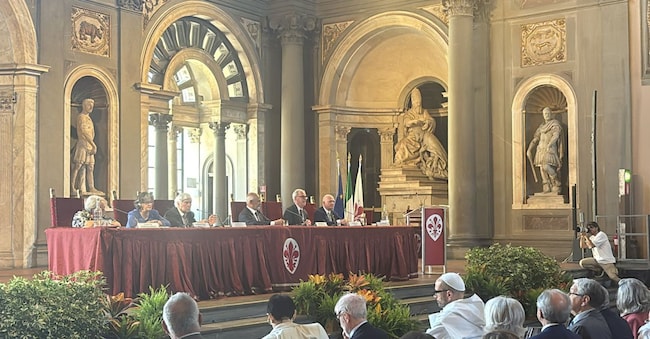
The link between the Olschki publishing house and the city of Florence is a long-standing and strong one, where the motto “Nihil difficile volenti” – meaning “nothing is difficult for those who are willing” – aptly captures the essence of the past 140 years. The Olschki family – celebrated at Palazzo Vecchio, including with the publication of a book marking the anniversary – has chosen Florence twice in the course of its history. The first time was in 1897, a year after the company’s founding, with the move to Florence initiated by Leone Samuele Olschki, the son of a Jewish printer from East Prussia. Florence offered the founder the ideal setting to combine antiquities, publishing and overseas connections. The second time the bond with Florence was cemented was before and during the Second World War: in 1938, due to the racial laws, the company was forced to change its name, and the historic brand survived under the imposed name of Bibliopolis. Despite Leo Olschki’s death in 1940 and the destruction by the war of what had been built up, Aldo Olschki, Leo’s son, once again chose Florence as the place to restart the business.
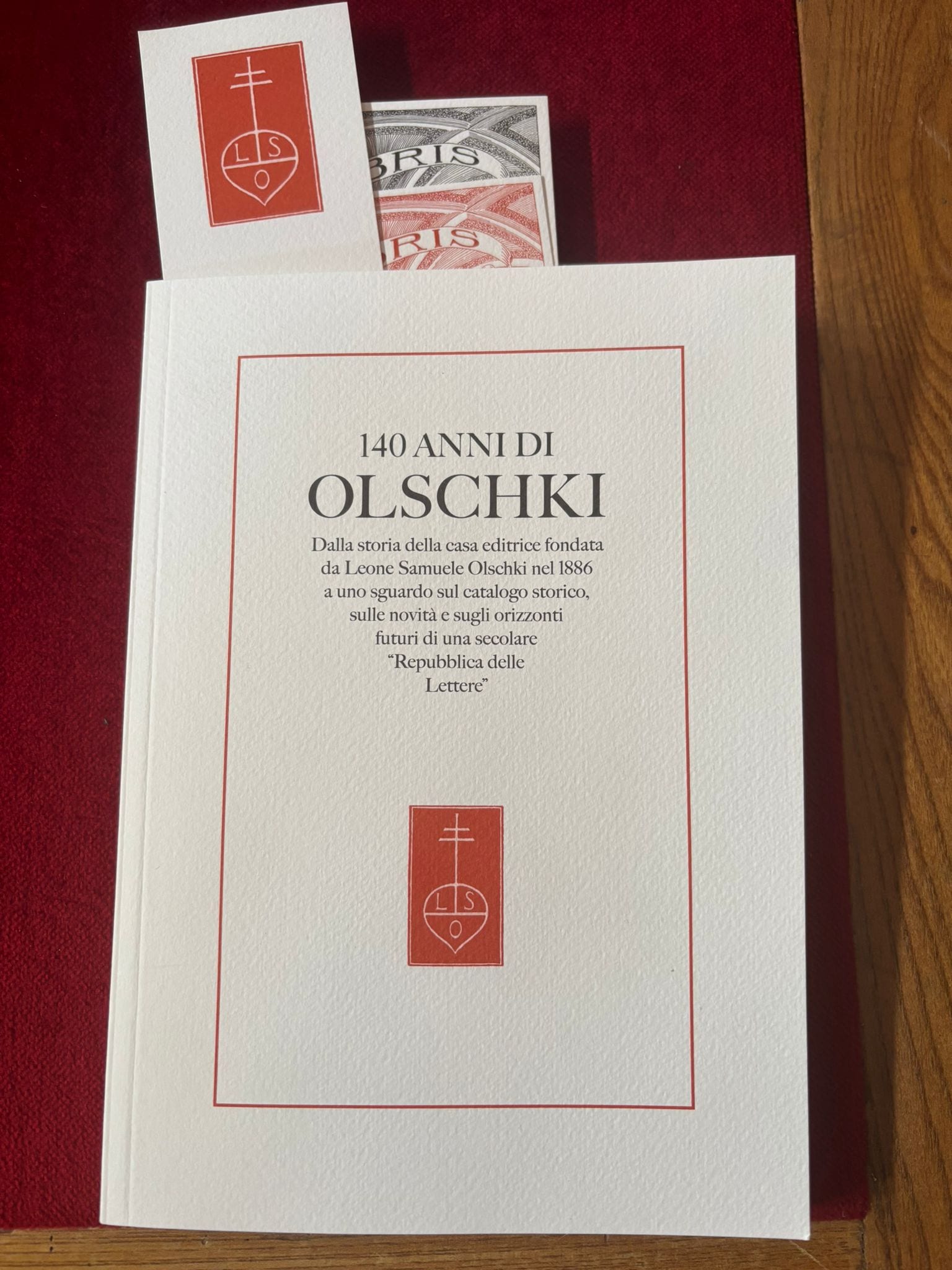
Then we arrived in 2026, a time when some people view culture more as a burden than an opportunity. “And they’re wrong,” says Daniele Olschki, a fourth-generation member of the family. “Culture is an antidote to war; it is the first building block that must underpin democracy at a time when democracies around the world are creaking.” The publishing house focuses on quality; one need only look at the day’s programme, which is far from simple: touching that paper is like discovering another world. “When I see the textbooks handed out to university students, I wonder if this is the right way to make people love books on paper,” he adds. “I still keep the books from my university days in my library and they’re still in perfect condition. Unfortunately, the very poor quality with which certain texts are produced today means that the book is discarded after being used for study. I am always on the lookout for the best papers and I must say that, sadly, they are disappearing.”
Celebrating this milestone is Father Bernardo Gianni, abbot of the Abbey of San Miniato al Monte, who believes that “we must have the courage to say that these enterprises deserve our support in the interests of the common good, which commits a people to valuing alternatives to the pursuit of profit”. Carlo Ossola, president of the Italian Encyclopaedia Institute, points out that “140 years of publishing history constitute a heritage that the community and the relevant ministries should regard as a cultural asset”.
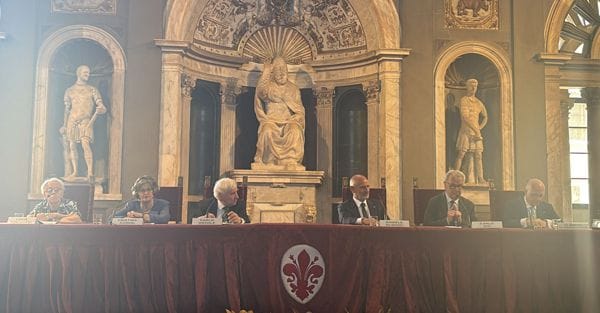
Mayor Sara Funaro notes that “140 years are not just a number but the symbol of a enduring history that is an integral part of our city’s cultural identity and which shows how, despite difficulties and periods of transformation, it is possible to continue producing publishing excellence by facing head-on the challenges that today’s world imposes on us. Leo Olschki chose Florence as the place to develop his business, and from there generations of publishers have followed one another, helping to reinforce our city’s vocation as a cultural capital”. “These days, culture, even more so than before, holds a very strong civic and identity-defining value,” adds Giovanni Bettarini, Councillor for Culture at Palazzo Vecchio.
Now the new challenge – such as the relationship with artificial intelligence – has been entrusted to the fifth generation, to his son Gherardo. His passion is clear from his very first words. “We must focus,” he explains, “on the symbol. A book is much more than an intellectual interlude; it is a sensory experience. Continuing to invest in high-quality materials is not just about creating a collector’s item, but about ensuring a durable product.” Long live books, slowness, and paper pages: even in the age of artificial intelligence. “When we value ourselves and the book, we realise just how indispensable this tool is,” Gherardo explains. “Umberto Eco said that technology moves at an incredible speed, but we will always need a hammer. And the book is like the hammer: it will never die.”

