
FOG and Boris Charmatz’s silent dance
The Milanese festival’s autumn programme and the male nudity in “Muette”, the latest work by the French dancer and choreographer

In Milan, it is a well-established hub of cross-fertilisation, experimentation and innovative theatrical and choreographic research, always imbued with visions and perspectives capable of addressing questions and proposals of undoubted interest. Now in its ninth edition, FOG is renewing its mission by extending its programme throughout the year, with events now taking place in the autumn as well, whilst maintaining its traditional focus on theatre, dance, performance and music. World premieres, previews and national premieres, debuts and brand-new creations are, in fact, the opportunities offered to the Triennale’s audience to engage with the directions taken by the performing arts and to grasp the forms, urgencies and visions that are transforming the landscape.
In Defence of Male Nudity
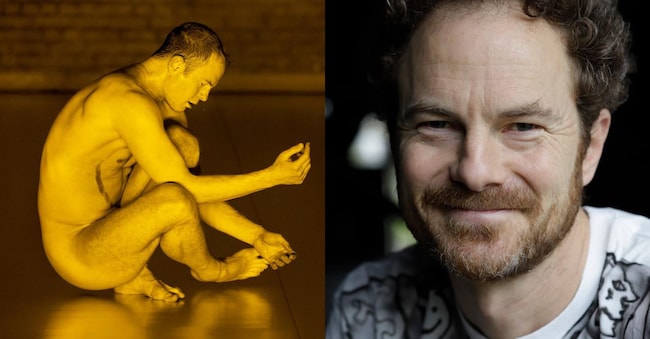
Among the lines of inquiry running through the autumn programme of this year’s FOG, Boris Charmatz’s work finds a new, essential and probing expression in “Muette”. Created last May at the Kaaistudios in Brussels as a continuation of the research begun with *SOMNOLE* – the previous solo piece, also presented at FOG – the French artist’s new work finds its choreographic substance in the body and in silence. These are the sole cornerstones of a creation in which there is no room for music, stage design or costumes; instead, it relies entirely on the dancer’s bare presence. His work is a sort of celebration of male nudity that bewilders, disorients and makes a powerful impact, whilst at the same time revealing the most intimate vibrations of physicality. It is a silent dance that explores sensitive, quiet and solitary nudity, restoring to it a breath capable of touching emotional depths never fully laid bare. “A dance that thunders softly”, as Charmatz describes it, evoking realms of tension and bodily resonances which, precisely through silence, reveal some of the most powerful expressive capacities of ‘dance itself’.
A warning, a goal and perhaps even a yearning that run through the work of this French dancer and choreographer and which, in *Muette*, seem to evoke, rekindle and reinterpret, all at once, certain memories of dance theatre and its unforgettable potential. A radical, unconventional choreographic work that would probably have benefited from greater conciseness and a more rigorous use of time, in order to preserve the impact of the work.
These explorations and shifts continue to raise the question: to what extent is it possible to strip dance of its embellishments whilst retaining its capacity to generate meaning, emotion and connection?
FOF Performing Arts Festival, Triennale Milano, from 19 September to 15 November

