
Fontanafredda, in the La Rosa farmstead short-term rental accommodation
Hospitality is now worth 6.5 million in revenue, while 1 million comes from the shop selling wine

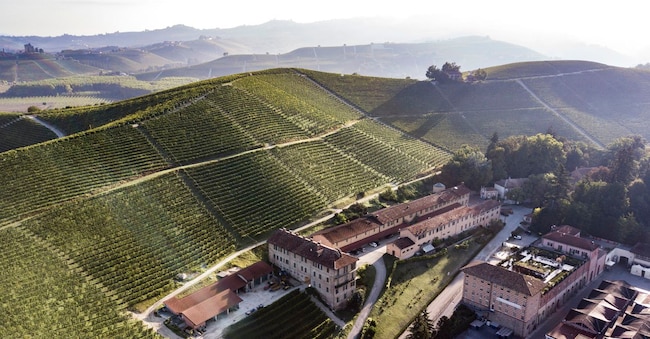
Another piece is added to the renewal project focused on wine and hospitality that Fontanafredda started in 2008, when entrepreneurs Oscar Farinetti and Luca Baffigo acquired the Piedmontese estate - born in 1858 from the love story between King Victor Emmanuel II and the 'bella Rosina', daughter of the drum major of the Savoy army - from Banca Monte dei Paschi di Siena, which had owned it for 76 years. The strategy followed by the new ownership was to diversify.
First of all the wines: 'We still produce seven million bottles, as we did when we acquired the estate,' explains Andrea Farinetti, Oscar's son who manages the property, 'but since then the mix has changed completely: at the time of Monte dei Paschi we produced five million bottles of Asti Spumante and two million wines; today the bottles of Asti have become one million, while six million are wines, including one million bottles of Barolo: we are the largest private producer, not counting the bottlers. A producer that does not do everything alone, however, because it can count on 280 farmer-grape growers, according to a formula that is used elsewhere in cooperative wineries.
Fontanafredda's investments in vineyards are destined to continue: 'We are the largest producers in Alta Langa and we can still develop in height,' Farinetti explains, adding that the objective is to segment towards the top of the range. For this reason, the company has resumed making wine separately from all the grape varieties, enhancing the cru and the eight territories in which it is present, starting from Serralunga d'Alba where it is based and where in September it organises the 'Serralunga day', a day that celebrates the Barolo produced in the municipality.
Alongside wines, since his arrival Farinetti has also focused on catering and hospitality. On the first front, he has entrusted the reins of the kitchen to the Alciati brothers, who run Guidoristorante, a Michelin-starred restaurant inside the Villa Reale, as well as the bistro and the Garden for events by the lake. To flesh out the hospitality he has built a boutique hotel with spa and swimming pools, another hotel and a guesthouse, for a total of 35 rooms. Hospitality is now worth 6.5 million in revenue, while 1 million comes from the shop that sells wine. In 2024, Fontanafredda's turnover was 72 million euro (+3.5%), 55% of which came from exports; this year Farinetti expects to "grow even more". Waiting to start with the new project to complete the tourist-receptive offer: after having covered the high and medium segment, now it is time for short-let accommodation. "In the La Rosa farmstead, which belonged to the sharecroppers, we will obtain eight flats: we are a democratic company and, just as we make 10 euro wines, in the same way we want to offer an accessible hospitality product, a sort of Airbnb," says Andrea Farinetti. This is how the investments continue, after that in the last three years Fontanafredda - which has just published its fifth sustainability report containing progress on welfare, environment, packaging - has put 12 million euro into the estate, rising to 30 million since the acquisition. US tariffs do not frighten Farinetti: "There is a beginning of a backlash that makes us think about market diversification". To get around the obstacle, Fontanafredda is starting to work with cruise lines and airlines: on water and in the air, tariffs do not apply.

