
Food as an act of intergenerational justice
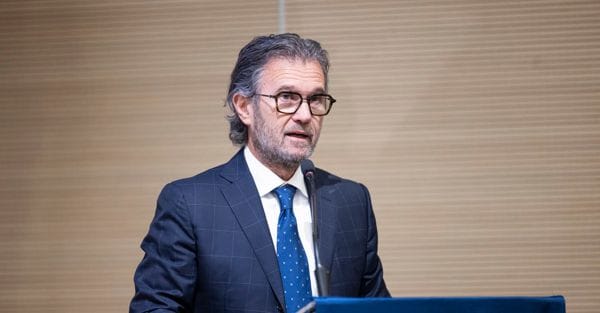
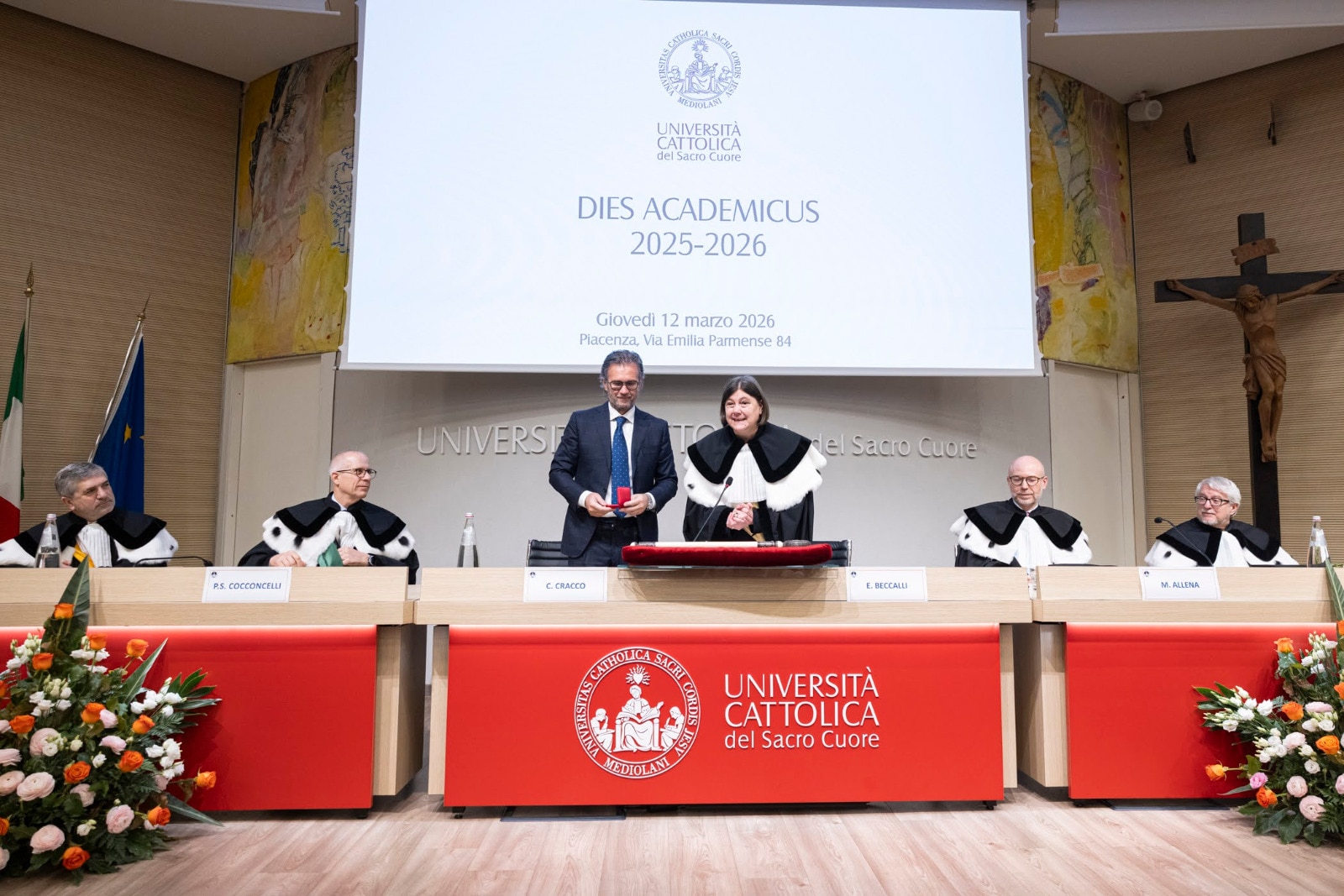
After the inaugural speech by Rector Elena Beccalli, the dies of the Piacenza-Cremona campus of the Università Cattolica del Sacro Cuore welcomed the keynote speech by Michelin-starred chef Carlo Cracco. "Innovation in the kitchen comes from the encounter between experience and the future: an authentic alliance between generations"

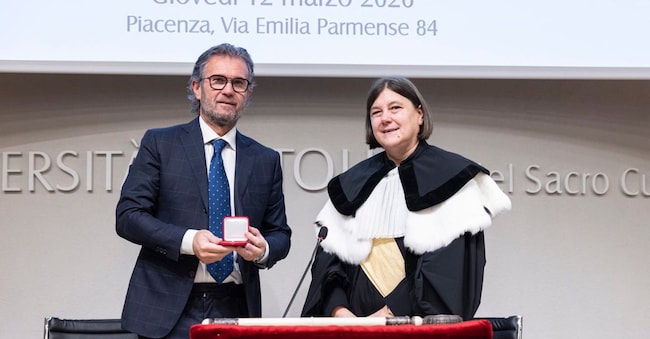
A dies academicus, that of the Piacenza-Cremona campus, under the banner of nutrition, sealed by the invitation to give the prologue to Carlo Cracco, who, said the Rector of the Università Cattolica del Sacro Cuore Elena Beccalli, "with the creativity of his dishes has contributed to making Italian cuisine a global symbol".
The rector's inaugural speech started from two assumptions related to the alliance between generations: 'In an era marked by an unprecedented demographic transition, the combination of nutrition and longevity represents a new frontier of human rights. Moreover, ageing should not be understood as a process of subtraction, but an extension of human dignity ensured also by food choices. These two assumptions encompass the interdisciplinary universe at the centre of the activities of the campuses of Piacenza and Cremona'.
On the first front, 'longevity means not just adding years to life, but life to years. This testifies to the link between nutrition, longevity and human rights'. But the problem of proper nutrition also concerns the younger generations. "In 2026, the global scenario depicts a paradoxical reality: for the first time in history, the number of obese children and adolescents has surpassed that of the underweight". This is "a political issue in the broadest sense, a top-level social issue".
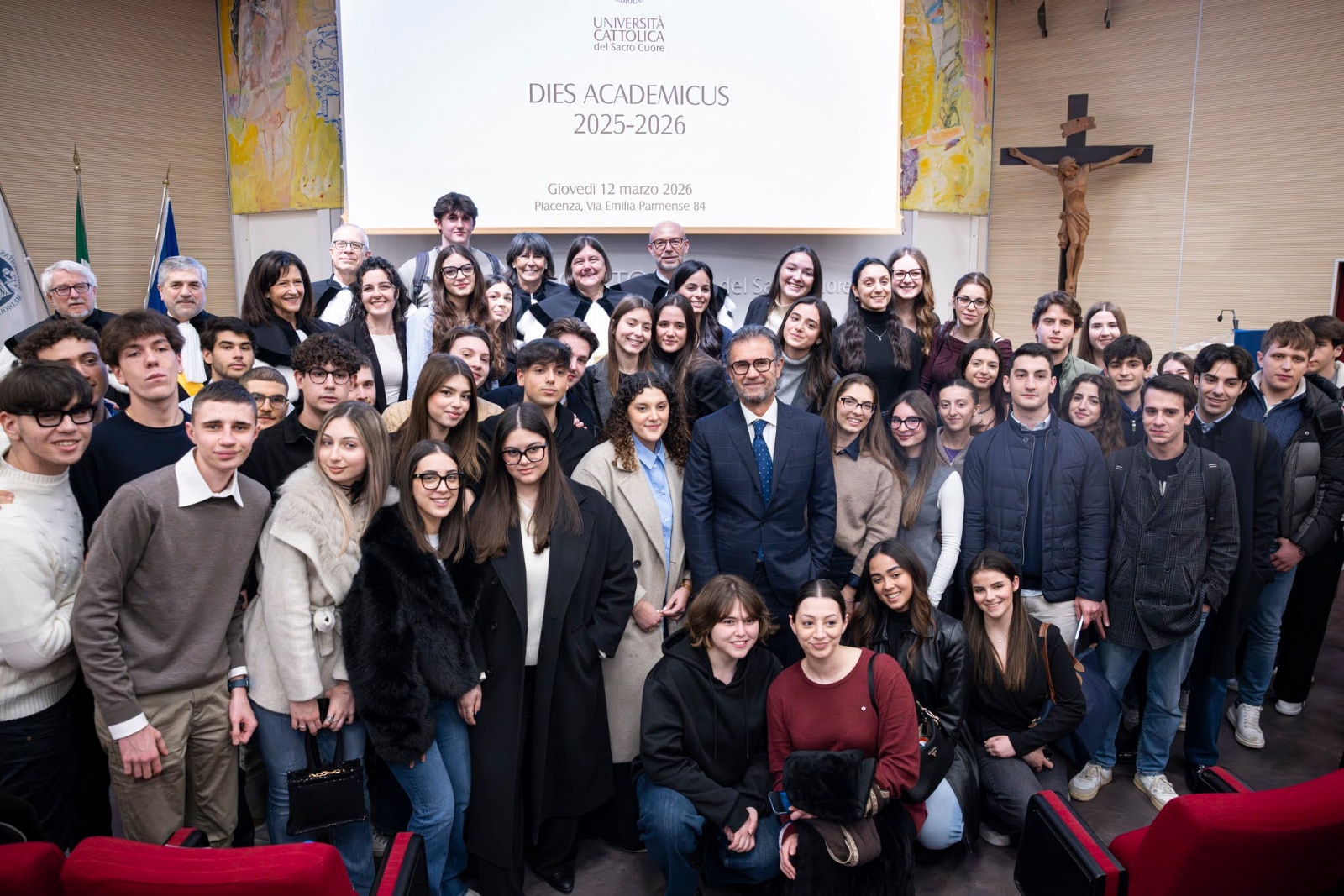
Professor Beccalli made a call to action on a shared commitment between institutions, the community and the world of research. 'To the institutions, so that they fully recognise clinical nutrition as a primary component of the essential levels of care. To communities, so that they rediscover the value of the shared meal, a powerful antidote to loneliness, which in turn represents one of the most insidious causes of malnutrition. To science, finally, so that it may continue to innovate in the field of food technology without ever losing sight of the centrality of the pleasure of taste and the quality of the food experience'. A concrete response is the creation of a new research centre of excellence on longevity on the Cremona campus, launched with the Bocconi University, through the support of the Invernizzi Foundation.
The Rector also recalled that 'if man is what he eats and if our humanity depends on responsibility towards each other, then ensuring nutritional security is an act of universal and intergenerational justice'. This is why 'combating food poverty and clinical malnutrition is not only a health objective, it is the only way to inhabit a society that can still call itself civilised'. It is necessary to assign relevance to social and environmental, as well as economic, sustainability, implying a development in the present that is not achieved at the expense of the future. "This points to a profile of intergenerational justice, based on an alliance between generations".
Brand connect


Newsletter Scuola+
La newsletter premium dedicata al mondo della scuola con approfondimenti normativi, analisi e guide operative
Abbonati