
Food exports, Trump's duties cost us €800 million. Grana Padano: tariffs more than doubled
Federalimentare's alarm: the drop in export volumes will be 30%. Grana Padano: until now the duty was 2.4 euro per kilo, now it rises to 6

4' min read
4' min read
Between 700 and 800 million euros in lost exports to the USA. This is the price that the Made in Italy food industry will have to pay on the altar of the duties imposed by President Trump. The calculations come from Federalimentare: the backlash for Italy will be 'a -10% drop in turnover and a -30% drop in export volumes,' said its president, Paolo Mascarino. Considering that in 2024 Italian agri-food exports to the US amounted to 7.8 billion euro - about one tenth of all exports in the sector - the accounts are soon done. And goodbye also to the growth rates of last year, when food & wine made in Italy heading overseas posted a growth of 17%.
'Federalimentare,' added Mascarino, 'is convinced that it will be decisive for us to be able to present ourselves in the EU with an unambiguous and pragmatic proposal that puts the national interests and those of our food sector at the centre. For this reason, as happened in Spain and France, we ask the government to be convened together with Confindustria'. Confcooperative Fedagripesca is also concerned. For its members, the US market represents 30% of all wine and 25% of cheese sold abroad: "A competitiveness problem is opening up that involves all companies in the sector," said Fedagripesca president Raffaele Drei, "because the depressive effect will involve the entire market. More generally, the president of Confcooperative, Maurizio Gardini, estimates "for every 10% drop in volumes, there is a risk of losing 15 thousand jobs throughout Italy". In the first instance, duties will cost American consumers: Coldiretti estimates a 1.6 billion euro impact for them, with a drop in sales that will damage Italian companies, in addition to increasing the phenomenon of Italian sounding: "Italy and Europe," says its secretary general, Vincenzo Gesmundo, "must continue the dialogue because the logic of duties and counter-duties is counterproductive for everyone". Centromarca has also launched a survey to measure the impact of the US duties: it seems that 47% of American consumers will maintain the quantity of Italian products purchased, while 30% will reduce it, and only 16% say they are willing to pay more to continue buying made in Italy. The five most bought Italian products? Pasta (50% of mentions), olive oil (46%), cheeses (38%), sauces (37%) and wine (33%), thus indicating that the agri-food sector will be among the hardest hit.
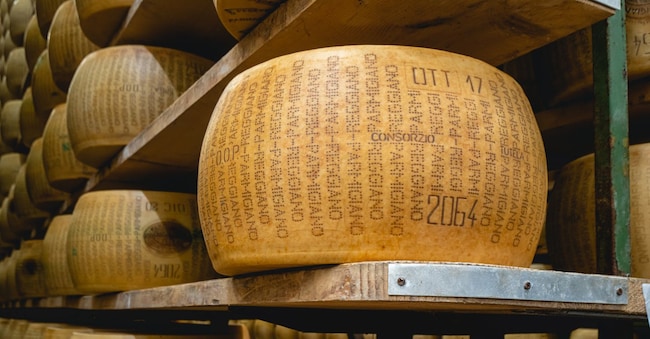
The spirits sector alone is worth more than 2 billion euros of exports to the USA, Federvini recalls: "The decision to apply duties represents a very serious damage for our sector," said its president, Micaela Pallini. "We know very well how much it can cost: in the past these measures have led us to lose up to 50% of exports to the USA. The Parmigiano Reggiano Consortium is more optimistic: 'The news of the duties certainly does not make us happy,' reads a note released on Wednesday night. 'But Parmigiano Reggiano is a premium product and a price increase does not automatically lead to a reduction in consumption. We will roll up our sleeves to support demand in what is our first foreign market'. More combative on the other hand is the Consortium of Grana Padano, for which the USA (with 215,000 wheels) is the third largest market, which disputes the calculations: "Up to now, a duty of 2.4 euros per kilo was applied on each exported wheel," explains the consortium's managing director, Stefano Berni, "with the 20% increase, the landing levy will rise to almost 6 euros. But the 39% shown on Trump's tables is not true as far as dairy is concerned, because the duty on entry into the EU for American cheeses is about 1.8 euro per kg, which is less than we have always paid'.
Assica recalls that the US market is the third largest destination for Italian cured meat exports, with 20,188 tonnes sold in 2024, a value of 265 million euros and a growth rate of 20.4%, which "could be seriously affected by the duties". Confagricoltura points to olive oil, pasta, ready-made sauces, and some wines as the Italian goods that will be most affected by the duties: "As Italy, we will certainly be penalised, particularly with regard to mid-range products," said its president, Massimiliano Giansanti. "The measures envisaged to support the hardest hit sectors will be fundamental: in fact, let us not forget that we also risk a massive outflow of products from other countries that will be affected by the American tariffs, such as China, for example.
On how to deal with the emergency, the Italian agricultural associations are united: 'We must not go in disorder now, but act united as Europe, with a non-subservient approach,' explains the president of Cia Agricoltori, Cristiano Fini, for example. On the contrary, among the industrialists in the food sector there are those - such as Illy, Lavazza or Granarolo - who are already thinking of Plan B. That of going to produce in the USA.


