
'Too much confusion on food labels': the opinion of the EU Court of Auditors
In the report presented by the judges, the lack of uniformity between countries emerges, which leads consumers to get lost in a maze of misleading claims with negative effects on health as well

3' min read
3' min read
When in Rome, do as the Romans do. The EU Court of Auditors certifies the European blunder of food labelling rules in a report that comes after those on CAP aid and organic farming, sounds like an appeal to the new Commission, also in the light of the enlargement of the competences of the new commissioner, Luxembourger Christophe Hansen, to agriculture and food. The current regulatory vacuum means, the report denounces, that consumers can easily get lost in a maze of misleading claims with negative effects on health as well.
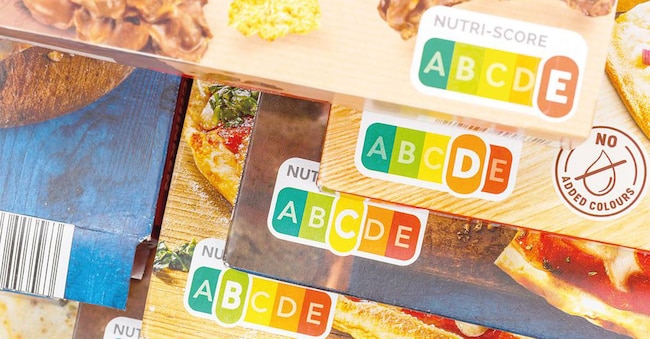
Among the national champions targeted by the EU Court are also the infamous French Nutriscore, a simplistic labelling system that penalises the products of the Mediterranean Diet, and the Italian antagonist Nutrinform on which the government is trying to build a cross-party alliance in Brussels in view of a European regulation of the matter, the urgency of which is made clear by the report.
Food labels should provide information on the content and properties of food, but are often used to make products more attractive by emphasising supposed benefits, such as being healthy, organic or gluten-free. There are EU rules on the basic information to be stated on the label but with too many gaps and problems on controls and fines. 'Instead of providing clarity, labels often create confusion: there are hundreds of schemes, logos and indications that the consumer has to decipher,' stressesreport manager Keit Pentus-Rosimannus. Companies can be very creative about what to report and EU regulations do not keep pace with a changing market' with the result that '450 million consumers are defenceless against misleading messages'.
The regulatory vacuum in short leaves too much room for misleading information. For example, health claims are permitted for products high in fat, sugar or salt, with sweets and energy bars advertised by highlighting the "high protein content". Shoppers are increasingly exposed to health claims without any scientific basis, such as 'contributes to energy recovery' or 'improves physical performance', with potential harmful effects on health. People with food allergies are faced with overly cautious or vague allergen labels. Vegetarians and vegans also have to be careful, as there is no EU-wide definition.
Front-of-pack nutrition labelling continues to be an issue of contention in Brussels, but only a standardisation of rules can help consumers make healthier food choices and potentially prevent food-related diseases. Whereas the co-existence of different schemes in individual EU countries, each with different meanings and purposes, ultimately has the opposite effect: it creates confusion and disorientates consumers. Add to this the increasing number of labels, logos and voluntary claims used to attract consumers. These include so-called 'clean labels' indicating the absence of certain elements (e.g. 'antibiotic-free') and non-certified qualities (e.g. 'fresh' and 'natural'), but also the wide variety of environmental claims that are nothing more than an example of environmental window-dressing. Only seven countries, including Italy, on the other hand, have introduced mandatory origin labelling for certain products, contributing to unequal access to information.

