Budget Law

For Culture some positive signs for forgotten territories and sectors

Few structural interventions and a constellation of micro-grants to national events and bodies that in total dissipate a value of almost 14 million euro

by Roberta Capozucca and Giuditta Giardini

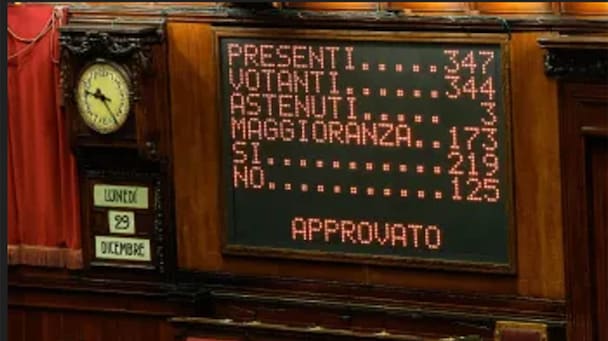
La Camera dei Deputati ha approvato il 30 dicembre 2025 la Legge di Bilancio 2026 con 216 voti favorevoli

8' min read

Translated by AI
Versione italiana

8' min read

Translated by AI
Versione italiana

After a parliamentary procedure marked by a passage through the Senate that lasted 63 days, at the end of the year, on 30 December 2025, the Chamber of Deputies approved the Budget Law 2026 with 216 votes in favour, 126 against and 3 abstentions. On the cultural front, no big news emerged: few structural interventions and a constellation of micro-contributions to events and national bodies that in total dispersed a value of almost EUR 14 million. Positive, on the other hand, is the funding for some sub-sectors that have so far remained on the margins of state spending policies and the attempt to introduce, at least for some measures, a monitoring and evaluation system. While waiting for the text of the law, the main measures for culture contained in the 'State budget for the financial year 2026 and multi-year budget for the three-year period 2026-2028' are listed below.

National Fund for Museum Federalism

Article 1, paragraphs 551-552, establishes, in the estimate of the Ministry of Culture, the National Fund for Museum Federalism (FNFM), with an endowment of EUR 5 million annually starting from 2026. The aim is to provide an instrument of structural support to non-state museums and places of culture, with particular reference to the coverage of ordinary management and enhancement needs: from the renewal of didactic apparatus to small-scale set-up interventions, up to the organisation of events. The Fund is part of the so-called 'cultural federalism', initiated with Legislative Decree No. 85 of 28 May 2010 on state-owned federalism, which allowed the State to transfer assets of historical and artistic interest to territorial entities according to criteria of territoriality and subsidiarity. The procedure - updated in April 2024 - envisages that the transfer of cultural assets takes place through the signing of an Enhancement Agreement, preparatory to the redevelopment, protection and preservation of the asset, concluded between the territorial entity concerned, the Agenzia del Demanio (which adopts the final transfer measure) and the Ministry of Culture. In this context, the FNFM aims to strengthen the presence of the State in the ordinary support to a cultural heritage that is widespread throughout the country. The same MiC perimeter also includes the allocation for Matera 'Mediterranean Capital of Culture and Dialogue 2026', with 4 million for 2026.

Loading...

Bonus Valore Cultura e Consumi Culturali

Article 1, Paragraph 539 introduces a new electronic card, the National Youth Card, aimed at accessing the Bonus Valore Cultura, already provided for by Article 1, Paragraph 413 of Law No. 160 of 27 December 2019. As of 2027, the new Card will replace the current 'Culture Youth' and 'Merit' Cards. The card, awarded in the year following the attainment of an upper secondary school diploma as long as it is within the 19th year of age, will be usable for tickets to shows, books, subscriptions to periodicals, music, musical instruments, admissions to museums and cultural sites, as well as courses (music, theatre, dance, languages), within an overall spending ceiling set at 180 million per year. The per capita amount will be determined each year by decree of the Minister of Culture, on the basis of six-monthly monitoring and available resources. A differentiation of the amounts - e.g. on the basis of merit or economic conditions - or the introduction of restricted quotas for specific expenditure categories is not excluded, given that the rule refers to the setting of plural 'amounts'. According to estimates by the Osservatorio CPI of the Catholic University, however, the individual value should remain substantially unchanged compared to the past. The real novelty about this instrument, which has been in force since 2016, is the introduction of a system for monitoring and evaluating expenditure (Art. 1, paras. 542-543 LB). Every six months, the Ministry of Culture will have to submit an analysis on the performance of the Value Card to the General State Accounting Office. This obligation is part of the broader framework outlined in Article 130 of the Budget Law, which requires each ministry to evaluate at least one policy area: for the Ministry of Culture, the Value Card could be the pilot programme. However, crucial nodes remain unresolved that monitoring should finally clarify: what share of cultural consumption is actually additional to the counterfactual scenario? Which types of goods and services are purchased? Which merchants benefit most and through which channels? And, above all, how can the incidence of ascertained fraud worth EUR 17.2 million to date be reduced?

Alongside this bonus, the Manoeuvre introduces further measures aimed at promoting cultural consumption: thefund for the purchase of textbooks for families with ISEE up to 30,000 euro, the contribution to families for students in parity schools (again with an ISEE threshold), and the refinancing of theSingle Fund for pluralism and digital innovation in information and publishing (60 million for 2026), with expected effects on the publishing and information ecosystem.

Fund for therapeutic culture and social care

Paragraph 822, introduced during the parliamentary examination, establishes, in the estimate of the Ministry of Culture, the Therapeutic Culture and Social Care Fund for the purpose of encouraging the enjoyment of the performing arts and cultural heritage, as therapeutic tools, to provide relief to persons with disabilities or in situations of social marginality. The initial allocation, amounting to EUR 1 million per year from 2026, which may be supplemented by additional resources from other social spending chapters, including those deriving from the 8 per mille, is intended to support projects that integrate the cultural dimension into welfare and care policies, recognising the value of beauty and creativity as therapeutic and social cohesion factors. The criteria and methods for distributing the Fund will be defined by an ad hoc decree of the Minister of Culture.

Fund for the Italian music system

In the budget of the Ministry of Culture, a Fund for the Italian music system is also established, with an endowment of EUR 1.5 million per year as of 2026 (Art. 1, paras. 825-827, LB). The Fund is intended to finance interventions for the development, strengthening and relaunch of the competitiveness of the sector, as well as for the promotion of the national music system. Beneficiaries are companies producing and organising contemporary popular music performances that have been active for at least one year. This is a long-awaited recognition for a sector that plays a central role in the country's cultural and creative supply chain, but has so far benefited from fragmented public support.

Cultural Divulgation

The 2026 Manoeuvre, with Art. 1, par. 901, authorises an expenditure of 2 million euros per year starting from 2026 for programmes for the promotion of cultural heritage, with particular attention to live activities and UNESCO heritage sites.

In the same framework, Article 1, paragraph 823 - introduced during the Senate examination - provides for further targeted interventions. In particular, letter a) authorises the expenditure of 1 million Euros per year for each of the years 2026, 2027 and 2028 for the establishment of the Matteti Prize for Cultural Cooperation, aimed at promoting cultural cooperation projects and initiatives between Italian cultural bodies and institutions and intellectuals, artists, cultural operators, as well as States and international organisations in Africa or belonging to the so-called Global Mediterranean. Letter b) authorises an expenditure of €1 million per year for each of the years 2026, 2027 and 2028 for the establishment of the Olivetti Prize for Cultural Accessibility, aimed at supporting projects that favour the development of culture as an accessible common good integrated in the life of communities, as well as cultural regeneration interventions in disadvantaged territorial contexts.

Finally, letter c) of the same paragraph allocates a contribution of €500,000 per year starting from 2026 to the MaXXI Foundation, in order to guarantee the functioning of the international artistic and cultural pole of the Mediterranean, called MAXXI Med, to be realised in the city of Messina. This also includes the authorisation, for 2027, of an expenditure of €500,000 for the continuation of the Grande MAXXI project and for the operational start-up of the MAXXI Med project to be realised in the city of Messina.

Cinema and Audiovisual: the node of allocations

More controversial is the picture for cinema and audiovisual on which paragraph 554 intervenes. In 2025, theCinema and Audiovisual Fund reached a budget of just under 700 million Euros, compared to the approximately 450 million of theNational Fund for Live Entertainment (Fnsv, the former FUS). In 2026, a paradoxical rebalancing is looming: support to cinema should drop to 610 million euro in 2026 and 500 million in 2027. At the same time, the manoeuvre strengthens expenditure control mechanisms: the Ministry of Culture will have to activate a quarterly monitoring of the trend of incentives, with direct information flows to the Ministry of the Economy, so as to verify the use of resources in real time and prevent imbalances in public accounts.

The most relevant novelty for companies, however, concerns thetax credit. With the new Budget Law, the season of the 'splafonamento', the unwritten principle according to which, if a project was eligible, the tax credit was recognised even beyond the resources initially allocated, is effectively archived. From now on, tax credits for film and audiovisual production will have to fall within an impassable expenditure ceiling, defined annually by the decree allocating the Fund. The manoeuvre also intervenes on entertainment workers. Paragraph 840, introduced by the Senate, modifies the rules on the requirements for access to the discontinuity allowance in favour of workers in the entertainment sector, raising, firstly, the ceiling of declared income below which it is possible to access the benefit from 30,000 to 35,000 Euros, and secondly, providing for a derogatory regime for film and audiovisual workers, more favourable in terms of the minimum number of contribution days required.

Within this framework, there are also regulations that affect the cultural and media industry in a broader sense: from 1 January 2026, an annual contribution 'of a tax nature' (2 per thousand of revenues) is introduced to finance the operation of the Communications Guarantee Authority, to be paid by electronic communications, audiovisual, platform, publishing and digital services providers.

Too many targeted contributions

The remaining share in the Ministry of Culture is actually divided into micro-financing to national cultural institutions, all of which were introduced by the Senate during the review. To the Med-Or Foundation for the conduct of research, studies and publications on Russian influence in Europe and North Africa, a contribution of 200,000 euros is granted, and to the Southeast Europe Observatory of the Luigi Einaudi Foundation a contribution of 300,000 euros for each of the years 2026-2027. For the year 2026 a contribution of Euro 500,000 is allocated to the Fondazione "I Pomeriggi Musicali" that manages the Teatro Dal Verme in Milan, Euro 1 million for the Fondazione "Festival dei due Mondi" and Euro 2 million for the Milan Symphony Orchestra. For 2028, 5 million euros are allocated in favour of the Teatro alla Scala di Milano to celebrate the 250th anniversary of its foundation and 1 million euros in favour of the Fondazione Teatro Amilcare Ponchielli

The Senate also increases the expenditure authorisation to guarantee the continuation of the activities of the International Academy of Imola, of the Chigiana Music Academy of Siena and of the Fondazione Scuola di musica di Fiesole by €300,000 for the year 2026, from €2.7 million to €3 million, and provides for it also provides for the allocation of 300,000 euros for the implementation of initiatives to mark the 90th anniversary of the death of Antonio Gramsci and 100,000 euros annually to the Giorgio Napolitano ETS Foundation. In addition, €1 million is allocated for the centenary of the birth of Pio La Torre and €200,000 to refinance the Portal of sources for the history of the Italian Republic, a project coordinated by the National Research Council. And then a contribution of €300,000, for each of the years 2026 and 2027, to carry out study, research and cultural promotion activities on the value of reading on paper and writing in cursive by hand at the Osservatorio Carta Penna & Digitale. Lastly, the expenditure of EUR 300,000 is authorised in this context for the modernisation of the oratory of the Parish S. Maria del Soccorso' based in Vibo Valentia, of 400 thousand euro for the year 2027, for the construction of a primary school located in the hamlet 'Vena Superiore' of the municipality of Vibo Valentia, and of 150 thousand euro for the year 2026 in favour of the Association 'Il Dono', based in Via della Pace, of the municipality of Jonadi (Vibo Valentia).

Copyright reserved ©
Loading...

Brand connect

Loading...

Newsletter

Notizie e approfondimenti sugli avvenimenti politici, economici e finanziari.

Iscriviti