Letter to the saver

For Royal Caribbean more luxury cruises and use of big data

Compared to its competitors, the airline is more upmarket. However, it is less diversified in relation to routes and passenger nationalities

by Vittorio Carlini

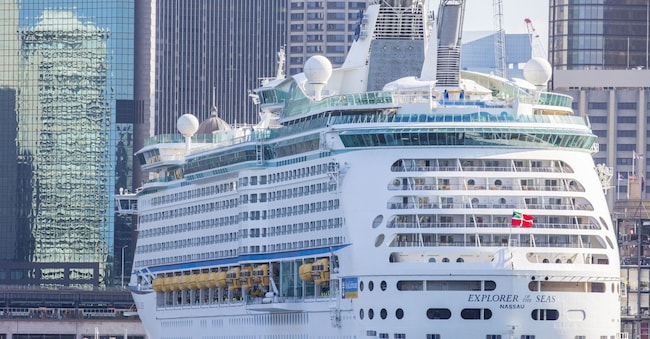
Royal Caribbean MS Explorer of the Seas

6' min read

6' min read

The protagonists on the stock market over the past 12 months? For the most part, for better or worse, the usual technology stocks and - unfortunately - defence and military stocks.

The Stock Exchange

On closer inspection, however, there is also another segment that has performed well: cruises. In particular, Royal Caribbean Cruises has maintained a remarkable speed. The US group in the last year has risen -according to Seeking Alpha- by 78.8%. The figure is significant because, over the same period of time, the Nasdaq rose by only 23.6%. One might say: extending the monitored period changes the situation. The reality is not like that: the dynamics remain the same. Looking at the last two years, Royal Caribbean has increased in value by over 250% while the index of hi-tech stocks has to make do with an increase of 69%. What's more: from 2021 to the present (five years), the 'travel-by-ship' company has grown on the list by 394.6% compared to the Nasdaq's 102% increase. Of course, individual hi-tech companies, such as the chip star Nvidia, beat Royal Caribbean on the stock exchange - and by a lot. However, the validity of the underlying argument remains: the group has done well in the market.

Loading...

The economic trend

.

Yeah, good. But what were the reasons for this trend? One market mover was the improvement in the company's balance sheet. The company - like the whole industry - suffered from the collapse following the Covid pandemic. The halt to cruises sank the financial numbers. According to the Bloomberg terminal, adjusted revenues in 2020 and 2021 fell to USD 2.2 billion and USD 1.5 billion respectively. At the same time, the bottom line of the income statement was marked by losses of $4 billion and $4.9 billion. In 2022, however, there was the beginning of the comeback. Turnover - in the wake of the cruise recovery - rose to 8.8 billion while adjusted profitability remained in the red (-1.9 billion). The situation turned completely around in the following financial year (2023). In that year, Royal Caribbean posted an adjusted profit of USD 1.8 billion. Then, in 2024, revenue rose to 16.48 billion and adjusted net profit to 3.24 billion.

SEMESTRI A CONFRONTO

Loading...

First semester 2025

The trend, on closer inspection, continued in 2025. In the first half of the financial year, revenues amounted to USD 8.54 billion (7.8 billion twelve months earlier) and net profit rose to USD 1.9 billion compared to USD 1.2 billion in the first half of 2024. With regard to turnover, a boost came from ticket sales, which accounted for almost two-thirds of the turnover (69.6% of the total). The accounting item grew by 9.4 %, from 5.4 billion in 2024 to 5.9 billion (2025).

The jump is the result of two factors. On the one hand, there is the increase of 274 million linked to the so-called yield. That is, the average yield per passenger and per cruise day, which depends on both the price level and the cabin occupancy rate. On the other hand, there is significant growth (+4.4%) in fleet capacity (more passengers carried), thanks to the entry of the ships "Utopia of the Seas" and "Silver Ray". The remaining 30.4% of turnover, on the other hand, was related to on-board activities (plus other income). The latter amounted to EUR 2.6 billion, an increase of 7.7% compared to the same period last year. Here too, the dynamic was caused by both higher capacity (+106 million) and better yield (+79 million). A mix resulting from more passengers and higher prices.

PASSEGGERI PER AREA GEOGRAFICA

Loading...

In such an environment Royal Caribbean was nevertheless able to contain its operating expenses. These settled at 4.36 billion, compared to 4.2 billion a year earlier. As a result, the marginality at Ebit level increased. In the first half of 2024 it had been around 23.6 per cent, while at the end of last June the indicator was 26.6 per cent. Clearly, in the wake of such numbers, the market - between ups and downs - has rewarded the stock on the stock exchange. Not least because the star-studded cruise group - again with the publication of the Q2 2025 numbers - improved its full-year guidance. In April, adjusted earnings per share were between $14.55 and $15.55. Now adjusted EPS is expected to be in the range of $15.41 to $15.55.

RICAVI E AREE GEOGRAFICHE

Loading...

Strategies

.

So far, some considerations between stock market dynamics and the income statement. What, instead, are the main moves to support the business? A first lever is certainly that of greater positioning - compared, for example, to the rival Carnival Corporation - in the premium and luxury segment. Royal Caribbean International (group brand) presides over the mainstream, but strength also lies in Celebrity Cruises, a premium brand, and Silversea, which is active in pure luxury and adventure travel. This structure brings higher yields and higher margins. The pipeline of ships, moreover, confirms the strategy: the 'Star of the Seas', the second Icon-class, or the new unit such as 'Celebrity' aim at transforming the ship into a destination in itself, with larger suites, thematic attractions and premium-priced services. The model is less diversified than Carnival itself, which with Costa, Aida and P&O covers more entry-level markets. Royal Caribbean, on the other hand, is more focused on the high-end. This increases pricing capacity, but on the one hand exposes the company more to the risk of a possible slowdown in demand; and, on the other, makes it potentially more difficult to exploit the fact that cruise passengers often want to experience a more expensive one after their first trip.

Private destinations

.

However, it is not just about ships and luxury. The group is pushing - similarly to its competitors - on private destinations. CocoCay has proven to increase average spending, and the model will be replicated with Royal Beach Clubs on Paradise Island (2025) and Cozumel (2026). Controlling the port of call means maximising revenue and differentiating the offer. That offer is also addressed through the use of digital and big data. Here, for example, on the one hand online platforms and on-board apps favour pre-departure sales of catering packages, excursions and services. On the other, the study of customer data enables a better understanding of how demand is moving.

The indebtedness

.

All as easy as sunbathing on the beach, then? The reality is more complex. A first front to remember is that of the financial structure. The group, like all companies in the sector, after Covid - when its debt exploded - started a process of deleveraging. According to the Bloomberg terminal, in 2019 the total debt was 11.7 billion. In 2022 it jumped to 23.9 billion. From there, the company made a significant push to bring the debt position down. At the end of the last quarter, the 'total debt' amounted to USD 19.5 billion (20.6 at the end of 2024). Similarly, the 'net debt to EBITDA ratio' gradually decreased. According to ValueSense, the 12-month rolling indicator as at 30 June was 3 times. On the one hand, this value is - according to the company - lower than the debt covenants themselves; but, on the other hand, it still remains high. Consequently, the do-it-yourselfer has an obligation to monitor the development of the financial structure.

Not only that. Royal Caribbean is not very diversified with respect to routes or customer origin. Regarding the first theme, in the last quarter, 62.2% of revenues were generated by North American and Caribbean itineraries. With regard to the second - again in the second quarter of 2025 - revenue from US passengers was worth 76% of the total. Well: such a pronounced concentration means high margins when the US market is growing, not least because American customers spend more and have a greater propensity for premium. But at the same time it increases exposure to specific risks: weather events in the Gulf of Mexico, geopolitical tensions or economic slowdowns in the US can have a direct and disproportionate impact on results. These are situations that the do-it-yourselfer would do well to always keep in mind.

SCADENZE ANNUALI DEL DEBITO

Loading...

Evaluations

That said, what are the company's stock market multiples? According to Seeking Alpha, the ratio of price to non-GAAP forward earnings is 20.88 times. That is: not a low value, when compared to the reference sector. The PEG, again non-GAAP forward, is instead at 0.92. That is lower than the median of the comparison sector. Beyond that, according to Seeking Alpha: "Royal Caribbean's valuation is stretched. For example, the price/turnover ratio is 5.65, higher than the comparison median (...). The price/book ratio is also significantly high at 10.76'. In short: the do-it-yourselfer will, as always, have to tread carefully.

Copyright reserved ©
Loading...

Brand connect

Loading...

Newsletter

Notizie e approfondimenti sugli avvenimenti politici, economici e finanziari.

Iscriviti