Collectors

For those who are always on the move, art is great therapy

French-Vietnamese patron and entrepreneur Hélène Nguyen-Ban talks about her passion and how she uses artificial intelligence to help contemporary art.

by Patrizia Sandretto Re Rebaudengo
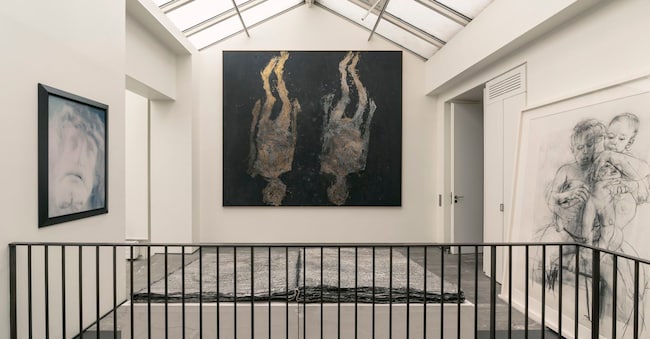
La casa di Nguyen-Ban a Parigi: da sinistra, “White Christ” (1989), di Andres Serrano; un’opera di Georg Baselitz;“Reproduction drawing III (after the Leonardo cartoon)” (2009-2010), di Jenny Saville; al centro, “The Secret Life of Plants”(2001) di Anselm Kiefer. ©Invisible Collection

5' min read

Translated by AI
Versione italiana

5' min read

Translated by AI
Versione italiana

"Art has always been my anchor and my obsession, a way of weaving together the fragments of my multicultural identity," Hélène Nguyen-Ban confides. A French-Vietnamese collector, patron and cultural entrepreneur, Hélène grew up in Africa, but has lived continuously moving between continents. After a career in the world of luxury and fashion, she dedicated herself to the promotion of contemporary art internationally, with a focus on emerging practices and intercultural narratives. She is active in various committees and boards of museum institutions and foundations, contributing to the development of exhibition programmes and building platforms for dialogue between artists, curators and global audiences. In recent years she has founded initiatives that explore the relationships between art, new technologies and contemporary forms of collecting such as DOCENT, the first platform powered by artificial intelligence, designed to make the discovery of contemporary art more accessible and personal.

Un ritratto di Hélène Nguyen-Ban.

WHAT WAS YOUR FIRST ACQUISITION? AND THE LAST?

Loading...

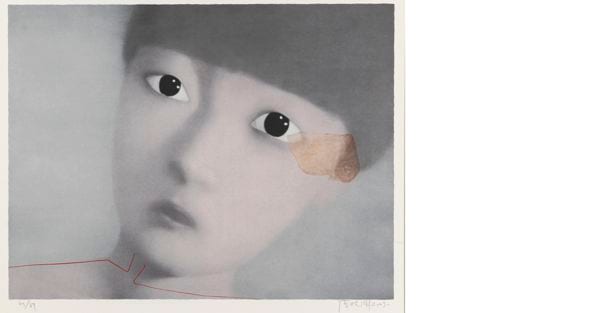
My first real encounter with contemporary art happened by chance in 2001 when, walking past the Enrico Navarra gallery in Paris, I was enchanted by Zhang Xiaogang's portraits. Those impassive gazes, which concealed all emotion, resonated deeply with my Asian upbringing, where showing feelings was considered vulgar. The most recent acquisition is a work by Korean artist Moka Lee. Her portraits, layered and elusive, echo the silent intensity of Zhang Xiaogang, and at the same time speak of our age dominated by social media and masks, where identity constantly oscillates between visibility and concealment.

When AND HOW DID YOU START COLLECTING ART?

I started almost by chance, but soon collecting became a form of therapy. Having lived in constant movement between Africa, Asia and Europe, I unconsciously tried to build a sort of refuge, surrounding myself with objects that could serve as roots. In the beginning, my collection included antiquities, icons and ritual art from different civilisations. After a chance and lucky meeting with Zhang Xiaogang, my passion shifted to contemporary art. Thanks to Vietnamese artists such as Danh Vo, Mai-Thu Perret and Thu-Van Tran, I delved into the intersections of Asian cultural heritage and Western thought. Over time, this passion turned into a kind of vocation: I co-founded a gallery that opened with an exhibition by Cameroonian artist Pascale Marthine Tayou dedicated to diversity and cultural dialogue. Today, my collection reflects both my personal journey and the deep human relationships I continue to cultivate with artists around the world.
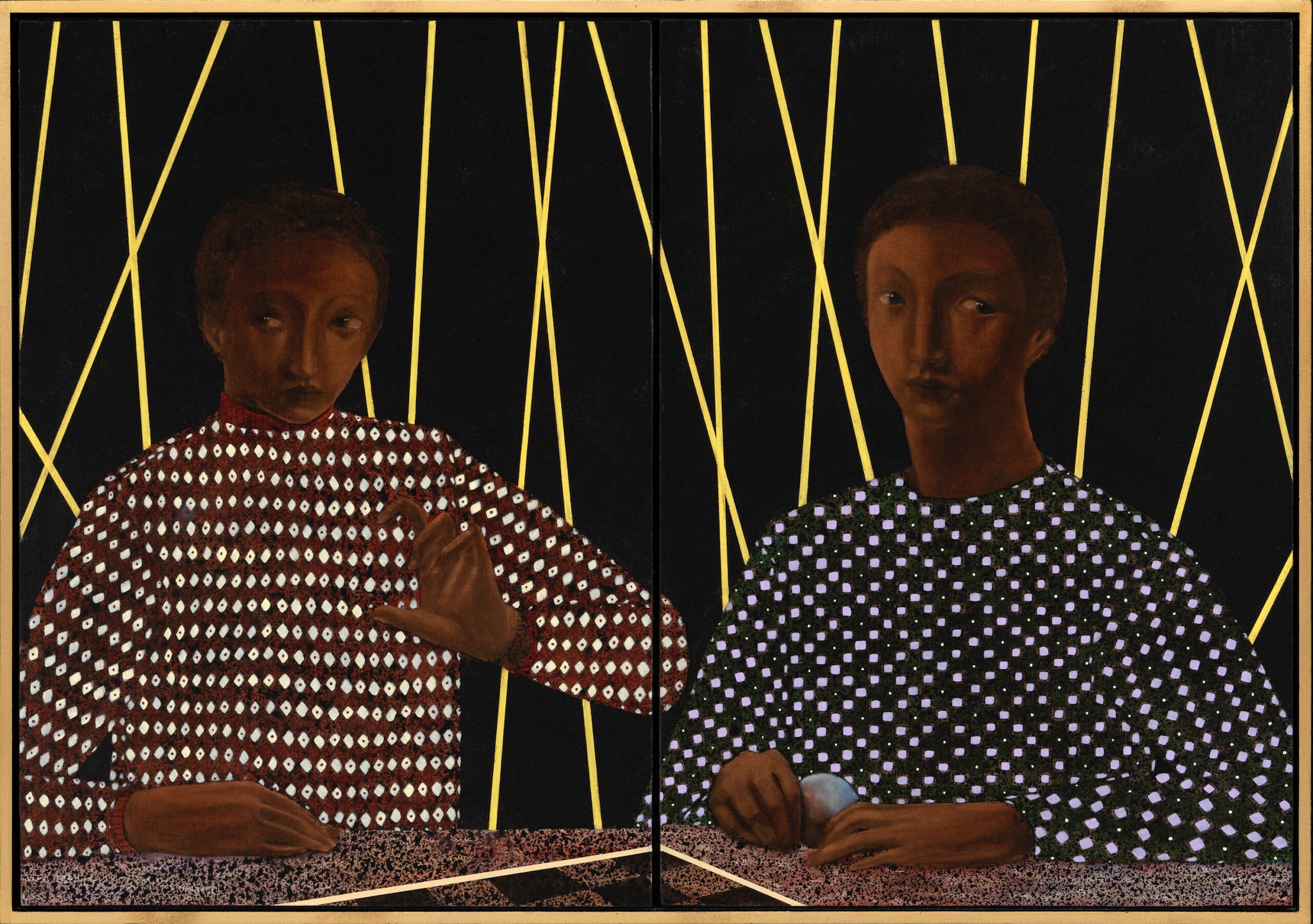
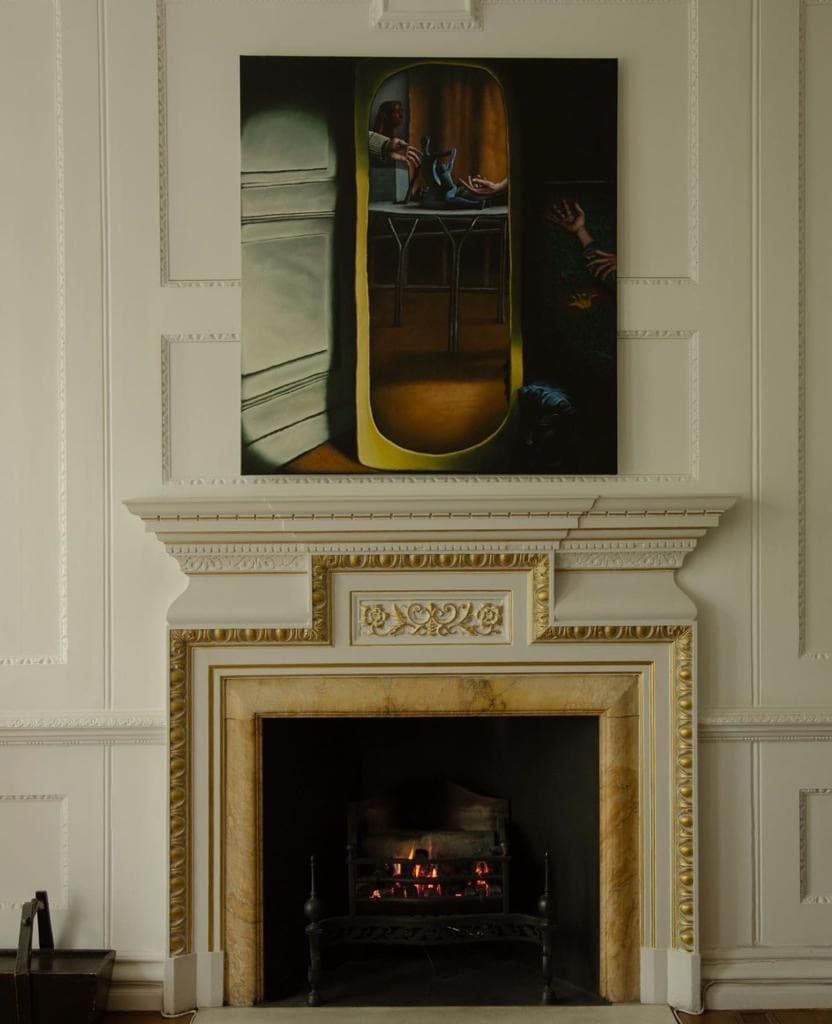
“Partita Di Scacchi” (2022), di Jem Perucchini.

HOW DO YOU SELECT THE WORKS TO BE ACQUIRED? DO YOU RELY ON GALLERY OWNERS OR CURATORS?

I do not choose rationally. What attracts me is the mystery, the ability of a work to surprise me day after day. Whether it happens in an artist's studio, at a biennial or by chance, it is always a coup de cœur, a thunderbolt, an instinctive call. Collecting, for me, is not a choice or a premeditated decision but a vital need, a way of reassembling the fragments of my identity into a coherent unit.

WHICH EMERGING ARTISTS DO YOU KEEP AN EYE IN MIND AND WHICH ARTISTS OF THE PAST DESERVE, IN YOUR OPINION, A NEW LOOK?

If I could, I would live with the Salvator Mundi, but it is a bit late now. Leonardo da Vinci remains, for me, the artist-scientist par excellence, capable of fusing observation and poetry into pure genius. In his wake, I rediscovered his pupil Giampietrino, who brought that light to the Lombard Renaissance. Among the emerging voices, I am fascinated by the Italian-Ethiopian Jem Perucchini: his portraits, which recall the allure and materiality of a fresco, reinvent sacred iconography to reinsert black bodies into the history of Western art in a refined dialogue between heritage, myth and contemporaneity.

“The phantom”(2019), di Bendt Eyckermans. ©Thea Løvstad

YOUR COLLECTION SPANS THE WORKS OF ARTISTS LIKE MARLENE DUMAS, THOMAS SCHÜTTE AND LYNETTE YIADOM BOAKYE. HOW DO YOU APPROACH THE INTEGRATION OF CONTEMPORARY ART IN HISTORICAL CONTEXTS, SUCH AS YOUR RESIDENCY IN LONDON?

Architecture, like art, preserves memory; every surface, every corner bears the traces of those who have gone before us. My Victorian house, built by Royal Academician Sir Ernest George in 1884 and later home to the Polish Royal Air Force, holds a noble and courageous legacy, a glorious page of Polish, British and European history. Honouring this past while shaping the present seems essential. This prompted me, for example, to hang on a wall a work by the Polish artist ML Poznanski, whose reflections on memory, time and identity take on new depth in such a meaningful context. For me, integrating contemporary art within those walls is a way to bring past and future into dialogue, to experience history and, at the same time, constantly reinvent it.

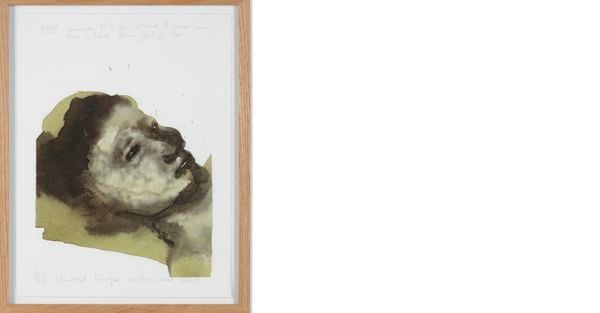
“Not going to tell you where I come from, nor where I am going to”(2005), di Marlene Dumas. ©Thea Løvstad

YOU ARE VERY INVOLVED WITH INSTITUTIONS AND INITIATIVES IN FRANCE AND THE UK, FROM THE TATE TO THE CENTRE POMPIDOU, FROM FLUXUS ART PROJECTS TO AWARE. WHAT GUIDES YOUR CHOICES WHEN IT COMES TO SUPPORTING MUSEUMS AND ASSOCIATIONS?

The art world has given me so much that it is natural for me to want to give something back. I believe in the circulation of art: between geographies, generations and genres. For example, Fluxus Art Projects is a Franco-British programme founded in 2010 to support artists and institutions on both sides of the English Channel, fostering collaborations, exhibitions and cultural exchanges. Since its inception, it has supported over 250 artists and 150 institutions, offering financial support that is often decisive for the realisation of new exhibitions, sometimes determining the very possibility of an exhibition coming to life. Especially in post-Brexit times, creating opportunities that help artists connect and grow across borders is crucial to keeping our cultural ecosystem active.

BY BEYOND YOUR ACTIVITY AS A COLLECTOR, YOU RECENTLY CO-FUNDED DOCENT, A PLATFORM THAT USES ARTIFICIAL INTELLIGENCE TO DISCOVER CONTEMPORARY ART WORKS. HOW DO YOU SEE TECHNOLOGY EXPANDING THE POSSIBILITIES OF DISCOVERY AND INVOLVEMENT OF NEW AUDIENCES?

My dream has always been to share as much as possible the adventure of collecting, which for me is a path of life. DOCENT was born from this desire. I co-founded it with a brilliant mathematician, with the idea of creating a platform that uses artificial intelligence not to offer people confirmation of their taste, but to expand their horizons. Today, DOCENT connects the public with over 2,500 artists from 160 galleries in 30 countries and five continents. Our ambition is to make discovery intuitive and emotional, creating a connection between personal identity and artistic exploration. By combining conversational AI with human experience, we help new audiences gain confidence to see, feel and ultimately experience art.

“Bloodline Series” (2001), di Zhang Xiaogang. ©Didier Delmas

CAN YOU SHARE YOUR FAVOURITE ADDRESSES FOR A TRIP TO LONDON OR PARIS?

Living between London and Paris, my two favourite hotels share a poetic connection with Oscar Wilde. In London, L'oscar occupies a former Baptist church transformed into a sanctuary of art and sensuality, where literary and theatrical atmospheres still hover, recalling the creative decadence of London's Golden Age, from Wilde to Whistler. In Paris, L'Hôtel, built in 1828 on the site of Queen Marguerite de Valois's Pavillon d'Amour, is where Oscar Wilde spent his last days. Other outstanding guests were Cocteau, Borges and Dalí. Tucked away on rue des Beaux-Arts, near Saint-Germain-des-Prés, it is an intimate retreat, rich in history and city charm, a true jewel of art and memory.

Copyright reserved ©
Loading...
Loading...

Newsletter

Notizie e approfondimenti sugli avvenimenti politici, economici e finanziari.

Iscriviti