
For trucks and ships EU targets still penalising
Road haulage companies: good for the postponement of Ets2 but tenological neutrality is needed. Shipowners, on the other hand, are against the postponement

Key points
For Italy's heavy vehicle fleets (HGVs), the postponement of the entry into force of Ets2 in road transport from 2027 to 2028 is a common-sense decision, but the challenge of decarbonisation remains very ambitious and all uphill. And for shipping the situation looks even bleaker after the EU climate agreement.
As things stand, the road haulage sector is unlikely to meet the targets set by Brussels on CO2 cuts without the recognition of technology neutrality. In summary: according to European standards, commercial and industrial vehicles above 7.5 tonnes will have to reduce their emissions by 45% by 2030, 65% by 2035 and 90% by 2040 (compared to 2019 values).
Anita: 'We need biofuels'
Moreover, without technological neutrality, i.e. the possibility of using, for example, biofuels such as Hvo (biodiesel), thus saving the combustion engine, from 2040 manufacturers will no longer be able to build trucks with combustion engines and all new vehicles will have to have an electric drive. In Italy the situation from this point of view is dramatic: 96.8% of registered trucks are powered by diesel. Electrically powered trucks account for just 0.3% of the total. Moreover, pre-Euro 5 vehicles still account for 44% of the circulating fleet (source: MIT). Says Riccardo Morelli, president of Anita (Confindustria): 'We believe that recognising the contribution that all technologies can make to the decarbonisation of heavy transport is the cornerstone of our sector's environmental transition.
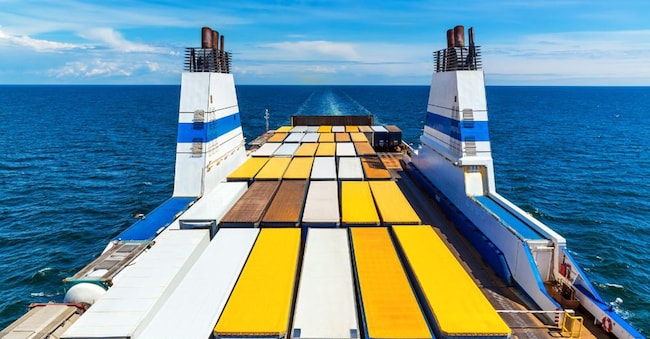
As for shipowners, "the European Commission's decision," Luca Sisto, Confitarma's director general, explains, "leaves us perplexed to say the least. Extending the entry into force of the Ets for road haulage by a further year will further weaken the competitiveness of the maritime route compared to the all-road route. It is an environmentally damaging decision, which induces road hauliers to choose the all-road instead of travelling by sea and drastically reduces environmental impacts, and accidents, for all citizens".
Confitarma: 'Motorways of the Sea are a best practice, they should not be penalised'
The Motorways of the Sea "and all the ships used in European short sea shipping - adds Sisto - are an environmental best practice that has been certified for years now, most recently by the Censis and MIT Study, which will be presented next December to celebrate the 20th anniversary of Ram (the Mediterranean motorways network company). Just one figure: we are talking about more than 2.2 billion kilometres per year of road haulage by lorries, potentially subtracted from the road by maritime intermodality. The EU cannot continue, with its decisions, to create disparities and competitiveness gaps always to the detriment of the sea. Just think, for example, of the Fuel-Eu Maritime. Brussels must recognise and enhance, in fact, the environmental best practice of the sea, which represents the most environmentally sustainable mode of transport of goods, first and foremost by eliminating the Ets for the major islands and the entire maritime cabotage, as Confitarma has long been requesting".


