Ford Ranger Phev, adventure-size rechargeable hybrid: what it costs and how it goes
The house of the blue oval introduces a plug-in version of the famous pick-up into the range
3' min read
3' min read
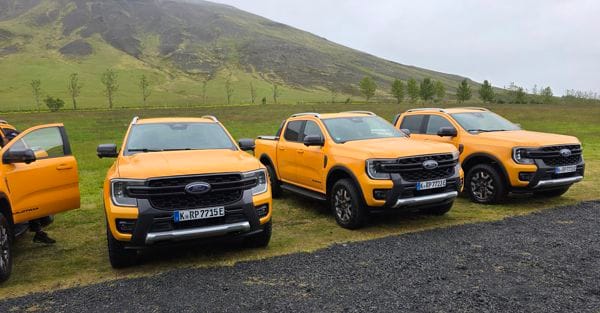
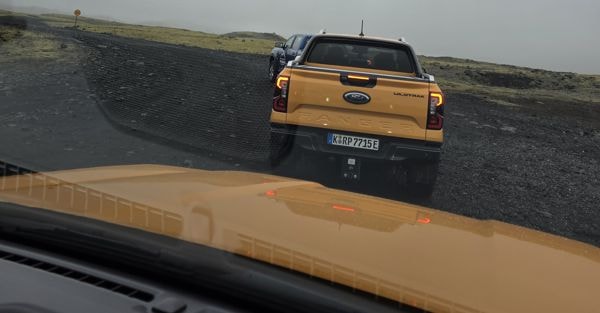
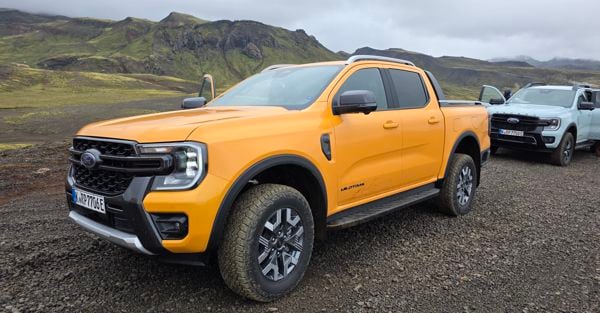
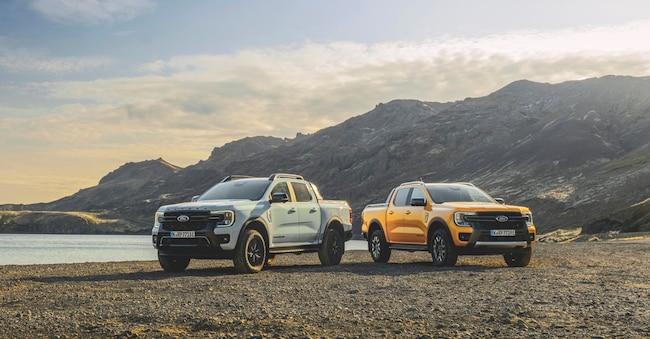
Ford Ranger is now also a Plug-in hybrid, making it an ideal vehicle for work and leisure. It's just a pity that in Italy these vehicles are penalised by anachronistic legislation. We went to get to know the new five-seater pick-up truck in Iceland through rough trails and volcanic rock roads, fording rivers and tackling slopes and descents. And the conclusion is very simple: this is a comfortable, well-made vehicle that is much more premium than many fashionable SUVs, because here we are dealing with practicality and robustness, with a taste for the essential and well-made. Of course the materials are not luxurious, but everything is very solid with good ergonomics and unexceptionable comfort for the type of vehicle. The new rechargeable hybrid powertrain also reduces fuel consumption and has four operating modes that allow the battery to be managed as required, offering around 40 km of electric drive
Ford thus introduces for the first time in the Ranger range a rechargeable hybrid propulsion system, without compromising load capacity, off-road performance and professional functionality. The technical architecture is based on a familiar platform, updated to integrate the new hybrid drivetrain, optimised for use in mixed on-road and operational environments.
The powertrain of the Ranger PHEV combines the 2.3 EcoBoost petrol engine with a 75 kW electric motor, powered by an 11.8 kWh net lithium-ion battery. The 10-speed automatic transmission integrates a modular hybrid module that actively manages the decoupling between the two energy sources via an electromechanical actuator.
The system allows several electric drive management modes, including Auto EV mode, which automatically uses the electric mode, EV Now mode, which prioritises electric drive, EV Later mode, which saves charge for later use, and EV Charge mode, which activates charging via the heat engine.
The battery can be recharged via the external mains with a 16 A single-phase charger, requiring less than four hours for a full charge. Charging via regenerative braking or internal combustion engine is also possible.