
Ford Transit, 60 years of the van that moves almost 5% of Italian GDP
SDA Bocconi research reveals the weight of the 'van-intensive' economy: 108 billion added value and 1.5 million employees. In Lombardy, one in three commercial vehicles is Ford.

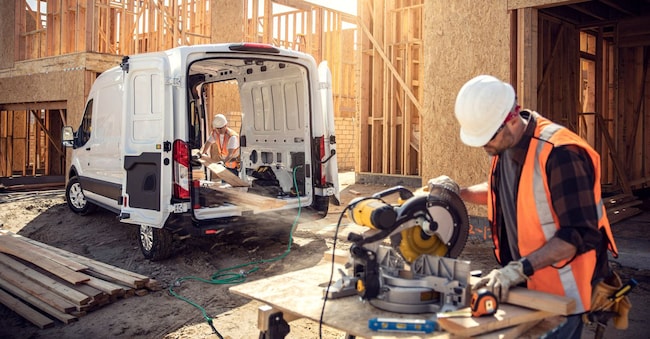
There are not only supercars and cars in the spotlight, there is another segment that silently supports the country's productive framework, without going on the catwalk. It is the economy of light commercial vehicles, an ecosystem that - according to research conducted by SDA Bocconi for Ford Italia - generates 107.9 billion euro of added value, equal to 4.9% of the national GDP, and supports 1.53 million jobs.
The occasion for this economic snapshot is the 60th anniversary of the Ford Transit, a vehicle that has accompanied the evolution of work in Italy since 1965. The numbers presented in the academic survey redefine the perception of a sector that is often considered ancillary: if European companies 'powered by vans' constituted a state, they would be the sixth largest economy in the EU in terms of GDP, with around 860 billion in added value.
The analysis, which covers the period 2000-2024, shows a growth in average productivity (added value per employee) of 28%, from 55 thousand to 70.7 thousand. A leap that reflects the sector's technological evolution: from simple mechanics to the integrated connectivity that now characterises new-generation commercial vehicles. "These figures confirm the centrality of a sector that is the true backbone of the economy," underlines Marco Buraglio, Managing Director of Ford Italia. "Celebrating 60 years of the Transit for us means celebrating this world. And the most concrete proof of the trust that Italian professionals place in us comes from the productive heart of the country, Lombardy, where one in three commercial vehicles is Ford".
The study identifies three ongoing transformations. The first is the ecological transition, which turns from an environmental imperative into an economic opportunity: adopting an electric Transit can generate savings of up to 12,000 euros in three years, thanks to a 70% reduction in energy costs and 40% reduction in maintenance costs.
The second revolution is digital. Through predictive telematics systems like FORDLiive, modern commercial vehicles can reduce downtime by up to 60 per cent, transforming themselves from simple means of transport into intelligent service platforms.

