
Foreign interference: Fdi and the League vote alongside Vannacci and the M5S against the creation of a European centre
The motion, which cites Russia as the main ‘hostile actor’, was passed with the votes of Forza Italia, the PD, the Greens and Azione. Calenda takes a dig at Crosetto over the fight against hybrid warfare

Key points
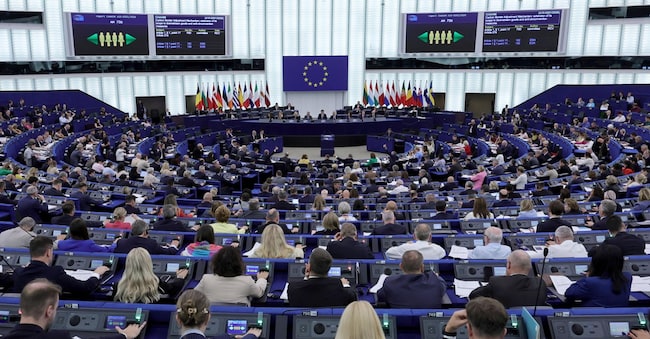
An unprecedented alliance between Fdi, the League and Futuro Nazionale has emerged in the European Parliament on the sensitive issue of relations with Russia: according to the voting records, the delegations from Meloni’s party, the Lega and Vannacchio’s party, together with the Five Star Movement, voted against the opinion on the resolution calling for the establishment within the Democratic Shield of a European Centre to combat disinformation and foreign interference.
EU-NATO tensions at the borders
The bill was passed with votes in favour from Forza Italia, the PD, the Greens and Azione, whilst Sinistra Italiana abstained. All this on the very day that tensions between NATO and Russia escalated in the skies over the Baltic, with two Italian Eurofighters taking to the air to shoot down a drone in Lithuania, and on which a Russian frigate fired two signal rockets in international waters off the coast of Denmark, narrowly missing a Danish military helicopter.
The dossier divides the camps
More specifically, the ECR Group (along with Fratelli d’Italia), the Patriots (along with the Lega) and Europe of Sovereign Nations (along with Futuro Nazionale) voted against the report. The Left group, on the other hand, was split into three: the Finnish and Swedish delegations voted in favour, whilst the Italian members of the M5S voted against, alongside the French members and the majority of the group; the two representatives from Sinistra Italiana and five other MEPs abstained.
The text recognises Russia as a ‘hostile actor’
The text therefore divides both the centre-right and the broader political spectrum. It reveals how the issue of relations with Putin’s Russia – identified in the opinion as the main external threat to European democracy – is one of the most thorny issues for both political camps in Italia. ‘The key hostile actor is Russia,’ said the rapporteur Tomas Tobé (EPP) in no uncertain terms. ‘Russia is waging systematic campaigns against European democracies’, with the aim of ‘dividing and weakening Europe’. The text highlights frequent hybrid attacks against critical infrastructure (which it also identifies as including electoral infrastructure), physical sabotage, arson, espionage and signal jamming, as well as similar activities originating from Belarus, China, Iran and North Korea.
Salvini’s signals in Moscow
It certainly comes as no surprise that Futuro Nazionale and the M5S have taken an opposing stance, given General Vannacci’s well-known pro-Russian stance and the hostility expressed by Giuseppe Conte towards the war in Ukraine. Nor is the opposition of the Lega surprising, as it is the party within the government closest to Moscow and the most hostile to supporting Kyiv (even though it has never failed to cast its votes in favour in Parliament): just the day before the vote, the leader of the Carroccio, Matteo Salvini, met with Italian businesspeople operating in Moscow, emphasising that Italia can play an important role in bringing the conflict to an end and expressing his confidence that purchases of Russian gas could resume as soon as the war is over.


