
Foreign trade, for the Centre a mini-rebound thanks to medicines
In the second quarter of 2024, growth returned (+3.1%) after the minus signs of previous months, driven by pharmaceuticals (+26.4%). Trade through the Red Sea also declines (-1.6%)

3' min read
3' min read
After an end of 2023 and beginning of 2024 characterised by a minus sign, the interchange (the sum of imports and exports) with foreign countries in Central Italy returned to a positive sign in the second quarter of 2024 (+3.1% compared to the same period in 2023). The difficulties at the turn of 2023 and 2024 had been caused mainly by a slowdown in the German and Chinese locomotives, but also in the United Kingdom. In addition, tensions in international markets due to the two wars in Ukraine and the Middle East had weighed heavily. With the corollary of trade in the Red Sea made more difficult and costly due to the attacks on the ships of the Houthi rebels in Yemen. In April-June this year, some of these conditions changed in a positive direction.
On the one hand, the collapse of traffic through Suez and the Red Sea has slowed down: the trend towards Central Italy - which had marked a more than -5% at the end of 2023 to reach -20% in January-March 2024 compared to the same periods of the previous year - in April-June 2024 has been reduced to a more contained -1.6%. As far as the main trading partners are concerned, Germany's economic problems are still being felt (-1.4%), albeit with less intensity than at the beginning of 2024, when the decline had been more than 7%. The same trend also applies to trade relations with China, which fell from over -40% in the first three months of 2024 to a more moderate -5.3% in April-June this year. For the UK it was even better: after the negative signs of the previous two quarters, the latest figure shows +0.5%.
However, the driving force in the last quarter came above all from the United States, which in absolute values almost caught up with Germany as the leading trade partner in the second quarter of 2024: an interchange of 10.5 billion (10.8 billion Germany) and an increase of 29% compared to April-June last year. But the other main European trade partners of Central Italy are also recovering: France (+3.8%), Spain (+12.8%) and the Netherlands (+13.8%).
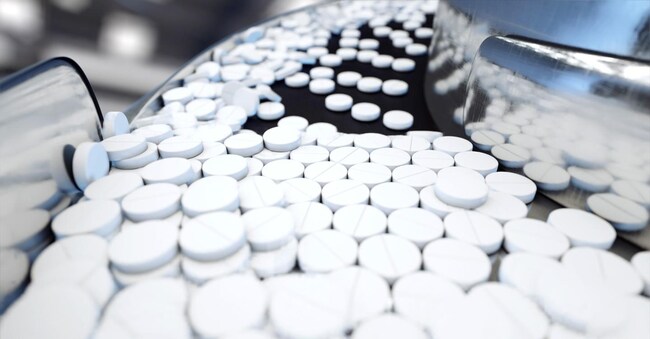
At the level of sectors, the recovery of the pharmaceutical sector should be noted, after the physiological downturn due to the end of the Covid emergency. In regions with strong pharmaceutical clusters such as Lazio and Tuscany, interchange between sites located in other countries of multinationals present in the territory certainly weighed. But in other regions, too, the sector is strengthening. So much so that the production of pharmaceuticals and medicines marked an increase of 26.4%, ranking first in absolute value in the second quarter of 2024, with almost 14 billion, surpassing even machinery (11.6 billion, -4%) and means of transport (10.6 billion, -6.5%).
Not surprisingly, at a territorial level, it is the regions with a strong pharmaceutical presence that recorded the best results in interchange in the second quarter of the year: +12% for Tuscany and +7.6% for Lazio. Umbria is also doing well (+7.7%), even if in absolute terms it only has a 3% share of all of Central Italy. Emilia-Romagna (-2.5%), Abruzzo (-6.5%) and Marche (-8%) are in trouble.


