MiC

Foreign works can leave the country, but with many exceptions

Circular No. 28 of 20 June sets out the criteria for a 'significant link' with Italy

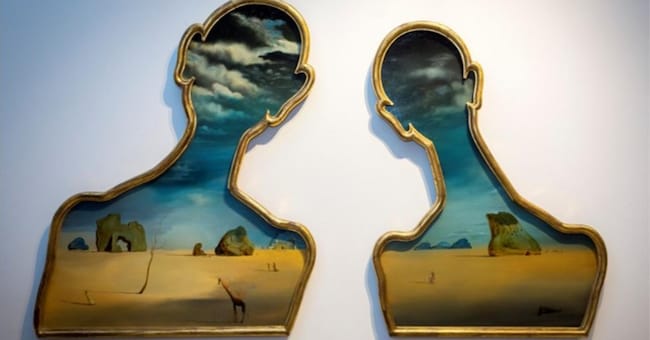
Salvador Dalì «Couple aux têtes pleines de nuages», 1937

4' min read

4' min read

Foreign works of art can only be notified or blocked for export if they have a 'significant link' with the Italian cultural heritage. This is, in brief, the innovative principle introduced by Circular No. 28 of 20 June 2024 of the General Directorate for Archaeology, Fine Arts and Landscape (DG ABAP) of the Ministry of Culture. It follows, therefore, that - in the presence of a foreign work of art - the Export Office that decides to deny the request for a certificate of free circulation must first and foremost highlight the link of the work of art with Italy and Italian culture.

Many question marks

.

But what is meant by 'foreign work of art'?
On this point, the circular defines the work of a foreign author performed outside Italy as such (therefore all works performed by foreign authors in Italy are not included).

Loading...

In which cases does the aforementioned connection between the so-called foreign work and Italian culture exist, which would legitimise a potential refusal to export? 'criteria of connection') in the presence of which such a connection must be considered to exist:
1) the belonging of a foreign good to an Italian historical collection (it is not specified, however, what is meant exactly by "historical collection");
2) the relevance of the work with the history of Italian culture;
3) historical links of the foreign author with Italy (therefore, given the use of the term "historical", the case of sporadic contacts between the author and Italy or not connected to artistic reasons should be excluded).

According to the Circular, moreover, the Export Office - after adequately highlighting the link between the foreign work and the national cultural heritage - may deny the export title only where (in addition to the aforementioned link between the work and the Italian cultural heritage) at least two of the six criteria set forth in Ministerial Decree 537/17 exist:
1. artistic quality of the work;
2. rarity in a qualitative and/or quantitative sense;
3. relevance of the representation;
4. belonging to a historical, artistic, archaeological, monumental complex and/or context;
5. particularly significant testimony to the history of collecting;
6. relevant testimony, from an archaeological, artistic, historical, ethnographic point of view, of significant relations between different cultural areas).

The time limit

.

And is it possible to bind foreign works that - regardless of their connection with Italian culture - have only been in Italy for a few years?
The Circular seems to exclude that such works can be subject to a restriction or denial of export, since 'in principle, it will not be possible to deny the exit of a foreign good of historical interest present on Italian territory in an incidental or passing manner'.

It is therefore to be considered that the permanence in Italy for a significant period of time in the life of the object is a relevant criterion for its declaration of interest for the national cultural heritage.
But, in practice, is it possible to identify a period of permanence of the foreign good in Italy within which it cannot be bound?
On this point, too, the Circular provides an answer, specifying that 'in any case, the permanence in Italy of the asset for at least seventy years, corresponding to the age required by the Code in order to be able to initiate ordinary protection action, appears certainly significant'.

The connection criteria

.

"The Circular, as a whole, is certainly to be welcomed as it sanctions, for the first time in Italy, that - in order to bind or deny the export of a work of art by a foreign author - it is necessary for the Administration to first demonstrate the existence of a significant link between the work of art in question and Italian culture. And this is regardless of the artistic merit or value of the work. However, it will be important for the Offices to adhere strictly to the "connection criteria" in order not to distort or water down the sacrosanct principle introduced by Circular No. 28", emphasises lawyer Francesco Salamone, who - in the past months - together with lawyer Giuseppe Calabi had represented the need for a circular regulating this issue.

Lawyer Giuseppe Calabi confirms the substantially positive judgement on the Circular that is appreciable for the Service IV's effort to systematise such a delicate and complex matter. Calabi points out that the Circular states that "the Exportation Offices will have to motivate with particular rigour the measures refusing the certificate of free circulation concerning works by foreign authors". In fact, according to the Circular, 'works that, according to the correct historical-critical perspective allowed today by the chronological distance from their execution, do not in any way present contiguity or interference with artistic research in our country, nor do they appear to have exerted any influence on developments in the history of Italian art, should be excluded from protection'.

The Case of Consent

.

The "contiguity and interference" with Italian artistic research has in the past been precluded. For example, in the case that recently involved Salvador Dalì's diptych "Couple aux têtes pleines de nuages" (1937), belonging to the Scelsi Foundation, the connection of the Spanish Surrealist author's work with Italy, as stated in the justification of the protection order, appears to be far removed from the rigour required by the Circular, having been traced back to an abstract and hypothesised "consentaneity of intentions that the psychic approach to artistic creation typical of Surrealist poetics presents with Scelsi's improvisational and mediumistic way of composing and that could have contributed to reinforcing the karmic bond of the musician with the Diptych".

Copyright reserved ©
Loading...

Brand connect

Loading...

Newsletter

Notizie e approfondimenti sugli avvenimenti politici, economici e finanziari.

Iscriviti