
Former CISL secretary Sbarra new undersecretary to the Council Presidency for the South. Here are the reasons
Prime Minister Meloni's decision is the culmination of a path that - on certain issues - has led to a progressive rapprochement between the trade unionist and the head of government

3' min read
3' min read
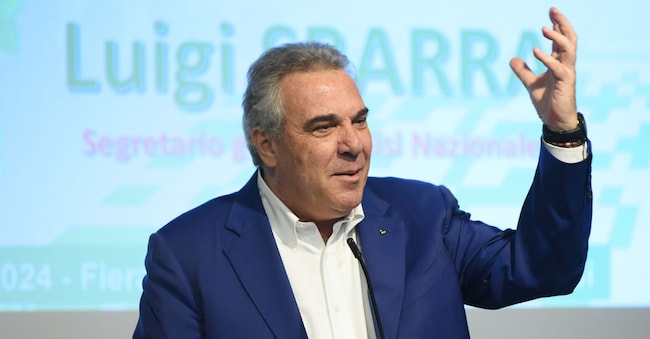
The former general secretary of the CISL, Luigi Sbarra, is the new undersecretary to the presidency of the Council for the South. The delegation had been kept ad interim by the Prime Minister, Giorgia Meloni, because Raffaele Fitto had left the government to take up the role of executive vice-president of the European Commission in Brussels. After hearing the Council of Ministers, Prime Minister Meloni announced that she would propose the appointment to the President of the Republic, Sergio Mattarella. After being sworn in at Palazzo Chigi, Sbarra made it known that he would enter the government as an 'independent'.
The approach path
.This is not an unexpected decision, but rather the crowning achievement of a path that has led - on certain issues - to a progressive rapprochement between the former CISL secretary and the Prime Minister.
An important handover took place in February, when on reaching the age of 65, Sbarra stepped down as head of the CISL, as required by the union's statute. The CISL national assembly held at the auditorium in Via della Conciliazione in Rome on 11 February - on the eve of the general council meeting that marked the handover to Daniela Fumarola - had a special guest: Italian Prime Minister Giorgia Meloni. It did not escape the attention of the Palazzo Chigi entourage that the audience of 2,000 CISL delegates and cadres welcomed the Prime Minister, and the applause received when she spoke from the stage under the slogan 'the courage of participation'.
In her speech from the auditorium stage, the head of government described Sbarra as a 'frank, determined, honest interlocutor', and her 'collaborative' line was taken as a model compared to the 'toxic conflictual vision' that 'some people still insist on supporting' (the premier did not name them, but the reference was to Maurizio Landini and Pierpaolo Bombardieri, leaders of CGIL and UIL respectively).
Moreover, under Sbarra's leadership, the Cisl broke away from CGIL and UIL, not participating in the general strike on 29 November against the Meloni government, carving out a 'privileged' position in the interlocution with the head of the executive on a series of measures, starting with the economic manoeuvre, highlighting positive aspects alongside critical ones.


