Industry

Former Ilva, Bedrock's plan includes thousands of cuts

The fund aims to retain 2,000 employees in Taranto and another thousand in the rest of Italy. It would then quantify its financial offer in a round figure: one euro

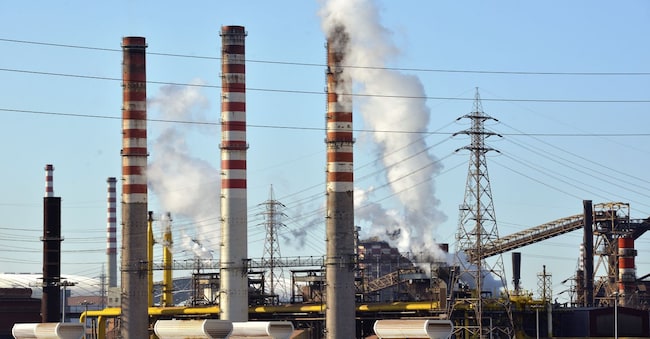
by Paolo Bricco

(Imagoeconomica)

4' min read

Translated by AI
Versione italiana

4' min read

Translated by AI
Versione italiana

The only sure thing is that it will be an employment apocalypse.

According to Il Sole 24 Ore, which consulted a number of converging sources, Bedrock Industries' proposal for the former Ilva would provide for the retention of two thousand employees in Taranto and another thousand in the rest of Italy, between the plants in Novi Ligure and Cornigliano and the logistical and commercial services scattered across the peninsula, the ancient vestiges of what was once Europe's second largest full-cycle steel group.

Loading...

Three thousand saved, then. And the others? Unfortunately, the others, submerged. Depending on the final structure, in Bedrock's vision of bloody restructuring, the number of employees who will have to leave the perimeter permanently is between seven thousand and seven thousand five hundred.The same sources consulted by Il Sole 24 Ore confirm that Bedrock would have quantified its financial offer in a round figure: one euro.

The same sources, moreover, describe the offer of the other American fund, the half-unknown Flacks Industries, which appeared on the scene a few days ago in cordination with the equally half-unknown Slovaks of Steel Business Europe, as little more than an expression of interest, in its slenderness and lack of decisiveness.

The offer of this second American fund would, moreover, be united with Bedrock's offer by one feature: Flacks is also offering one euro.At this point, it becomes clear that the former Ilva has no chance of preserving its industrial integrity. And it becomes equally clear that, thirteen years after the arrest of Emilio Riva and his collaborators and the - even then de facto - forced nationalisation, the entire path defined by the judiciary of Taranto (and Milan) and supported by all the successive governments has led to an apocalyptic scenario.

First of all the Meloni government. The previous owners, the Indians of Arcelor Mittal, have sued the Italian state asking for more than two and a half billion in damages. The commissioners, who of course act in coordination and at the instigation of the government, have not yet taken any legal action against Arcelor Mittal.

Months and months have passed. Evidently either Arcelor Mittal has done everything very well or there is no will to move against Arcelor Mittal. A first tender was called. The first tender was held regularly. The Azerbaijani consortium hinged industrially on Baku Steel and financially on the state-owned gas company, Socar, prevailed.

The Meloni government has effectively rewritten the business plan of the former Ilva after the tender with a 100 per cent green plan. No more integral cycle. Just electric furnaces. Nobody ever saw a number on the public funds needed: zero financial engineering, even on paper. A regasifier ship was needed in the port of Taranto, to keep the energy cycle of electric furnaces and pre-heat: Mr Bitetti, mayor of the city, and Mr Emiliano, president of the Puglia region, went along with those who did not want it.

The race was remade. Baku Steel turned the other way. And it will already be a lot if it does not sue the Italian state. The first tender had been attended by the younger branch of the Jindal family. The Indians chose not to bid either: better to try to take over Thyssen Krupp's German operations. In Germany, there are no judges in Berlin and the government there is willing to finance decarbonisation.

In Italy, the constant of the whole affair has been the watchful vigilance of the Mef, which, committed to maintaining the balance of our precarious public accounts, has never accepted that the former Ilva could be abundantly financed in decarbonisation with state money.

Moreover, the American funds ask for just that: a flood of public funds, in a quantity that is difficult to quantify. To keep a 3,000-employee company alive.

At this point in the affair, the problem becomes industrial: our manufacturing, which has already been importing steel for infrastructure, components and aviation from Asia for ten years while it once procured it in Taranto, knows that it will be more dependent on foreign suppliers. The problem is also political and civil, bordering on public order: the trade unions will have to manage one of the most violent crashes in our history, and the methadone of subsidies and Cig is not always enough. The problem is also health and environmental: apart from the paradox that today there is no plant in Europe with the level of ecological technologies of the former Ilva, the risk is that the steelworks will turn into a huge (and much bigger) Bagnoli, where the state has already operated with very poor results.

Finally, the problem could take on noir contours, in the grey area between the economy and crime: because, if things go really wrong, Taranto will become - in its gigantic industrial apparatus - a mine to be dismantled, recycled, broken up, and sold for the most unscrupulous entrepreneurs and for entrepreneurs who have already been convicted.

Copyright reserved ©
Loading...

Brand connect

Loading...

Newsletter

Notizie e approfondimenti sugli avvenimenti politici, economici e finanziari.

Iscriviti