
Ex Ilva, blockade avoided: TAR suspends mayor's order on power plant stop
The first citizen had ordered the plant to stop within 30 days for environmental reasons. The Court: the matter should be investigated first. Hearing on 19 May
Key points
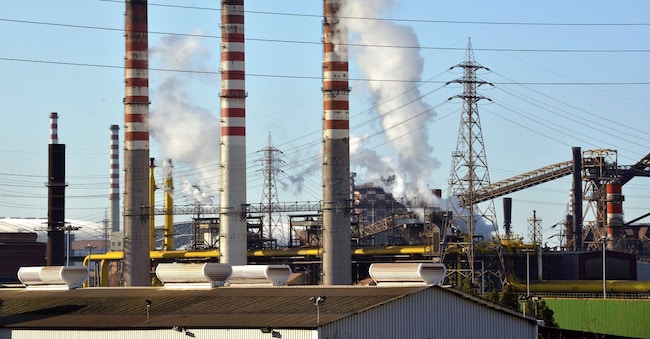
The Taranto plant of Acciaierie d'Italia in extraordinary administration, former Ilva, dodges the risk of having to shut down from 13 May following the order of the mayor of Taranto, Piero Bitetti, who had imposed a 30-day shutdown of the thermoelectric power plant that feeds the factory by processing blast furnace gases. The Lecce Tar - as requested by the company's lawyers - has in fact suspended the mayor's order. "The proposed issues need to be examined in depth by the collegiate panel," while in the meantime "it appears appropriate to safeguard the state of affairs existing to date, also in order to allow the decisional phase to take place," wrote the president of the Lecce Tar, Antonio Pasca. The administrative court therefore ordered 'the collegial treatment in council chamber on 19 May 2026'.
The company had highlighted the prospect of setbacks
The mayor, in his order of the past few days, had justified the halt to the plant by the fact that AdI Energia is still 'in default with regard to the presentation of the reduction plan for the non-carcinogenic risk of arsenic, cobalt, and nickel emission parameters'. 'This is a very bad signal for anyone who wants to relaunch the plant,' commented Adolfo Urso, Minister of Enterprise. 'We hope that this decision will not compromise the continuity of production at the plant.
Loading...
And in fact, upon receipt of the order, company sources had observed that with the shutdown of the plant it would no longer be possible to recover and manage the gases of the steelmaking cycle, which, as they cannot even be flared, remain without any possibility of disposal. Under these conditions, therefore, AdI had pointed out, the production cycle cannot continue and the impossibility of managing the gases of the steel cycle means, as a consequence of the order, the shutdown of the hot area, heart of the Taranto plant. All this, moreover, with an open negotiation for the sale of the company with two potential investors: the American fund Flacks Group and Jindal Steel International.
Mayor: but we are no longer a land of sacrifice
For his part, Mayor Bitetti gave the following reasons for the order: 'I appreciate the attention of Minister Urso, a person who devotes a lot of effort to resolving disputes at a national level, but we cannot ignore the fact that this is no longer a land of sacrifice. As long as I am mayor for this land, which gives me honours and burdens, perhaps more burdens at this time, we can no longer think that a power plant will not present a plan to prove that there is no pollution. This no longer exists'.
In the appeal filed with the Regional Administrative Court on 24 April, AdI Energia's attorneys, Marco Annoni and Luisa Torchia, had pointed out that "as of 13 May 2026, AdI Energia will be obliged to suspend the operation of the plant" and therefore asked the Administrative Court to order "the reduction to half of the terms for setting hearings and council chambers in order to allow the precautionary petition to be dealt with by the panel before the date of the suspension of operations".


Brand connect
Loading...
