
Former Ilva: company lodges an appeal with the Court of Cassation to prevent the hot area from being shut down
An appeal has been lodged against the citizens of Taranto who brought the legal action and the Puglia Region. Fourteen grounds of appeal have been put forward

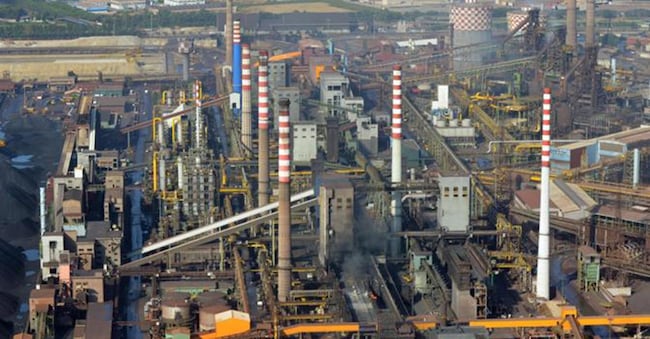
Key points
Ilva, currently under special administration, is seeking to overturn the recent ruling by the Milan Court of Appeal, which ordered the shutdown of the hot area of the former Ilva site in Taranto within 90 days on the grounds that it is a source of pollution, including fine particulate matter and asbestos. The deadline set by the judges is already ticking down and is due to expire before the end of October. Ilva, under special administration – the company that owns the steelworks, whilst Acciaierie d’Italia, also under special administration, is the operator of the facilities – lodged an appeal with the Court of Cassation on 14 August. The appeal – totalling 82 pages – seeks the “quashing of Decree No. 425/2026 issued on 9 July 2026 by the Milan Court of Appeal”. This is precisely the decree that orders the shutdown of the blast furnaces and steelworks. Ilva’s appeal is directed against the group of Taranto citizens who brought the case against the former Ilva, seeking a shutdown order from the Court of Milan – a case that also reached the European Court of Justice and subsequently the Court of Appeal. But it is also directed against the Puglia Regional Government, the Legal Intervention Group and Codacons, as well as against Acciaierie d’Italia SpA and Acciaierie d’Italia Holding, both under special administration, and the Public Prosecutor’s Office at the Milan Court of Appeal and the Attorney General’s Office at the Court of Cassation. There are fourteen grounds underlying the appeal to the Supreme Court.
“The administrative court has jurisdiction”
The first two grounds of appeal challenge the order to suspend operations at the hot zone “on the grounds that the Court of Appeal ruled on a claim and heard a dispute falling within the jurisdiction of the Administrative Court”, whilst “the second ground challenges the decree on the grounds that the Court of Appeal issued rulings falling within the remit and competence of the public administration. Specifically, rather than referring to the competent administration any decision regarding the scope of the Integrated Environmental Authorisation issued in 2025 and the identification of the requirements and/or recommendations necessary to minimise the environmental impact, the Court of Appeal – it is argued – has substituted itself for the authorities involved in the review procedure of the 2025 IEA and has sought to directly determine the content that the authorisation must contain”.
Ilva in AS also challenges the decree issued by the Milan judges, “given that the Court of Appeal ordered the non-application of the 2025 Integrated Environmental Authorisation (AIA) in the absence of the relevant conditions” and “since the Court of Appeal ordered the non-application of Decree No. 278/2023 of the Ministry of the Environment and Energy Security and the preceding opinion of the Higher Institute for Environmental Protection and Research in the absence of the relevant conditions”. Furthermore, the appeal to the Supreme Court states that Ilva in as “reserves the right to file, substantially concurrently with this appeal, an application for the suspension of the effects of the contested decision”. This application for suspension will be addressed to the Court of Appeal itself.
Lawyers: no extension of environmental limitation periods
According to the lawyers representing Ilva in as – Giuseppe Lombardi, Marco Annoni, Lazare-David Vittone Tassinari, Raffaele Cassano and Alberto Villa – “the relationship between preliminary requirements and subsequent updates does not constitute an extension of the environmental measures, but rather the mechanism through which the legislator ensures that the authorisation keeps pace with developments in technical knowledge, plant performance and best available techniques. From this perspective – they state – the contested decision (assuming it is deemed to have upheld the Court’s ruling on this point) ultimately attributes to the Integrated Environmental Authorisation (AIA) a nature contrary to that derived from Article 29-sexies and constitutional case law”.
In other words, it is specified that “not a provision subject to progressive adjustment on the basis of data and studies gathered during its implementation, but a measure that should establish, from the outset and definitively, every future intervention, even where the necessity, feasibility or technical details of such an intervention have yet to be ascertained”.

