
Former Ilva site: Court of Cassation rejects companies’ appeals; hot zone in Taranto remains in place
The judges’ ruling following the hearing on 20 October. According to the Supreme Court, the Milan Court of Appeal, which issued the order to halt proceedings, had “reached a conclusion regarding an immediate and significant risk on the basis of the various pieces of evidence gathered”.

Key points
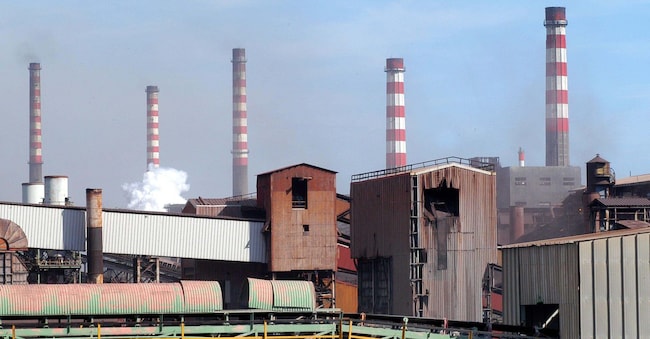
In a 70-page judgement, the Court of Cassation, sitting as the Joint Civil Chambers, has put an end to the hot area of the former Ilva site in Taranto – comprising the coking plants, blast furnaces and steelworks. The appeals lodged in August by Acciaierie d’Italia and Ilva against the decree of the Milan Court of Appeal – which ordered the closure of the hot area on the grounds that it was polluting and harmful to health – have in fact been dismissed. This hot area had, in recent days – as the deadline (25 October) set by the Milan judges approached (a deadline subsequently extended to 15 December under the latest decree-law on the former Ilva site) – already been placed on standby. In other words, there was zero production and the plants were powered solely by gas supplied from outside. On this basis, Acciaierie also submitted a request for extraordinary redundancy payments for 8,622 workers out of a total workforce of 9,626. Now, in accordance with the decree of the Milan Court of Appeal – which therefore remains in force – these plants will have to be shut down permanently. The hot section is the largest part of the former Ilva site in Taranto and also the one with the highest number of employees.
“The grounds put forward by the companies are inadmissible”
Asbestos present in blast furnaces and fine particulate matter, PM 2.5 and PM 10: these are the factors underlying the Milan judges’ order to halt operations. And now the Supreme Court maintains that “the failure to assess the findings of the VIS study and the favourable opinion of the ISS on which the granting of the 2025 Environmental Authorisation was based, the failure to specify what the various additional safety limits would be within which particulate matter emissions should be kept, the reference not to the current level of steel production, but to the highest authorised production scenario (6 Mt/a)”, are all grounds that “are inadmissible on the grounds of lack of standing”. In the Court of Cassation’s view, the Court of Appeal, in setting out the grounds “underpinning the granting of the collective injunction (asbestos and fine particulate matter), expressly declared them to be independent and each capable of supporting the decision.Therefore, once the grounds put forward regarding asbestos have been deemed unfounded and inadmissible, the decision to uphold the collective injunction cannot be set aside even if, hypothetically, the grounds set out in the second line of reasoning concerning fine particulate matter were deemed worthy of acceptance”.
The Public Prosecutor at the Court of Cassation: no concrete danger has been established
Indeed, at the hearing on 20 October, Luigi Birritteri, Advocate General at the Court of Cassation, acting as public prosecutor, had stated – with regard to the dangers posed by fine particulate matter emissions and the presence of asbestos in blast furnaces – that “the contested decree did not base the suspension order on a concrete assessment of the health risk, but on the unlawfulness of the 2025 Hague Convention due to its conflict with Directive 2010/75/EU as interpreted by the Court of Justice. Meanwhile, the Attorney General argued, “the case law cited by the respondents”, that is, the citizens of Taranto, “points in the same direction”. That is to say, “it requires that the continuation of an industrial activity be accompanied by an effective assessment of its effects on the health of the exposed population, and that protection must not be limited to the formal compliance of the relevant documents”. This, the Advocate General further emphasised, “does not permit that assessment to be replaced by presumptions drawn from outdated regulations or the existence of monitoring schemes, nor does it permit the health assessment carried out during the review proceedings to be disregarded without even examining it”.
“A judgement has been made that the danger is current and significant”
In its judgement, however, the Court of Cassation states “that it can therefore be said that the Court of Appeal, on the basis of the principles of precaution, prevention and mitigated causality, has reached a finding of current and significant danger on the basis of the multiple pieces of evidence gathered, to the extent that it did not deem it necessary to commission a specific court-appointed expert report”. This, says the Supreme Court, “is also in light of undisputed facts, including the numerous and frequent accidents that have occurred at the plant (as documented in the various ISPRA reports) and the obsolescence or dilapidated state of the plant’s facilities. Moreover, given their very location within the Cowpers – auxiliary installations of the blast furnace – the tonnes of asbestos in question constitute a source of danger, given the potential release of the relevant fibres even merely as a result of cracks or micro-cracks in the refractory material”. For the Court of Cassation, this is “a fact that is not only inferable from the provisions of the 2017 Hague Convention, but is also corroborated by the facts set out in the documents and even those that occurred during the proceedings: such as the fire that took place on 7 May 2025, prior to the issuance of the Hague Convention (expressly considered on page 35 of the District Court’s decree and referred to on page 22 of the Court of Appeal’s decree as a possible source of asbestos fibre dispersion), which led to the criminal seizure of the plant precisely as a result of the explosion of a Cowper tube bundle”.

