
‘Former Ilva site in Genoa: remediation and sale in separate lots’
Ferrari, president of Confindustria Genova: ‘We need a new emergency plan.’ Meanwhile, the local economy is growing

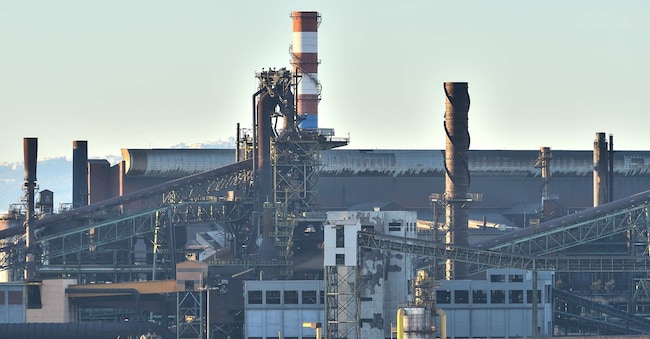
For the former Ilva site, ‘an extraordinary strategic plan by the Government’ is required, and for the Genoa site in particular, ‘this plan must provide for the remediation of land not used by the steelworks and the reindustrialisation of these areas’ – which amount to around 600,000 square metres in Cornigliano – “starting to consider a tender process to sell them off in separate blocks”. This was emphasised by the president of Confindustria Genova, Fabrizio Ferrari, on the sidelines of the presentation of economic data on the Ligurian economy for the first half of 2026.
The position of Genoa’s industrialists, which had already been set out in writing in February in a dedicated position paper, has returned to the fore after the Milan Court of Appeal ordered a halt to hot-rolling operations at the former Ilva plant in Taranto within 90 days. “The closure of the hot-rolling area in Taranto,” emphasised Ferrari, “completely changes the outlook: what has been done so far – the possibility of a tender and of selling Acciaiere d’Italia as a single block – essentially falls through.”
On the other hand, Ferrari added, it appears that, previously, ‘there had been discussions in which Italian private investors had shown an interest in Genoa and Novi, but the response was not one of openness: there was no “go ahead”.’ However, now that the hot rolling mills are being shut down, it is clear that we will no longer have coils to process in Genoa and Novi and, in effect, operations are set to close. That is why we need an alternative solution’. Ferrari therefore called for a review of the tender process for the former Ilva, with the group’s individual plants being managed separately.
‘We must be open to the idea that, as opposed to a tender for a single block, there should also be opportunities for tenders for separate blocks. The single tender and the current programme agreement have not achieved the desired objectives, and it is clear to everyone that remaining tied to a single facility will lead to the decline of that area; and this is a mistake. Major decisions are needed at government level to determine whether there is anyone with the interest and the means to purchase Genoa and Novi, in order to maintain and develop the business.”
In short, according to Genoese industrialists, provided a buyer can be found, the current operations in Genoa and Novi – involving the production of tinplate and cold-galvanising – could continue. Meanwhile, the other plots of land in the former hot-rolling area of Cornigliano, where the plant’s quays are also located, could be allocated to companies interested in setting up industrial operations. Ferrari cited, for example, the Genoa-based company Generative Bionics, ‘a unique enterprise established in our region, thanks to the IIT, which plans to produce 12,000 robots a year. This involves electronics, software, mechanics and components’. Furthermore, according to Ferrari, the Cornigliano quays should be handed over to a terminal operator, ‘to handle loading and unloading operations for all entities operating in those areas’, including, of course, the part of the former Ilva site that will remain in operation.


