
Former Ilva, Supervisory Committees OK Flacks

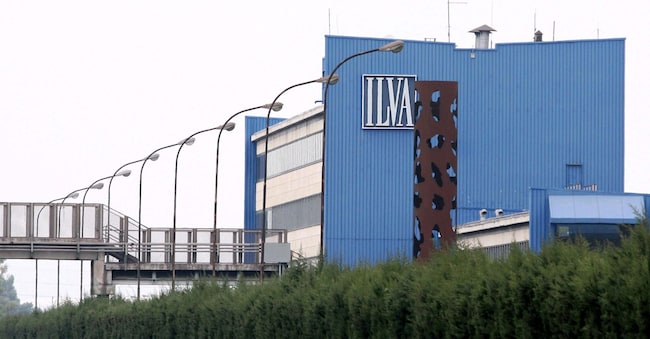
The industrial, financial, employment and environmental analysis of the plans proposed by the two American speculative funds, Flacks and Bedrock, was examined yesterday by the two supervisory committees of Acciaieria d'Italia and Ilva in extraordinary administration.The lawyers who make up the two supervisory committees and the creditors, who risk finding themselves weak parties in a disastrous affair together with the workers destined to be laid off or made redundant, considered the work carried out by the commissioners - the pros and cons of the two proposals - and the orientation expressed in favour of Flacks (technically Bedrock's was never a binding offer) to be transmitted to the Meloni government which, in the ministerial component of Mimit, will now have to close the circle by activating the exclusive negotiation.In the end, therefore, with the de facto self-exclusion of Bedrock, which presented an even more fragile offer than could have been expected in a procedure that was deserted by all the steel industry players, the proposal of the American turnaround fund remained on the table, which had nothing to do with steel: in Bedrock's track record, at least, steel was one of the sectors in which it had already operated as an investor. At this point, a further negotiation phase will open in which it will be necessary to understand whether, as the government wishes, an Italian white knight (Palazzo Chigi hopes for Arvedi) will be able to intervene, capable of conferring the industrial and managerial component to a former Ilva that is unlikely to be guided towards recovery - albeit with a reduced perimeter - by a hedge fund. This is a very delicate junction, not least because it would be difficult for a classic steel operator to accept running the financial, judicial and entrepreneurial risks of a game that began in 2012 and that has reeled in on itself, producing one of the greatest economic, social and political disruptions in Italian history. Not to speak of the cost of energy, which remains an element - American fund or Italian white knight - to be treated with kid gloves, because with the current gas tariffs and Taranto's poor infrastructure (the no to the regasifier) it would be impossible to activate plants for the pre-diesel with which to feed the hypothetical electric ovens. In fact, the last confrontation at Mimit in recent weeks ended badly. What the commissioners and Minister Urso presented as a 'short plan', claiming that there is no increase in the redundancy fund - confirmed for the initial 4,450 units without jumping to 6,000 - and that the objective is to carry out maintenance that can no longer be postponed to the plants, is rejected by the metalworking unions. For them, this plan only leads to the closure of the plants in March.There are four demands that the leaders of Fim, Fiom and Uilm are renewing in these hours. First of all, to resume negotiations at Palazzo Chigi under the direction of the premier Giorgia Meloni. Second, withdraw the 'short plan' and give guarantees on the continuity of the company where, moreover, resources are running out. Then, to resume in time and manner the decarbonisation plan discussed in the summer with the government: three electric furnaces in Taranto, one in Genoa, and four Dri plants (pre-dry) in Taranto. Finally, to put on track a public intervention for the former Ilva to implement decarbonisation: the identified pivot, for which a specific regulation would be under study, would be Invitalia.Meanwhile, the former Ilva closes 2025 with 2 million tonnes of production, already achieved by mid-month. The same production level as in 2024 was recorded as from January to April the factory ran with two blast furnaces, 1 and 4. Blast furnace 1 was then stopped in May due to the sequestration following a tube fire. In addition, with maintenance in mid-January, coke batteries 7, 8 and 12 will be stopped and put into pre-heating, presumably for two months. During this time, coke will be purchased externally and work will be done on the gas systems connected to the batteries. Around 20 January, blast furnace 2 will be back in operation after a long shutdown and blast furnace 4 will be stopped for work. The two blast furnaces will then go back on the road together. Meanwhile, the response of the Taranto Public Prosecutor's Office on the company's application for the release of blast furnace 1 is awaited. It is estimated that, after the release from seizure, it will take at least six to seven months to get the plant back on the road.


