
Former Ilva, blast furnace 1 seized after fire
An evidentiary seizure was ordered by public prosecutor Francesco Ciardo. Acciaierie's legal team already at work to present its brief
3' min read
3' min read
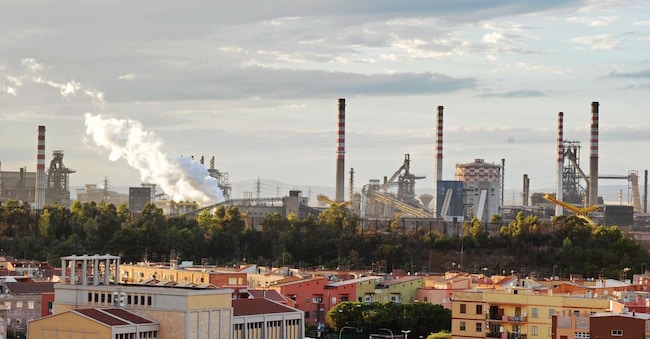
Last night, the Taranto Public Prosecutor's Office seized blast furnace 1 at the Acciaierie d'Italia plant under extraordinary administration where a serious fire broke out in the plant's pipelines yesterday morning, 7 May. There were no injuries, only damage that is still being assessed. The seizure of the plant is without authority and has a probative character. It was ordered by Deputy Prosecutor Francesco Ciardo and was carried out by the Carabinieri of the Ecological Operations Unit (Noe). The operations ended this morning, 8 May, at around 6am.
AdI's legal department is already at work to submit its pleadings to the Public Prosecutor's Office, pointing out that the fire at blast furnace 1, in addition to not causing any injuries, was promptly handled by the plant's fire-fighting teams and vehicles, as well as by factory personnel, and that the fire is also one of the events that can possibly occur at a plant such as the blast furnace, so much so that specific operational practices are in place, which were promptly triggered yesterday. It has to be said that the entire hot area of the former Ilva (coke ovens, blast furnaces, steelworks, etc.) has been under seizure with right of use for several years. In recent months, this seizure was renewed by the Potenza gip, Ida Iure, following the transfer of the 'Ambiente Svenduto' trial, concerning the crime of environmental disaster charged against the former Riva management of the steel plant, from the Taranto Court of Assizes to the Potenza Court of Assizes due to a question of incompatibility concerning some former honorary magistrates of Taranto. The latter, at the time of the facts that were the subject of the trial, which has since resumed in Potenza, were in active employment and then entered an appearance as injured parties in the same trial.
Fim Cisl: concerned about repercussions
It was the Fim Cisl that announced in a communication to the workers on the morning of 8 May that blast furnace 1 had been seized. 'Due to the accident that occurred yesterday at 11.30 a.m. on Afo1, the plant has been placed under seizure without the right to use it,' says the concise union communication. Vincenzo La Neve, Fim Cisl factory coordinator, declares: 'We have learned of the seizure of blast furnace 1 by the judicial authorities and the approximately 70 workers assigned to the plant have been temporarily relocated to training. Now, without prejudice to all the safety aspects on which we must pay the utmost attention and on which we have asked the company for a discussion, also to understand the causes of the fire at the blast furnace, it is clear that these developments worry us. We will have to see if there will be any further repercussions upstream and downstream of the plant. And in any case, what happened was not wanted at this crucial stage of the sale of Acciaierie'.
Yesterday, the company said of the incident that 'blast furnace 1 was regularly running when, at around 11.30 a.m., an uncontrolled emission into the atmosphere occurred, caused by a sudden anomaly in an element of the plant's cooling system'. The anomaly, says Acciaierie, 'affected tube No. 11, one of the 27 nozzles responsible for blowing hot wind into the blast furnace. Coke leaked from this point and reached the tube floor and the area below. No operator was involved in the event'.
The plant was back in operation last October
.High-temperature hot air flows through the tubes for the combustion of coke and the start of the production process that then leads to the casting of pig iron. Blast furnace 1 was at a standstill when the management of the commissioners appointed by Mimit took over from ArcelorMittal-Invitalia in February 2024. The blast furnace was then included in the company's restart plan presented in May last year, subject to restoration work and then restarted in mid-October 2024. Production was currently around 4,500 tonnes of pig iron per day, more or less the same quantity as blast furnace 4, the only one now left running in Taranto.

