
Former Ilva: following the Senate’s approval of the decree, what are the prospects for Taranto?
The Mimit must now draw up the investment plan. AdI has called a meeting with the trade unions for 30 November to discuss the supply chain fund

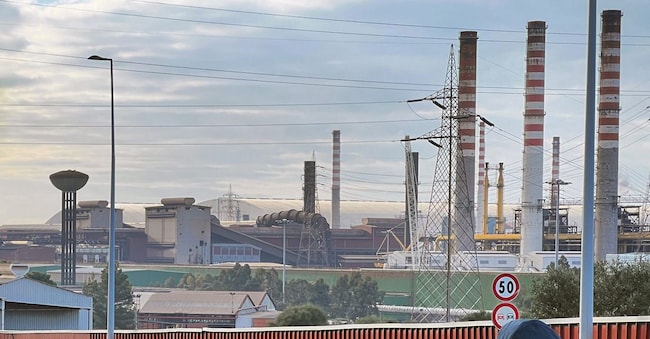
The Government has secured a vote of confidence, the Senate has approved the new decree-law on the former Ilva, and the bill now goes to the Chamber of Deputies for its final reading; however, two issues remain unresolved regarding the steel industry crisis: the conclusion of the tender process for the sale of assets, with the Ilva and Acciaierie d’Italia commissioners continuing to examine the bids from Arvedi and Jindal, and the implementation of measures for the reindustrialisation of the Taranto area. The latter measures are included in the decree, alongside the redundancy scheme for workers in the supply chain and subcontractors, and the supplementary pay scheme for AdI’s direct employees. “The decree has taken a different course from that envisaged when it was approved by the Council of Ministers,” explains Dario Damiani of FI, the majority rapporteur alongside Paola Mancini of FdI. The measure actually dates back to 16 October, but since then the ruling by the Court of Cassation and the definitive shutdown of the hot area have altered the situation. We have, however, extended the redundancy scheme to the subcontracting sector, allocated more resources to the Mediterranean Technology Park, reduced the threshold for new investments from 10 million to one million, and decided that new businesses may also be established in other areas of the Taranto territory, not just on the former Ilva site or within the maritime and port state-owned land. Furthermore – says Damiani – ‘through a motion I tabled, I have committed the Government to allocating the 720 million set aside by the Ministry of Infrastructure and Transport (MIMIT) for decarbonisation entirely to Taranto’. Meanwhile, regarding the decree, AdI has called a meeting with the trade unions for 30 November at 3.00 pm to discuss the fund for third parties. Trade unions and businesses continue to highlight difficulties in accessing the INPS procedure.
As for the bids from Arvedi and Jindal, the commissioners expect to complete their assessment within two weeks and then recommend the best one to the Government so that exclusive negotiations can begin. That is, the negotiations intended to lead to the completion of the transaction. The Government is pushing for a decision to be reached by the end of the year. The latest development is that whilst Arvedi has confirmed its bid – based on two electric furnaces, each with a capacity of 3 million tonnes, to be built at different times, a potential DRI plant, an investment of 3 billion and around 4,300–4,400 employees rising to 5,200–5,300 in phase two, Jindal has, on the other hand, substantially revised its proposal. The Indian firm is proposing two electric furnaces instead of one, an investment of 7.5 billion instead of 1.5–2, 4,500 employees by 2036 (whereas the previous figure was under 4,000) and the integration of the Taranto operations with those in Oman. Adolfo Urso, Minister for Enterprise, said: “It is up to the commissioners, and them alone, to decide on the new terms of the proposals. I will not comment, nor should I. The tender is competitive, within the parameters already set, and it is up to them to assess compliance.”
However, sources close to the matter indicate that the view taken of Jindal’s latest move is that it did not constitute an amendment to the bid – as had been requested – but rather a revised bid, which is not permitted at this stage of the AdI process. Hence the caution and reservations with which the commissioners have received the Indian firm’s new plan. However, even though this is an ‘unusual situation’ and the proposal ‘has all the hallmarks of a new bid’, it will nevertheless be examined. The commissioners are therefore assessing ‘the viability of the new proposals’. Arvedi, on the other hand, has not amended the initial bid but has merely announced that it has completed its analysis of AdI’s data room, for which it had requested more time. And yesterday, Arvedi sent its own technicians to Taranto to carry out a site survey of the facilities.
Meanwhile, as regards the reindustrialisation of the area – which is also intended to offset job losses in the steel industry – the Senate’s approval of the decree paves the way for the first measures (including incentives for those who take on former Ilva employees), and the Mimit must now draw up the investment plan. Various proposals have been put forward by MIMIT, ZES, development contracts and the Mediterranean Technology Park, covering agro-industry, tourism, renewable energy, agro-energy, shipbuilding, artificial intelligence and data centres powered by renewable energy. A separate chapter concerns the investments which the Under-Secretary to the Presidency, Alfredo Mantovano, is currently discussing with Fincantieri, Leonardo, Rheinmetall and Ferrovie. The Mimit plan “is being submitted to the Council of Ministers for approval with a view to adopting the declaration of national strategic interest and the simultaneous appointment of the Government’s special commissioner. This designation grants the plan’s implementation emergency administrative procedures and derogatory powers designed to eliminate authorisation bottlenecks”. As for the role of commissioner, the name of Federico Eichberg, chief of staff at Mimit, is being mentioned, but the Taranto Chamber of Commerce is calling for “the commissioner to be a direct representative of the local business community”.

