
Former Ilva site: hot area shut down. Meeting on the CIGS scheme postponed
After 62 years of operation, the last preheating blast furnace has also been decommissioned. Decaro: ‘To secure a future for Taranto, we need a green factory and other investments’

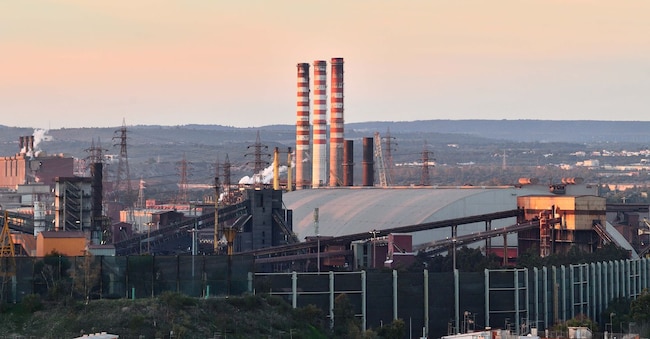
Everything has been shut down. After 62 years of operation, the former Ilva shut down its last preheating blast furnace – No. 2 – yesterday; Nos. 1 and 4 had already been shut down earlier in the week – along with the coking plant batteries. There is now nothing left in operation in the hot area after the Court of Cassation rejected the appeals lodged by Acciaierie d’Italia and Ilva, thereby upholding the decree issued in late July by the Milan Court of Appeal, which, imposed the shutdown due to pollution from asbestos and fine particulate matter. The rolling mill area is also currently at a standstill. It will restart on 10 November and continue until just before Christmas, before resuming in January with steel slabs supplied by the Marcegaglia Group.
The consequence of such widespread inactivity is the use of the extraordinary redundancy scheme for 8,622 of the group’s direct employees, of whom 6,964 are in Taranto, in addition to the scheme covering the supply chain and subcontractors. In fact, 4,200 workers from these companies will be covered by the exceptional redundancy scheme. Yesterday, at the Ministry of Labour, the trade unions and Acciaierie discussed the redundancy scheme for direct employees, but no agreement was reached and it is unlikely that one will be reached any time soon. The Ministry has rescheduled the meeting for 10 November to set up a steering group.
The trade unions have highlighted the fact that AdI, lacking the necessary resources, no longer intends to pay the unemployment benefit in advance but is asking for the INPS to pay it directly. However, the unions fear that this could lead to irregular payments of the redundancy allowance – that is, without a specific date – whereas, until now, AdI has paid the allowance on the same day as the salary. Two further issues have also been raised, including the mismatch between the redundancy fund and the supplementary allowance linked to it. In fact, the company has requested the suspension of work until February, whilst the supplementary allowance is due to continue until June, in line with the exceptional redundancy fund for the subcontracting sector.
The other point highlighted is that workers risk ending up with three payslips: the INPS payment from the redundancy fund, the company payment including the financial top-up (the latter is funded by the Government under the latest decree-law on the former Ilva), and yet another payment from the company for those staff members who may carry out any work during the month.
“Right from the start, we have emphasised the need for a special law to manage this phase of the redundancy scheme as well,” says Guglielmo Gambardella of Uilm. “We also need measures covering early retirement, the recognition of arduous work throughout the entire production cycle, and incentives for voluntary redundancy. These are issues that must be addressed, regardless of which industrial operator comes forward and makes offers.” “We urge the regions concerned to remove the six-month waiting period for access to training courses,” says Valerio D’Alò of Fim Cisl. “We must begin professional retraining immediately. We need to develop training programmes coordinated between the company and institutions that offer real, marketable skills, avoiding courses of little use in relation to the workers’ professional profiles. It also remains a priority to shed full light on the state of production activities site by site and on the prospects linked to the outcome of the tender.” As for Fiom Cgil, says Loris Scarpa, the Ministry and the special administration “must guarantee the continuity of the plants and the continuity of workers’ wages. We are calling for at least the conditions to be in place to allow people to return to work with the slabs and coils to be processed in the cold-rolling mills.”

