
Former Ilva site: meeting at Palazzo Chigi on the closure of the hot zone
An extraordinary plan is being considered to deal with the Court of Appeal’s ruling

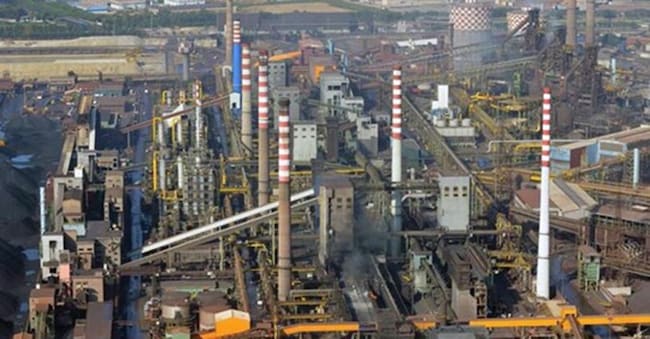
A technical working group comprising ministries, trade unions and local authorities will begin its work as early as next week, probably on Tuesday at the Mimit, to examine what alternatives are possible following the decree of the Milan Court of Appeal, which on 27 July ruled that within 90 days operations in the hot section of the Taranto steelworks must be halted due to emissions of fine particulate matter, PM10 and PM2.5, and the presence of asbestos.
Following today’s summit at Palazzo Chigi with the Under-Secretary to the Prime Minister, Mantovano, and Ministers Giorgetti (Economy), Urso (Business) and Calderone (Labour), are discussing an extraordinary plan to be agreed upon by the Government, workers’ organisations and local institutions. This plan will need to seek solutions that bring together the various aspects of the problem: the need to somehow save the former Ilva, the future of the workers, social safety nets and other support and protection measures, and the new industrial projects needed to mitigate the cutbacks that the steelworks will inevitably face – and which it would have faced in any case with the decarbonisation of electric furnaces replacing blast furnaces.
Mantovano: no decision has been taken, nor is there a predetermined outcome
“No decision has yet been taken, nor is there any predetermined outcome. All working hypotheses will be examined without prejudice and without preconceived choices,” summarised Under-Secretary Mantovano at the end of the discussion. Regarding the extraordinary plan called for during the meeting, Mantovano states that ‘to ensure it does not remain a mere slogan but is translated into a concrete project, it is necessary to clearly define its premises, starting with an in-depth technical assessment of the implications of the Milan Court of Appeal’s ruling. It is also necessary to examine the possibility of involving further investors, starting with Italian ones, and to jointly analyse all further investment proposals concerning Taranto, as well as the resources available to support such measures. This is also with a view to guaranteeing a future in employment for those who, as a result of the situation that has arisen, might lose their jobs. It is also necessary – Mantovano continues – to strengthen the involvement of local authorities, in particular the Puglia Region and the Municipality of Taranto. The entire process must lead to the development of concrete proposals, building on the input from the trade unions”.
At the start of the meeting, the Under-Secretary to the Presidency pointed out that the ruling of the Milan Court of Appeal ‘prohibits production activities, and is therefore a ruling suspending activities, not one setting out conditions for their continuation’.
A new tender specifically for the area and cooling systems may be issued
Later in the discussion, Mantovano says that the tender to sell the former Ilva site in the ‘cold zone’ needs to be ‘revised’. This is interpreted as meaning that a new tender is required for the former Ilva site following the two already launched in July 2024 and August 2025, given that a production facility comprising the hot area in Taranto and the cold areas in Taranto and at the other plants is no longer on the market, as the hot area is to be shut down within 90 days by the Milan courts, whilst only the individual cold areas remain.

