
Former Ilva: Urso says we must prevent 2,500 redundancies in related industries
The Minister for Enterprise: a series of round-table discussions have been called for Tuesday at Palazzo Chigi; I hope we can work together. So far, this has not happened in Taranto

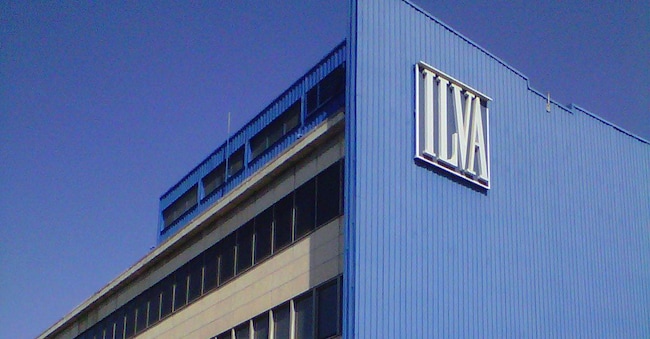
The Government wants to prevent the 2,500 redundancies in the former Ilva supply chain in Taranto, as announced by 28 companies affiliated with Aigi, following the Milan Court of Appeal’s order for the hot section of the plant to be shut down by the end of October. This was stated by the Minister for Enterprise, Adolfo Urso, on the sidelines of a meeting for AC Boilers in Gioia Del Colle (Bari). “We absolutely must prevent mass redundancies,” said Urso. “We are committed to ensuring that a decision which has triggered what many have called a social and industrial time bomb does not result in workers being the first victims. A meeting with local authorities will be necessary as we must work together. We have convened a series of meetings at Palazzo Chigi which will take place next Tuesday. Workers in the supply chain are the first to be affected, as companies in this sector operate mainly in the hot area that is about to be shut down.”
According to Urso, ‘today more than ever, we need to work together on the former Ilva site’, with local authorities ‘and then, of course, with businesses too, starting with those in the ancillary sector and the Italian manufacturing supply chain that rely on products from Taranto’. Urso, who highlighted the lack of a spirit of cooperation in Taranto regarding the former Ilva site – in contrast to what happened in Terni, Piombino and also in Gioia del Colle with AC Boilers – continued as follows: ‘If we manage to create – as I have hoped since Tuesday – a spirit of cooperation, we will be able to limit the social and economic impact and also draw up a revitalisation plan, in the hope that the international tender currently underway will yield a positive outcome.’
Trade unions: without resources, the plant still risks a shutdown
Meanwhile, should the Milan Court of Appeal decide to suspend the order to shut down the hot section of the former Ilva plant (both Ilva and Acciaierie d’Italia have filed applications for a suspension) and thus allow operations to continue, the steelworks “still risks shutting down at the end of October due to a lack of resources”. This was highlighted by the trade unions Fim Cisl, Fiom Cgil, Uilm and Usb at a press conference on the collective redundancy procedures initiated for over 2,500 workers in the supply chain and subcontracting sector.
At the former Ilva site, the trade unions said, “there are sufficient resources to last until the end of October”, which is also the deadline by which the hot end – blast furnaces and steelworks – must cease operations by order of the courts, which cited reasons of pollution and damage to health and the environment (asbestos present in the blast furnaces and emissions of fine particulate matter). According to the trade unions, after October – even if the Court of Appeal rules in their favour – there would be insufficient funds to purchase the raw materials needed for steel production, keep the few remaining active plants running, pay employees’ wages and suppliers, and even advance redundancy payments in place of the INPS.
Regarding resources, it should be noted that in recent months the Government, within the framework of the 390 million ceiling (a bridging loan pending the sale of the company to private investors) authorised by the European Commission, has authorised the disbursement to the former Ilva of three tranches of funding: 149 million, 100 million and 100 million. Meanwhile, regarding the extraordinary redundancy fund, the trade unions are expecting the former Ilva to significantly increase the number of beneficiaries in the near future, following the shutdown of the hot area ordered by the judicial authorities. Currently, the scheme is authorised to cover a maximum of 4,500 workers across the group (out of a workforce of around 10,000), of whom 3,800 are in Taranto (out of just under 8,000).
The trade unions’ positions
“The former Ilva case is becoming even more complicated because, although the trade unions had, as one, asked the employers’ organisations – and Aigi in particular – to hold off before sending out the notices and procedures regarding the 2,500 collective redundancies, Aigi nevertheless went ahead on its own without waiting for the meeting on Tuesday 8th,” said Luigi Bennardi of Uilm Taranto. “This worries us greatly because Taranto is on the brink of a social crisis and we must try to avert it,” continued Bennardi. “We are telling the Government and all the institutions, ahead of the summit at Palazzo Chigi on 8 September, that time has run out in Taranto. Clear action must be taken through extraordinary measures for all workers: Acciaierie d’Italia, Ilva and, above all, those in the subcontracting sector and related industries.”
“Now that the Mediterranean Games are over – during which Taranto showcased its beauty in a fascinating setting despite its many health, environmental and employment issues – to announce a procedure the very next day involving 2,500 redundancies, is, I believe, a slap in the face for the region, the institutions, the workers and the city,” argued Biagio Prisciano of Fim Cisl. As well as raising industrial, environmental, employment and social issues, we will also bring to Palazzo Chigi those concerning the ancillary sector, whose workers, compared to others, represent the weakest link’. “Prime Minister Giorgia Meloni said in Bari that the Government is in favour of the operational continuity of the former Ilva, but for that continuity,” noted Prisciano, “we need not only proposals but also clarity on what the Government intends to do with the Taranto plant and the group’s other facilities. “When we talk about job security, what we are saying is that we are not in favour of maintaining the current coal-fired production cycle; rather, we are in favour of switching to an electric process using electric furnaces and producing green steel without polluting and without causing illness to those inside the factory or those outside.”
According to Francesco Brigati of Fiom Cgil, ‘the Government is taking on a huge responsibility: that of closing the former Ilva plant without offering any prospects for the workers, the city or decarbonisation. Even if there were to be a stay of execution regarding the ruling by the Milan Court of Appeal, the plant would still close due to a lack of financial resources. Steps are currently being taken to shut down operations. We must not place the blame on the Milan Court of Appeal. I believe – says Brigati – that the Government bears a very significant responsibility, given that this situation has arisen. Ships carrying ore are not arriving, and so supplies of raw materials are running out. The Government, which celebrated its record-breaking longevity in Bari, had five years to intervene and plan for the future of the former Ilva, but it failed to do so.” And Franco Rizzo of USB concluded: ‘We expect a realisation to set in; in other words, the Government must find the courage to do the only thing that needs doing: nationalise the factory. The only entity capable of driving forward a serious, genuine decarbonisation project is the State. A tender has indeed been launched for the sale of the former Ilva site; there are bids, but they are bids in which the financial aspect is always guaranteed by the State.”

