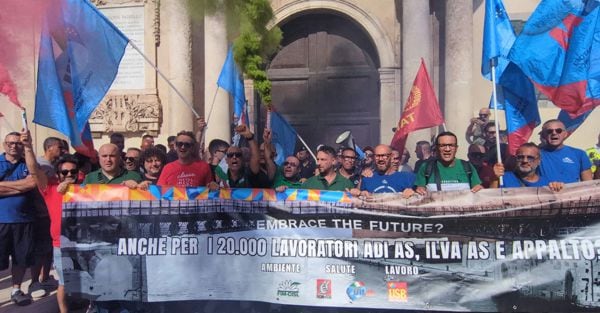
Former Ilva site: 24-hour strike and road blockades
A new wave of industrial action is beginning in Taranto over the threat of 2,500 workers being made redundant. A meeting is due to take place tomorrow at Palazzo Chigi

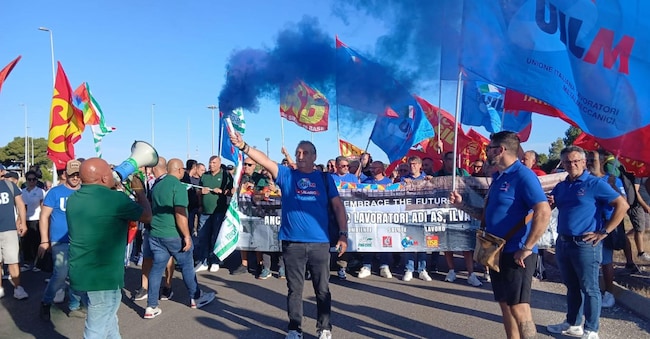
A 24-hour strike, which will continue until 7.00 am tomorrow, 15 September, is currently being held by workers at companies in the supply chain contracted to the former Ilva plant in Taranto. The protest was organised by the trade unions Fim Cisl, Fiom Cgil, Uilm and Usb following a meeting held early this morning in the area in front of the steelworks’ main entrance.
“We will not stop until there are solutions and extraordinary measures for all workers,” the organisations have announced. Workers and trade unions are protesting against the mass redundancies announced by certain employers’ associations. Specifically, Aigi has announced redundancies affecting over 2,500 employees across 28 member companies, whilst Confapi warns of the risk that a further 1,700 could be affected by mass redundancies and extraordinary redundancy schemes, though it has not yet initiated the procedures.
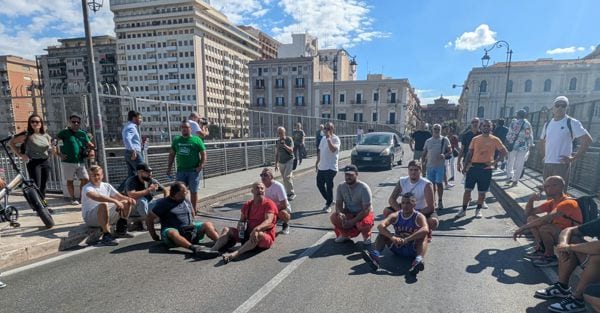
Redundancies are on the horizon following the shutdown of the hot area at the former Ilva site, a shutdown confirmed on 11 September by an order from the Milan Court of Appeal, which ruled that the hot area, poses a health risk due to the presence of asbestos in the blast furnaces – albeit encapsulated and not dispersed – and the emission of fine particulate matter, PM 2.5 and PM 10. This morning, the workers first blocked the road leading from Taranto to Statte, near the company gatehouse; they then slowed traffic on the Taranto–Brindisi motorway heading towards Taranto and, upon reaching the city, are now staging a sit-in outside the Town Hall. The Town Hall is under police guard and the main entrance is closed. The entire former Ilva subcontracting and supply chain sector is currently the one most at risk in terms of employment. The majority of these firms operate precisely within the ‘hot zone’, where they have so far provided labour, maintenance, supplies, transport and industrial cleaning services.
The trade unions’ demands
“We must defuse this social time bomb immediately; we must safeguard all workers by protecting their incomes through extraordinary measures and create prospects for the industry,” says Biagio Prisciano of Fim Cisl. “ “We do not want to rely solely on social safety nets; we do not want to live through redundancies, but we want to have decent work that respects both health and the environment.”
“A very important issue has come to light: first and foremost, we must provide ad hoc, extraordinary social safety nets for the former Ilva subcontracting firms that have already announced collective redundancies. And we call on all companies that have done so to withdraw them immediately”, says Pietro Cantoro of Fim Cisl. “The Government must provide us with an industrial plan setting out a roadmap for the resumption of operations, because people need jobs,” says Cantoro, for whom “restructuring is an issue that should already have been addressed and which must now be tackled as a matter of urgency. Clearly, the recovery plan must be environmentally friendly and green, given the challenges that lie ahead. Workers cannot be left to fend for themselves. People need guarantees and a future.’