
France, Sarkozy sentenced to five years. He will be imprisoned
The former president announced that he will appeal: 'I will sleep in jail, but with my head held high'

2' min read
2' min read
A Paris court sentenced former French President Nicolas Sarkozy to five years in prison after finding him guilty of a key charge in his trial for allegedly illegally financing his election campaign from Muammar Gaddafi's government. Sarkozy was found guilty of conspiracy in a plot from 2005 to 2007 to finance his campaign with funds from Libya in exchange for diplomatic favours. However, the court acquitted the former president of the other three charges, including passive corruption, illegal campaign financing and concealment of misappropriation of public funds: no proof of the transfer of the money was found. In essence, Sarkozy would have 'let it be' the intermediaries with him convicted, and engaged in negotiations that were in any case illegitimate, and could not have been unaware of the course and outcome of the negotiations.
The committal order, which has only been in force since February 2020, allows the convicted person not to be taken to prison immediately after the hearing: he will be summoned on 13 October before the sentencing judge to set a date for imprisonment. This must be set within a period not exceeding four months from the date of conviction.
If it considers it necessary, the court may also grant the person concerned time to organise his subsequent professional and family absence. However, the order suspending the internment does not allow for any adjustment of the sentence. In other words, Nicolas Sarkozy cannot be placed on day parole, nor subjected to electronic monitoring, for example.
Moreover, when the order to suspend internment is accompanied by a provisional execution, as in the case of Nicolas Sarkozy, the appeal has no suspensive effect. Consequently, even if the former head of state appealed against his conviction, he would still be imprisoned. The former president, having passed the age of 70, can immediately apply for parole or an electronic bracelet, and will not have to wait until he has served half of his sentence: however, the concession is left to the judge's free judgement and, above all, it only applies to final sentences, not to those appealed. In the event of an appeal, Sarkozy will therefore not be able to ask for the sanction to be converted. With a small 'window': the president of the Court of Appeal could, at the former president's request, set him free, but contradicting the first instance judges. According to some jurists, Sarkozy risks spending two to three years in prison anyway.
The former president: 'I will sleep in jail, but with my head held high. I will appeal"
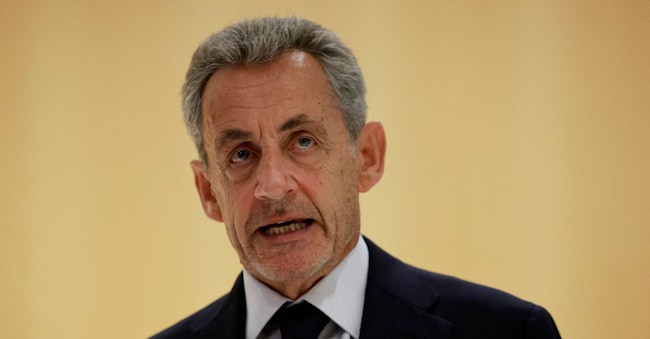
.Sarkozy announced as he left court that he will appeal the sentence. 'If they absolutely want me to sleep in jail, well,' said the former president, 'I will sleep in jail, but with my head held high. I am innocent. This injustice is a scandal. I will not recuse myself for something I did not commit. Of course, I will appeal'.

