
Former Whirlpool site: the research centre where washing machines used to be assembled is set to open in November
Work is currently underway, with an investment of 90 million, led by Igf (part of the Tea Tek group), which has taken over the site from the multinational.

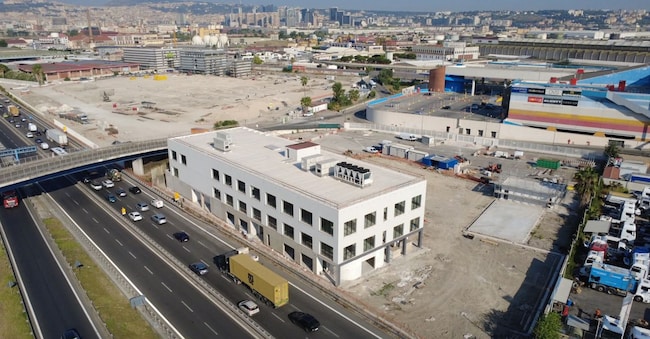
Work is progressing at the site where the former Whirlpool factory – taken over by Italian Green Factory, part of the Tea Tek group – is being converted; the company will produce components for photovoltaic systems there. The Research Centre, as set out in the business plan, will be ready in November. It will be the first operational hub of the major reindustrialisation project promoted by the Neapolitan business group, which has already taken on the approximately 290 employees left jobless by the American multinational: a project involving an investment of over 90 million, supported by a development contract.
In short, where washing machines were manufactured until two years ago, a research centre focusing on the application of artificial intelligence to energy networks will be up and running in a few months’ time; it will also be equipped with a quantum computer (due to be completed by the end of the year). IGF has, in fact, taken part in the STEP Call for Proposals (first edition organised by the Campania Region) with a project for a quantum computer and cryogenic laboratory involving an investment of 25 million, securing a grant of 12 under the 2021–2027 ERDF Operational Programme (European Regional Development Fund, Action 1.6.1). Work is set to begin in November, initially carried out by staff already employed by the group; three further staff members will join by the end of the year, and once fully operational by February 2027, this facility will have a staff of 12 researchers. The investment in the quantum computer marks the first step in a close partnership with the university system and an intensive collaboration with the team led by Professor Francesco Tafuri of the Department of Physics at the University of Naples Federico II, an internationally renowned expert who has already designed and physically assembled a prototype for his university. The process for registering a patent for the IGF computer has been initiated.
This first phase of the new renewable energy hub developed by Igf accounts for 30 per cent of the project. The actual factory makes up the remaining 70 per cent. This will be spread across two sites: the first in Naples, on Via Argine (on the former Whirlpool site), and the second in Pomigliano d’Arco, at a facility purchased from Stellantis. The first site will focus on the production of wiring harnesses, electrical switchboards, transformer substations for photovoltaic systems and power skids. In Pomigliano, on the other hand, production will focus on structural steelwork and components for solar trackers. Production here could begin in January 2027. In Via Argine, following the removal of 32,000 square metres of asbestos, refurbishment work has begun and is due to be completed by September 2027.
With an investment of 92 million for the production side and 25 million for the research side, IGF – in which Invitalia has held a 49 per cent stake since January 2026 for a period of five years – has been awarded a grant of 23 million and a loan of 35 million at a preferential rate.


