
"Foundations can act as a bridge between Brussels and the needs of the territories"
Acri and Cariplo President Azzone: 'Strengthen presence in EU programmes'

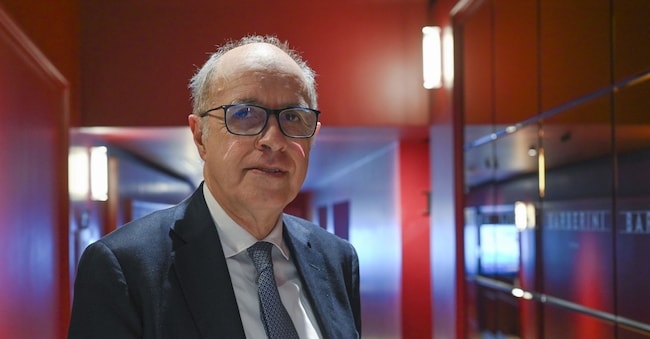
Making critical mass, coordinating available resources and bringing the real needs of territories to Brussels. This is the challenge that, according to Giovanni Azzone, president of Acri and Fondazione Cariplo, is opening up in view of the next European programming period 2028-2034. A step that comes in a complex phase, in which - thanks to the international economic situation - public resources may be scarcer than in the past and, precisely for this reason, will have to be directed more carefully. The ambition is there, in short, at the top of the association that brings together the Foundations of banking origin, each of which, for its own area of reference, could become the ideal 'bridge' for gathering instances from below and responding to them in the best possible way. "We want to strengthen the capacity of local organisations to participate in a qualified manner in European programmes, increasing their skills, know-how and internationalisation opportunities. The quality of our third sector is already very high and can certainly compete at European level,' Azzone told Il Sole 24Ore.
This is why the Cariplo Foundation, together with the Lombardy Region and Anci Lombardia, has chosen to put forward a reflection on the future European budget, which will be the focus of a debate to be held on Monday in Milan. The starting point is a conviction: the Foundations have all the right cards to make a contribution in the European context. 'We are a privileged observatory,' Azzone explains, 'we see the problems from within, we listen to the needs of the territories, we are an institutional subject able to give objective opinions on the situation that our communities, our families, our young people and the elderly are experiencing.
There is no shortage of examples, as demonstrated by the cooperation with local authorities. Azzone cites a number of experiences already undertaken by Cariplo in Lombardy, for instance with the ZeroNeet programme (dedicated to young people who do not study or work) or Destinazione Autonomia (for people with disabilities) and on initiatives in the cultural sphere. Or the work done with Anci, particularly on issues related to the Pnrr, which for Cariplo represents 'a concrete example of intervention in the planning capacity of local authorities'. "Often the municipalities did not have the resources to cover the planning costs and then compete for European funds," the chairman recalls, "We filled that gap.
The natural outcome of this premise, for the president representing Italian foundations, is that organisations can not only intercept more European funds, but use them better, building a territorial direction capable of dialogue with Brussels. Because, he says, there is an 'awareness that in a context where resources are increasingly scarce, it is necessary to coordinate those available in order to have greater impact'. This is why the new European programming is seen as an opportunity to be prepared in advance. "We would like to create a working table with the Lombardy Region and Anci to contribute to the debate on the next European budget for the seven-year period 2028-2034," explains Cariplo's chairman. "It is a decisive step and we believe it is the right time to bring concrete contributions."
The European dimension, for Cariplo, is not new. The Lombardy institution claims stable relations with some of the major international philanthropic realities, from La Caixa to the Wellcome Trust, from the Gulbenkian Foundation to the Fondation de France, and the Philea and Impact Europe networks. But now the next step is to strengthen the dialogue with EU institutions. "Relations with European institutions for a philanthropic organisation are increasingly central. The issues, after all, can no longer be tackled only on a local level: 'From inequality to climate change and housing, these are global challenges. To remain confined to a local dimension would mean losing effectiveness'.


