
Four-season tyres, smart choice
The new all seasons

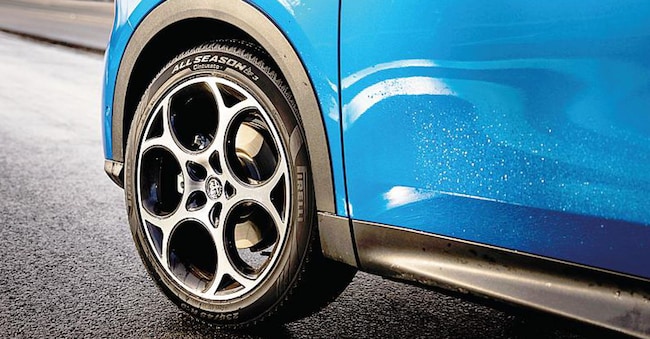
If for the choice of car the role of the fleet manager is fundamental, also for tyres it is important to decide what to fit according to one's needs and habits. Given for certain that the winter tyre obligation from November to April has considerably improved safety, thanks to greater frequentation of tyre shops, the technological innovation of all-season tyres is rewriting the habits of thousands of users.
Because unless you are a pharmaceutical information provider in the Pustertal valley or a representative of gastronomic products for huts above 2,000 metres, finding more than five days a year with a snow situation unsuitable for 'four-season' tyres is less and less frequent.
Folklore comparisons aside, the main theme is how 'summer-to-winter' tyre changes can be avoided in many cases by changing a long list of habits that worsen user productivity and increase overheads. Leaving aside fleets where tyre changes are handled directly by leaving the car in the company car park, either by on-site changes or by drivers moving the car, these are generally operations that take time away from work.
And this is where tyres such as the Pirelli Cinturato All Season SF3 come in, which inherits from the previous product the adaptive tread technology with 3D sipes, further perfected to provide grip on snow throughout the life of the tyre. As the tread wears, in fact, the sipes change their shape from straight lines to a zig-zag pattern, increasing the surface area capable of capturing snow despite the reduction in depth given by tyre wear. The adaptive behaviour of the design can also be found in the mobility of the sipes: thanks to their ability to close and compact under the high forces exerted between the footprint and the asphalt, both dry and wet, they transform the tread from a winter sipe to a summer sipe, much more rigid and compact, enhancing braking performance, road holding and driving precision.
Turning to Michelin, the CrossClimate 3 is the latest evolution of the French all-season family, launched in 2025 ten years after the first CrossClimate. It is designed for cars, crossovers and SUVs with thermal, hybrid and electric engines, focusing on constant safety and ease of use. The 3Pmsf certification makes it suitable for winter use, while the new V-shaped tread pattern improves water drainage and reduces the wet braking distance by 4% compared to the previous reference. The work of the Thermal Adaptive Tread Compound enables the tyre to adapt to different temperatures and surfaces, from dry asphalt to snow.

