
France: budget approved, Lecornu survives censorship
The 2026 budget envisages a 5% deficit. The external support of the socialists is crucial, boosted by various social measures
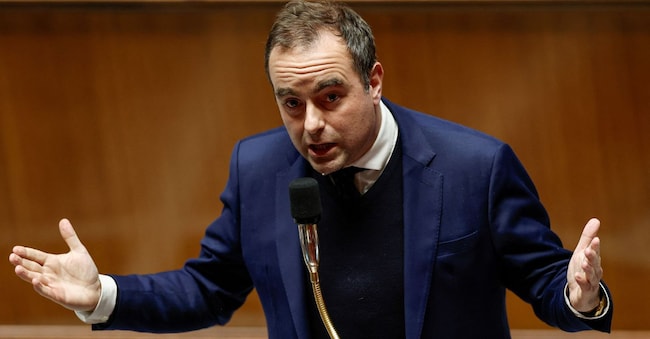
The French budget has been passed. Sébastien Lecornu's government has survived even the last two censure motions and the 'state' budget law, which excludes the Sécurité sociale part already approved on 16 December, is considered adopted. Yesterday, in the Assemblée nationale, the motion presented by the left of France Insoumise and the ecologists gathered, thanks to the convergence of the radical right, 260 votes, against a quorum of 289: a result not far from the previous censure votes of 23 January (269 votes) and 27 January (267 votes). The motion tabled by the right then received only 135 votes (142 on 23rd, 140 on 27th January).
"It is time to move on and let France have a budget," the prime minister said at the end of the preliminary debate. After the necessary preventive passage at the Conseil Constitutionnel, the law can be enacted by President Emmanuel Macron in a rather tight timeframe.
Overcoming uncertainty
Lecornu therefore succeeded in the not easy task of getting the budget approved. The path was bumpy, the government had to resort to the provisional financial year. The fragmentation of the Assemblée did not, however, suggest anything else. Even the 2025 budget, after the censure vote that brought down Michel Barnier's government on 4 December 2024, was only approved on 6 February (and that of the Sécurité Sociale on 17 February) while François Bayrou was prime minister. Bayrou himself, starting the process for the approval of the two budget laws, chose to undergo a preliminary censure vote on 8 September 2025 that led to the fall of his government.
Lecornu's strategy
Lecornu's strategy succeeded in overcoming the constraints posed by the political situation, starting with the tight timeframe. He immediately swept away two major obstacles: he pledged not to use Article 49.3 of the Constitution, which allows the budget to be passed without a parliamentary vote, and he proposed to the left - and especially to the socialists - to freeze the raising of the legal retirement age (a 'reference' level, somewhat different from the Italian retirement age), until the 2027 presidential elections.
He then shifted the task of building a majority on individual measures to Parliament, making the government take a step to the side. In this way he first of all alleviated the political pressure against President Emmanuel Macron. Calls for his resignation were focused on him, which would have opened up a phase of structural uncertainty: the institutional dynamic would have made the head of state accountable to Parliament - and the French regime is constructed in a decidedly different way - and, if accepted, would have forced the French to vote after a very fast election campaign, the timing of which is dictated by the Constitution. Lecornu then gained the external support of the socialists who, after having obtained the suspension of the pension reform, renounced the prime minister's other concession: the pledge not to use Article 49.3, which was instead decisive.


