
France, the Assemblée suspends pension reform
Socialists, ecologists and lepenists vote yes. The républicains are divided and the Macronians abstain. Communists and Mélenchon's Insoumis against

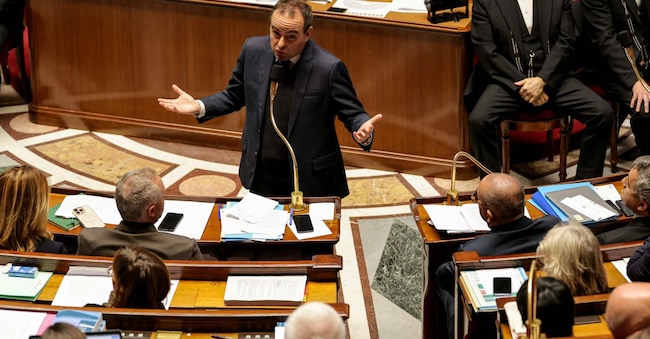
A decisive yes. The suspension of the French pension reform until January 2028 was approved in the Assemblée, at first reading, with 205 votes in favour and 146 against. There were 100 abstentions. According to the voted rule, the raising of the legal - reference - age for social security benefits would be frozen: those born in 1964 will retire at 62 years and 9 months and no longer at 63 years as the progression towards 64 years of age launched with the reform envisaged. The number of quarters of contributions, on which the calculation system in France is based, also remains frozen at 170.
Now, however, the floor passes to the Sénat, whose members are chosen by the local authorities, mainly expressing the traditional parties, and gathering consensus could become complicated. A first step has been taken, however, and the political significance is very strong. It is not only a green light for the government of Sébastien Lecornu, which can now really hope to vote on the two French finances, that of the State proper, and that of the Sécurité sociale, to which the now approved Article 45 bis belongs.
The rule was also approved by a partly unprecedented coalition, although the transfer of responsibility to the Assemblée, desired by Lecornu, does not make it a scandal. Most of the socialists and ecologists on the left voted yes (with a few abstentions and none against), and the Rassemblement national of the radical right. The Macronian deputies abstained (with three in favour and five against), while the Horizons group of former prime minister Edouard Philippe, the communists and, on the extreme left, La France Insoumise voted against. The Républicains were divided: 8 in favour, 25 against, 9 abstained; and so was the group of democrats of Lecornu's predecessor François Bayrou (11 in favour, one against, 18 abstained).
Controversy was inevitable. On the left, the first secretary of the Parti socialiste, Olivier Faure, criticised the Insoumis: ""I did not imagine that it was imaginable: to see a left-wing party, LFI, vote AGAINST the suspension of the reform," he wrote on X. "In the name of the 'big day', one should not, above all, accept an immediate and positive development for millions of future pensioners!" added Faure, saying he was "very proud", and criticising "those who have already given up on victory" in the 2027 presidential elections. For Mélenchon's followers, voting for the suspension would have meant voting for the raising of the legal retirement age to 64, only suspended, while abolishing it: 'Voting for the postponement of the pension reform means voting for the pension at 64. The Insoumis will vote against postponing the pension to 64, because we do not accept the principle," said group leader Mathilde Panot. For the Socialists, Jérôme Guedj explained, it is a question of 'suspending in order to reform better, within the framework of a democratic debate'.
The president of the Républicains, Bruno Retailleau, faced with the divisions in his own party, preferred to attack the government (which also saw the abstention of the prime minister's party): "I am astounded by the cowardice of the government, which has just sacrificed the future of our young generations on the altar of its political survival. This irresponsible decision, taken under the diktat of the Ps with the complicity of the RN, will cost France billions'.


