
'In France ready to launch a 1 billion euro plan'
Emma and Antonio Marcegaglia: 'Cbam and Salvaguardia structural factors, let's strengthen verticality in Europe'
by Matteo Meneghello
 Aggiungi Il Sole 24 Ore
ai preferiti su Google
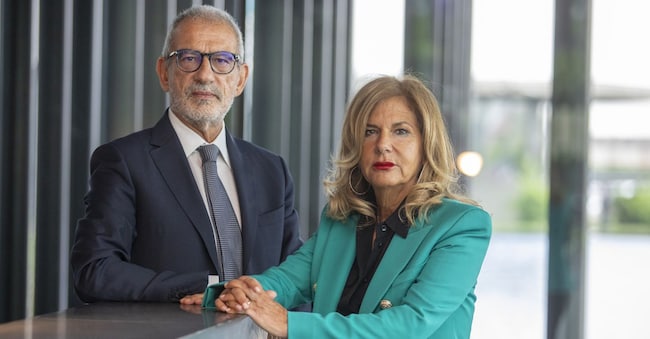
Against a backdrop of a sharply accelerating start to the year, the Marcegaglia group is preparing to launch a €1 billion maxi-investment in the French site of Fos-sur-Mer, where it has acquired a number of assets from the bankruptcy proceedings of Ascometal, with a view to strengthening the upstream integration (i.e. in steel production) of its value chain. This is one of the pieces, perhaps the definitive one, by virtue of which the brothers Emma and Antonio Marcegaglia, at the top of the family group of the same name, have in recent years redesigned the identity of the group, consolidating its leadership in a new European dimension, with an even more integrated vocation, surpassing the historical one of steel transformer.
The amount of expenditure envisaged for the Fos sur Mer project, one billion euro, is considerable: what is the timetable for the realisation of the plan?
This is the largest investment in the group's history. In recent weeks we have signed a EUR 450 million contract with Danieli for the plant works. The plan for the investment at Fos-sur-Mer, which includes a new furnace, a continuous caster and a rolling mill, should be definitively grounded in the next few days, with the aim of obtaining the authorisations to start work between October and November. The aim is to cast the first French slabs at the beginning of 2029.
How does this new choice fit into the group's strategy?
The plan is to produce 2 million tonnes of liquid steel, with a rolling capacity of 3 million. We will also be able to process stainless steel slabs from the Sheffield plant, acquired from the Finnish Outokumpu, and other imported slabs if needed. The investment has been revised upwards from the initial assumptions: Cbam and Salvaguardia are an undeniable structural market shift in favour of European production. With this operation, 35-40% of the group's requirements will be guaranteed by domestic production, strengthening the capacity for value creation, all the more so if prices remain sustained. Not to mention the benefits in terms of decarbonisation and production flexibility. Finally, the project is scalable: with another furnace and another continuous casting, we can reach 4 million tonnes of steel and 4 million rolling mills.

