Europe

France, recession and instability: S&P issues a negative outlook

The credit rating. The A+ rating for public debt has been confirmed, but the agency warns that a downgrade could be on the cards because ‘persistent political polarisation’ could hinder fiscal consolidation

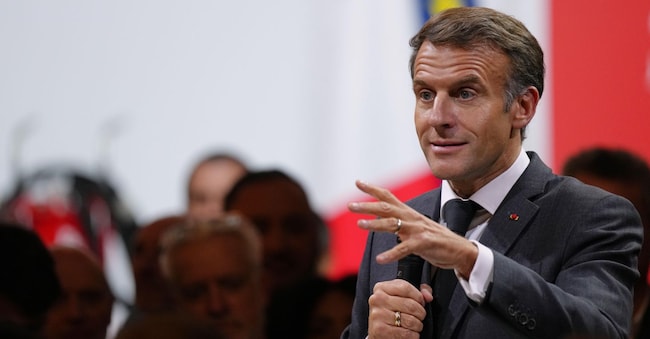
Strada in salita. Il governo del presidente Emmanuel Macron (nella foto) deve approvare una legge finanziaria per il 2027 che riduca il disavanzo a non più del 5% del Pil.  (AP Photo/Aurelien Morissard, Pool/APN)

3' min read

Translated by AI
Versione italiana

3' min read

Translated by AI
Versione italiana

Recession and political instability are weighing on France’s public debt, which S&P Global Ratings has now also placed on a negative outlook. The A+ rating remains unchanged, but the agency warns that a downgrade could be on the cards – and in the not-too-distant future – if the deficit does not fall significantly or if economic growth does not pick up again.

“The negative outlook reflects the rise in public debt against a backdrop of modest economic growth prospects,” explained S&P in a statement released on Friday evening. According to the agency, “persistent political polarisation, even after the 2027 presidential elections, could continue to hinder the implementation of measures aimed at reducing the deficit and reforms to support growth”.

Loading...

For the Finance Minister, Roland Lescure, S&P’s decision highlights the need to swiftly pass a budget bill for 2027 that will reduce the deficit to no more than 5 per cent of GDP next year. However, this target may prove out of reach, and the European Commission forecasts a deficit of 5.4 per cent.

The budget debate will reach its moment of truth in December, when the draft bills return to the National Assembly. If it fails to persuade part of the opposition to vote for the package, the Government could decide to force the issue by invoking the constitutional provision that allows it to bypass Parliament. This has happened on several occasions in the recent past. In doing so, however, the government would risk reigniting protests amongst the French public, who in recent weeks have taken to the streets in their tens of thousands, leading to clashes and unrest.

For 2026 too, the Government had initially targeted a deficit of 5 per cent, but it will end up being almost half a percentage point higher.

The ECB’s Vice-President, Boris Vujcic, in an interview with the Austrian newspaper *Kurier*, sought to allay fears of a French sovereign debt crisis, which would have repercussions across the entire eurozone. “I do not believe that France is in the same situation as Greece was at the time of the sovereign debt crisis,” he said. Compared with that situation, France has “lower public debt”, a “stronger and more diversified” economy and is “a wealthier country”, with sovereign bonds benefiting from a “larger and more liquid” market. “Fiscal issues,” Vujcic reiterated, however, “must be resolved through fiscal measures.”

The ECB’s Vice-President did, however, admit that, due to the presidential election campaign, ‘no significant decision’ is expected.

Fitch Ratings assigned a negative outlook last month, in an unscheduled decision. Moody’s has held the same view for some time.

France’s public debt, which appears impossible to reduce, is coming under increasing pressure, not least because the economy has now ground to a halt. Indeed, with GDP contracting – albeit slightly – in the second and third quarters of the year, the economy has entered a technical recession, according to data just released by the National Institute of Statistics (INSEE). Growth recorded in the first nine months of the year stands at a mere 0.1 per cent, making the 0.5 per cent increase forecast by the Government for 2026 unlikely.

Nor does the outlook for next year look any better. S&P forecasts a deficit of 5.3 per cent of GDP, anticipating that fiscal consolidation efforts will likely be undermined by rising debt financing costs. Growth, by contrast, is forecast at 0.6 per cent, below the government’s estimates. Other institutions have even lower estimates.

Copyright reserved ©
Loading...
Loading...

Brand connect

Loading...

Newsletter

Notizie e approfondimenti sugli avvenimenti politici, economici e finanziari.

Iscriviti