
France: a decisive yes to the Sécurité Sociale budget
The law suspends the pension reform. After a purely formal passage through the Sénat it will be passed definitively by the Assemblée

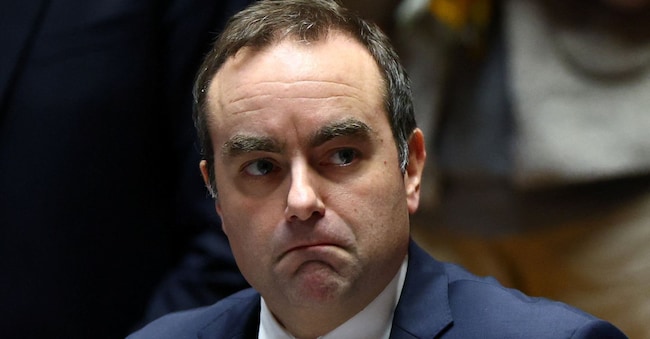
A resounding yes, but precious. The French Sécurité Sociale's budget was approved by the Assemblée national after a very uncertain vote until the last moment. The text destined to become definitive obtained 247 votes in favour, 234 against and 98 abstentions, which allowed Sébastien Lecornu's government to score an initial success. Voting in favour were the Macronians from Ensemble, François Bayrou's MoDem, almost all the Socialists (six abstained) and nine deputies from Horizons, Edouard Philippe's group (the others abstained). Divided once again were the Républicains (18 votes in favour, 28 abstentions, three against) but also the Ecologists (three in favour, nine against, 26 abstained). Decided no from the radical parties: the Rassemblement national on the right, La France Insoumise on the left.
The contrast with the Senate
The approved law is not the state budget that the French call regalien, administrative: it is the parallel one that merely defines resources and expenditure for the French welfare state, separated since the post-war period from the accounts of other public activities. It is not even, formally, a definitive yes: the Sénat voted for a profoundly different text, and the Joint Equal Commission envisaged by the Constitution, made up of seven deputies and seven senators, failed on 26 November to pass an agreed text. The representatives of the Upper Chamber are against the suspension of the pension reform provided for by the law and the agreement between the government and the Socialist Party.
Final go-ahead
The Sénat will undoubtedly also vote against this second text on Friday 12 December, but the French Constitution allows it to avoid the stalemate of an endless shuttle between the two chambers. At that point, the government will be able to apply Article 45 of the Constitution, and ask the Assemblée to vote once again on one of the law texts approved during the long procedure - and modify it if necessary - this time definitively. The partial pre-eminence of the Chamber of Deputies, in a system defined as imperfect or asymmetrical bicameralism, stems from the fact that the Assemblée is elected by the people - it also has a power of censure and thus political control over the government - whereas the Sénat is appointed by the territorial authorities and thus has less representativeness.
Increasing expenditure on health care...
The go-ahead was the result of a long series of concessions, which ended yesterday when the government increased the target increase for health expenditure (the assurance-maladie) from 2% to 3%, which was approved by 259 votes in favour and 64 votes against. Not surprisingly, a few hours before the final vote, the expenditure-only part of the law was approved with 227 votes in favour and only 86 votes against (with 189 abstentions). The government also withdrew an amendment that allowed the Assurance-maladie to review medical fees in cases of excessive profitability, recorded in areas such as radiotherapy, diagnostic imaging, dialysis and other nephrology treatments. Freelance doctors' unions had protested strongly against the amendment, which was also taken up - and rejected - by a single MP.
...and contributions from property income
The law also provides for an increase in contributions on wealth income, albeit reduced - after rejection in the Senate - compared to the initial draft. In addition, a France Santé network will be set up to guarantee care in isolated territories, a major problem in France. Aid to families with children until they reach the age of 18 (and no longer 14), an additional two months' leave for the birth of a child for both parents, and an increase for mothers' pensions are some of the measures in the Finance Bill.


