
Francesco, the wolf and that peace agreement
The event. This year’s Festival is dedicated to the saint of Assisi, marking the 800th anniversary of his death, and the programme explores in depth various aspects of the life and legacy of this great figure

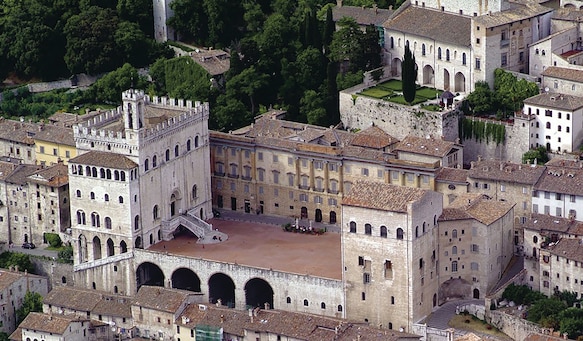
The Medieval Festival, an unmissable event for all enthusiasts and scholars of the Middle Ages, is dedicated this year to the saint of Assisi: 2026 marks the 800th anniversary of the death of St Francis of Assisi, which an ancient source places on the night between 3 and 4 October, celebrated joyfully by a flock of birds gathering round his body as it lay on the bare earth at Santa Maria degli Angeli alla Porziuncola.
A foregone conclusion, one might say, because Francis is the most famous of the medieval saints. Some have described him as a rock star: an inappropriate, modernised image, yet one that hints at the reality of a young, who broke the mould, who loved to sing poems – both those written by others and his own (the Canticle of the Creatures was intended to be set to music) – and who shook up the conventions of preaching, and at times even of prayer, with an extraordinary charisma.
The packed programme explores in depth, through a host of talks, specific aspects of Francesco’s life and, above all, his multifaceted and tormented memory; yet it also sets out to highlight, with the help of leading popularisers, the role of this figure in History – with a capital H.
The choice of the festival’s logo may seem less obvious, but one need only think of the town where the event takes place to realise that the wolf is almost as much a citizen of Gubbio as his friend the friar, who first arrived here after having had a spectacular row with his father in the main square of Assisi and having thrown his nakedness in his face, stripping off his clothes right in front of a cloth merchant.
The encounter between Francis and the wolf, however, did not take place at that first stop in Gubbio; the Fioretti, which have made this story known to the whole world and passed it down to us, do not specify when it occurred, transforming the event into a myth, if not a fable, as is typical of that text, written in Tuscany at the end of the 14th century but reworked from a work from the Marche region dating from the beginning of the century.

