History of Costume

Franco Moschino exhibition at the Forte di Bard in Aosta

From 31 October, the venue in the Aosta Valley will host a tribute to the fashion designer and entrepreneur, founder of the brand of the same name, who died in 1994 at the age of 44

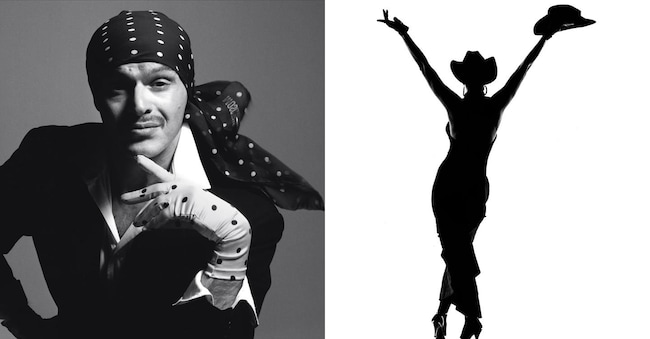
Un ritratto di Franco Moschino, che, da pioniere, negli anni 80 apparve in alcune campagne pubblicitarie del marchio, e la modella Vivian Infantino durante una sessione fotografica curata da Sergio Caminata a Milano a metà degli anni 80

4' min read

Translated by AI
Versione italiana

4' min read

Translated by AI
Versione italiana

An exhibition dedicated to Franco Moschino, who was regarded as the enfant prodige of fashion in the 1980s, is set to open on 31 October at the Forte di Bard in Aosta, where it will run until 14 February 2027. The exhibition, organised by Forte di Bard in collaboration with CZ Fotografia and with the patronage and support of ADCI – the Italian Art Directors Club – is curated by Pier Paolo Pitacco, in collaboration with Catia Zucchetti and with critical commentary by Giuseppe Mastromatteo. Set within the Cantine galleries, it presents a unique exhibition that celebrates Moschino’s visionary, ironic and profoundly revolutionary genius.

Forte’s interest in fashion


Loading...

Following the solo exhibitions dedicated to Gian Paolo Barbieri and Gianfranco Ferré, the Forte di Bard reaffirms its commitment to chronicling the recent history of fashion: the exhibition features over 200 photographs, the most iconic garments and precious archive material, tracing the career of one of the most extraordinary innovators in the global fashion industry – a designer who made provocation, playfulness and the rejection of academic dogmas his unmistakable signature.

From fashion designer to artist

Franco Moschino is remembered not only as a great fashion designer, but as a well-rounded artist who used fashion to comment on society, pushing the boundaries of creativity and leaving an indelible mark on the history of costume: a revolutionary designer, a provocative advertiser, a pacifist and a pioneer of the eco-friendly movement. He himself liked to describe himself as a ‘painter’, using fashion as a medium to express his art and his vision. His creations, characterised by biting irony and a pop, non-conformist aesthetic, serve as a parody and critique of the fashion world itself. He reworked classic garments, adding irreverent details, such as ‘Chanel-style’ suits with pinwheels instead of buttons, the famous little black dress with the price embroidered on it, or even skirts made entirely of ties.

Sustainable even before ESG was a thing

An innovator and an ecologist ahead of his time, he was one of the first fashion designers to showcase eco-friendly furs on the catwalk, ushering in what was to become a full-blown trend. For Moschino, Italia was a treasure trove of symbols, an endless realm of exploration. His creative vision encompassed Leonardo’s Mona Lisa, Michelangelo’s David, Sicilian marionettes – which can be seen used as pendants in an all-black outfit – *La Gazzetta dello Sport*, and the Gulf of Naples: everything became raw material for creating fashion that was not only elegant but also fun, ironic and playful. A legacy that continues to inspire new generations of creatives to this day.

Not just photographs


The exhibition space will be transformed into a veritable manifesto of creative freedom and open criticism of fashion conventions. Welcoming the public is a forty-metre-long photographic gallery that immediately transports visitors into the designer’s world. The exhibition unfolds across six themed rooms, punctuated by neon light installations. In a continuous flow between art and fashion, the historic photographs by Stefano Babic, Sergio Caminata and Stefano Pandini engage in dialogue with the spectacular nature of the fashion house’s legendary shop windows, its provocative advertising campaigns and a carefully curated selection of original vintage garments. To enrich the experience, room by room, there will be video contributions featuring interviews with long-standing friends, colleagues and artists (produced by Alberto Clementi, Tommaso Basilio and Pier Paolo Pitacco): their stories reveal Moschino’s most human and radical side: from his origins in the Po Valley (Abbiategrasso) to his outrageous catwalk performances, his surprising advertising campaigns, and the profound seriousness of his political and social messages.

A life cut short by AIDS

Franco Moschino was born in Abbiategrasso, in the province of Milan, on 27 February 1950. He died in 1994, aged just 44, of AIDS, although at the time it was reported that the cause had been a heart attack linked to cancer. From a young age, he showed a strong passion for art and, in 1967, he enrolled at the Brera Academy of Fine Arts in Milan with the intention of becoming a painter. To support himself through his studies, he began working as a freelance illustrator for magazines and fashion houses, discovering the world of fashion. He subsequently graduated from the Istituto Marangoni and, in 1971, began working as a designer for Gianni Versace, a collaboration that would last six years. From 1978 onwards, for eleven consecutive seasons, he designed collections for the Cadette brand, and 1983 marked a turning point: Franco Moschino founded his own fashion house, Moschino Couture!, through the company Moonshadow. His first collection – womenswear – was an instant success, attracting the attention of the press for its playful style and its ability to break the industry’s rules. In 1984, the second womenswear collection, presented whilst fashion shows were still held at the Fiera di Milano, confirmed the success of the previous season, and the following year saw the launch of the first menswear collection, presented in the halls of Palazzo Reale in Milan. In 1986, the Moschino Jeans womenswear line was launched; the following year, the fashion house presented its first fragrance; and in 1988 came ‘Cheap and Chic’, a youthful and affordable line that reflected the designer’s desire to make his creativity accessible to a wider audience. 1989 was a pivotal year: the first Moschino boutique opened in Via Sant’Andrea, in Milan’s luxury shopping district, whilst the second, in Via Durini, also in Milan, was designed specifically for the Cheap and Chic and Moschino Jeans ranges. From 1991 onwards, Franco Moschino decided to step away from the catwalks, whilst at the same time increasing his commitment to social awareness campaigns, driven by an ecological and moral conscience. In 1993, to celebrate the brand’s tenth anniversary, Moschino organised the retrospective ‘X Anni di Kaos!’ at the Permanente in Milan, which, together with the catalogue published for the occasion, traced all the milestones of his eclectic career. In the same year, a presentation of his iconic designs was organised, with a fashion show held at the Teatro Nazionale in Milan; however, just a few months later, in September 1994, Moschino passed away from AIDS, a disease which at the time was still, in effect, incurable.

Copyright reserved ©
Loading...

Brand connect

Loading...

Newsletter

Notizie e approfondimenti sugli avvenimenti politici, economici e finanziari.

Iscriviti