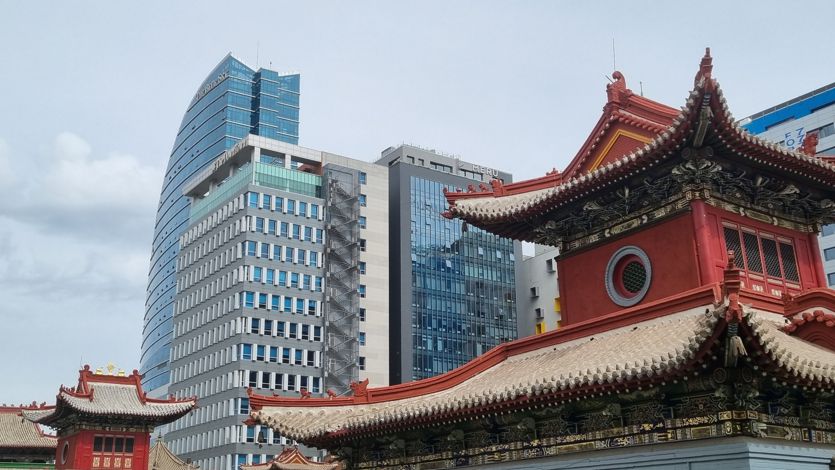
Free and unspoilt Mongolia: skies, horizons and endless silence
Just 5 million inhabitants, capable of surviving in a harsh natural environment and heirs to a history stretching back millennia, which is still evident in temples and monasteries

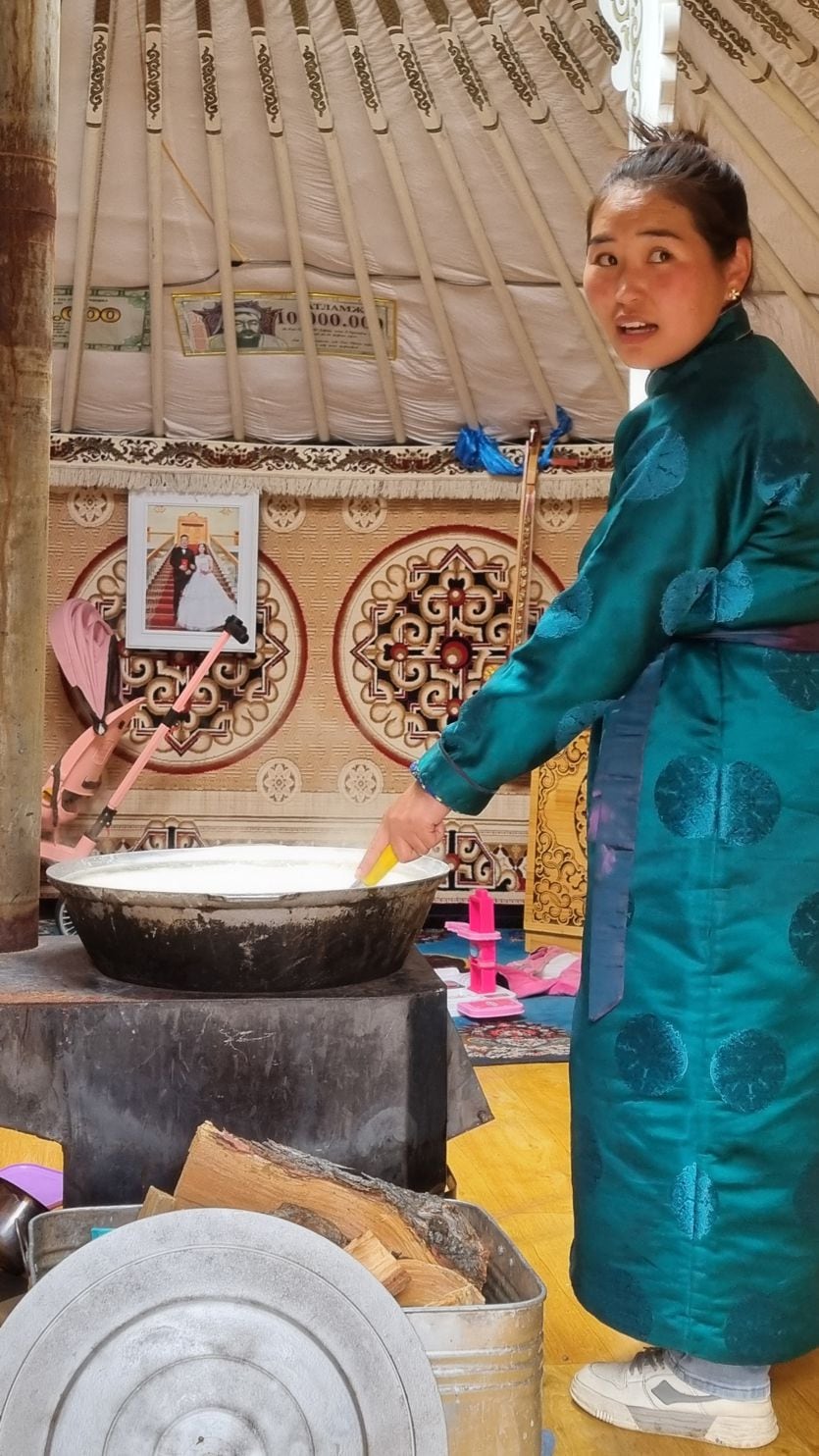
Thzerma is wearing the deel she wears every day. It is the colour of the sky and the meadows. The young woman slowly stirs the mare’s milk, contained in the basin warmed by the stove in the centre of the ger, in a clockwise direction. It is the very same gesture she saw her mother Oinaa and her grandmother Solongo perform, and one that millions of Mongolian women have repeated over the centuries. This is Mongolia, eternal and contemporary, true to itself and to the profound meaning of life. Are not a home, a hot meal and the sky as a roof over one’s head enough?
In the Land of Chinggis Qa’an
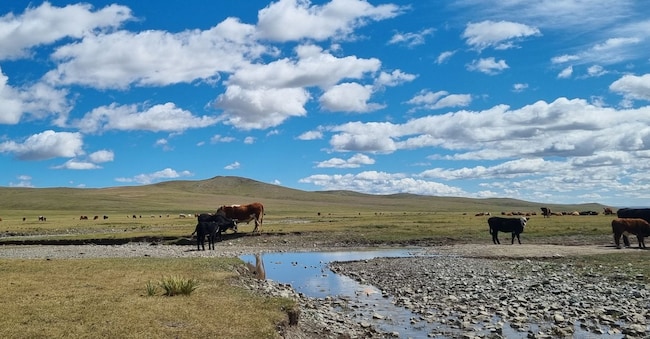
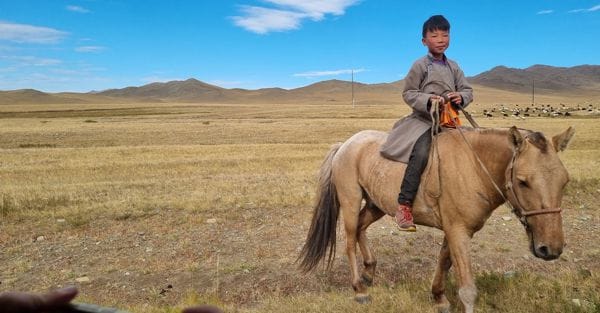
We are on the grasslands overlooking the town of Tsetserleg, 500 kilometres west of Ulaanbaatar. We are at Thzerma’s house, where she is serving us khuushuur, stuffed fried dumplings, and a bowl of warm milk, tea and salt. All around, grasslands stretching as far as the eye can see, wild horses and the babbling of a stream. Nothing but silence, and in that stillness lies the fullness and immensity of the journey through the land of Chinggis Qa’an. The silence stirs the soul, opening up pathways to thoughts, to an eternal present, to a blue sky that could not be bluer. Luigi Barzini Jr. described it masterfully in 1938: ‘I have never seen a sky like this. There is nowhere else in the world like it. So wide open, so full of light, that you do not feel oppressed beneath it, but free.’ Dreams leave their mark on our days, but in Mongolia, the days themselves become dreams that last forever.
The country, five times the size of Italia and with just under 5 million inhabitants, is the Goldberg Variations of the landscape; it is a matryoshka of horizons, colours and animals – millions upon millions of goats, sheep, yaks, horses and cows. Steppes, plains, grasslands, and then forests, deserts and mountains, as well as lakes and rivers, push the very notion of infinity to its limits. The sky and the horizons are an infinity that silences man’s arrogance, making him seem tiny. And so, one can only lose oneself in such beauty. Perhaps heading south, with a stop at Kharkhorin, where the Mongolian capital of Karakorum stood in the 13th century. The Erdene Zuu Khiid monastery is a gem, even though it suffered severe damage during the Stalinist purges of 1937.
Buddhism and nature
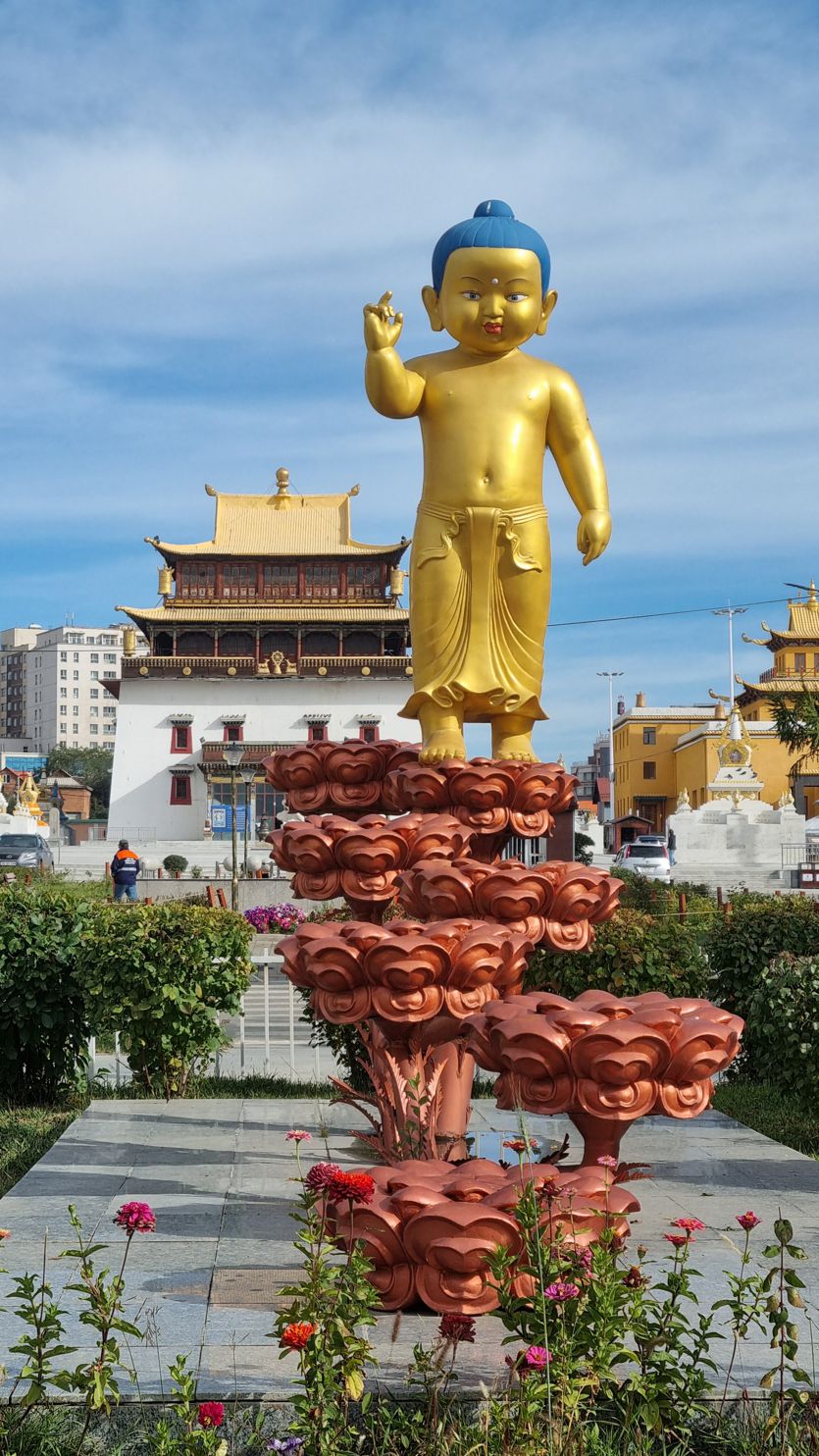
Of the hundred temples from the Golden Age, which once welcomed and amazed travellers and traders arriving from Europe, only three remain, still imbued with the mysticism of Buddhism and featuring the tsam masks, bearers of the tradition of pantomimic mystery. Time passes slowly; the kilometres stretch on as far as the eye can see, just like the tracks. It is the absence of people and buildings – not even a single lamppost – that brings one closer to nature. The scents change as the landscape shifts, from mugwort to wild garlic. The Mongolians have lived for millennia in this harsh and fierce land because they go along with nature, treating flora and fauna with great caution, as these entities can be vengeful and hostile. It is better to revere nature, to give it attention and to listen to its music. Like the powerful sound you hear at the Khongor Sand Dunes, a hundred kilometres from China, as it rises with the sand and the wind. The dunes are majestic; the camels lend them a human touch, but the mountains behind them reveal their full power. It is best not to challenge nature. At the Flaming Cliffs, nature tells a story spanning 65 million years. It was here that Roy Chapman Andrews arrived in 1920 to study the origins of humankind, only to discover something far older: dinosaur egg fossils, which later inspired Star Wars and Jurassic Park. The setting sun sets the sky ablaze; its light pierces the sky and colours the rock faces, where, amidst the crumbly rock, denser areas are clearly visible – the bones of dinosaurs that have been preserved for eternity within the strata.
Towards Lake Khövsgö
Kilometres upon kilometres, with a few stops at the guanz, the trattorias where the sweet blueberry jam is always on offer, from one gher field to the next, before stopping at the Terhjin Tsagaan Nuur National Park, with the crater of the Khorgoo Uul volcano and Lake Tsagaan. And at night, the sky is a velvet carpet studded with stars like diamonds: ‘What are you doing, moon, in the sky? Tell me what you’re doing, silent moon?’. From the border with China to that with Russia. Lake Khövsgöl, the sea of Mongolia, the Mongolians’ Portofino, is immense; the mountains are reflected in its waters and the forests already speak of the taiga and worlds straight out of a novel. Here, if you’re lucky, you might even encounter the Tsaatan, the ‘reindeer people’, to whom Federico Pistone has dedicated a moving book-length reportage. Hidden amongst the Sayan Mountains, they survive in one of the most inhospitable areas on earth, and yet they manage. For millennia. And in return, they have light and freedom.