Transport

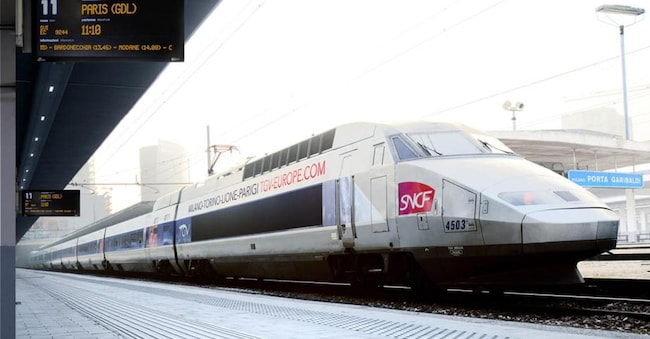
High-speed trains: French SNCF land in Italy

From 2026 daily Tgv connections between Turin, Venice, Rome and Naples. The challenge with Frecciarossa and Italo is on

by Marco Morino
5' min read

5' min read

The European high-speed rail market is ablaze. The French Tgv of Sncf (Société nationale des chemins de fer français) will challenge the Italian Frecciarossa 1000. And it will do so directly on the tracks at home, i.e. in Italy, from 2026 after Trenitalia's (Fs) Frecciarossa itself entered the transalpine market some time ago on the Paris-Lyon route. All this while the French state railways, SNCF, are preparing for the first time in their history to face, on the domestic market, an independent private railway company in high-speed trains: Proxima. But let us go in order.

French Tgv lands in Italy

.

The railway company Sncf Voyageurs (the Trenitalia of beyond the Alps) has announced its intention to establish itself in Italy from 2026 with the opening of several domestic high-speed routes and plans to achievea 15% market share by 2030. An official request to this effect, according to the newspaper Le Monde, has already been submitted to Rfi, the national railway infrastructure manager. The framework agreement proposed to the Italian authorities covers a period of 15 years.

Loading...

The transalpine railway company will offer nine daily round trips between Turin, Milan, Rome and Naples and four round trips between Turin and Venice, which will be carried out with 15 of the new Tgv M high-speed trains, the first deliveries of which are scheduled for the second half of 2025. The builder of the Tgv is Alstom (French), the competitor of Hitachi Rail (Japanese), which in turn manufactures the Frecciarossa 1000. Alstom is also the builder of the Italo trains. So, on the Italian tracks it will also be a technological and engineering challenge between major train manufacturers and not only between railway companies.

Sncf's offer will be introduced 'gradually', the company says, as was the case in Spain (where Sncf started operations in 2021 and is expected to complete the entire offer by the end of this year). In addition to the main cities, the French company will serve Brescia, Verona, Padua, Bologna and Florence. With the landing of the French, the operators in the Italian high-speed rail sector will rise to three: Fs, Italo and Sncf.

The daily service between Paris, Turin and Milan, which is currently reduced to one round trip per day (instead of three), part of which is by bus, will also continue after the landslide in the Maurienne valley disrupted the rail link last August. The reopening of the Frejus rail tunnel between France and Italy is not expected before November.

Sncf Voyageurs does not exclude the possibility of serving other destinations, including southern Italy, as soon as the infrastructure permits. For this deployment, Sncf has chosen to put into service Tgv M trains, technically adapted to the Italian infrastructure. These trainsets come from an additional order placed in 2022 with respect to the initial order of 100 Tgv M trainsets, which will run in France.

Competition arrives in France too

Competition on fast trains is also coming to France. In fact, a private and independent railway company will start up: it is called Proxima and will compete, on national routes, with the state railways. In short, it will be the French version of Italo, the first train that brought the free market to Italy. The new railway company will be financed to the tune of EUR 1 billion by the French investment fund Antin. For the first time, a competitor will challenge the giant Sncf, which is the public monopolist on domestic connections.

Proxima, which aims to connect cities on the west coast of France, such as Rennes and Bordeaux, with Paris, has signed an initial contract for 12 double-decker trains from French manufacturer Alstom that are scheduled for delivery in 2027.

Changing work habits after the pandemic are fuelling the need for high-speed commuter connections, said Rachel Picard, a former Sncf executive and one of the founders of Proxima. "New lifestyles are emerging. You can live in Nantes and work in Paris,' commented Picard.

Fs, record quarterly

On the day on which the French Sncf announced its intention to establish itself with its flagship train, the Tgv M, on the Italian high-speed market as of 2026, the FS (Ferrovie dello Stato) group presented a record quarterly report: operating revenues in excess of 4 billion euros (+25% compared to the same period in 2023), investments in excess of 3 billion euros (+49%) and around 3,000 new recruits. This was announced in a group note. Luigi Ferraris, CEO of the FS Group, summed up the situation: "The increase in revenues was driven by operating performance and the recovery in passenger volumes in all business segments, with double-digit growth in high-speed trains. Also contributing to the results was the urban regeneration programme, which in the first three months of 2024 finalised the sale of the disused railway yards of Milano Farini and San Cristoforo".

On the investment front, the first quarter of the year confirmed SBB's central role in supporting the national industrial system. The group developed and managed a total level of technical investments amounting to €3.2 billion (98% in Italy), up 49% compared to Q1 2023, of which €2.8 billion related to rail and road infrastructure, including the Turin-Milan-Naples high-speed line; the Naples-Bari line; the Verona-Padua Verona-Vicenza high-speed line; the Milan-Verona Brescia-Verona line and the Third Giovi pass (Genoa-Milan).

Operating revenues (€4.085 billion) increased by €820 million, mainly due to growth in transport services (+€177 million), infrastructure services (+€160 million), and other service revenues (+€515 million). Ebitda (EUR 392 million) increased by EUR 63 million (+19%), mainly due to revenue growth in all business components. Lastly, the number of Fs Group employees increased to 93,900 at 31 March 2024 from 92,446 in December 2023, with turnover determined by approximately 3,000 new hires, mainly due to generational turnover.

Still on the investment front, with regard to the Frecciarossa 1000, a new agreement was announced last November with Hitachi Rail, which produces the high-speed train. The more than one billion euro agreement provides for the supply of 40 new trainsets. The first deliveries are scheduled to start in April 2026, at a rate of eight to ten vehicles per year. The trains will be produced in Hitachi's Italian factories (Pistoia, Naples, Reggio Calabria), which will also have a positive impact on employment levels. There is also news for Intercity trains: new hybrid trains with triple electric, diesel and battery power, purchased with Pnrr funds to the value of 60 million euro, are running in Calabria, Basilicata and Puglia. In total, in the last three years FS has invested more than 5 billion euro in the renewal of trains.

Copyright reserved ©
Loading...

Brand connect

Loading...

Newsletter

Notizie e approfondimenti sugli avvenimenti politici, economici e finanziari.

Iscriviti