Friedrich and the unfathomable quest for the sublime
The Metropolitan Museum of Art exhibits the heir to German Romanticism in its collection
2' min read
2' min read
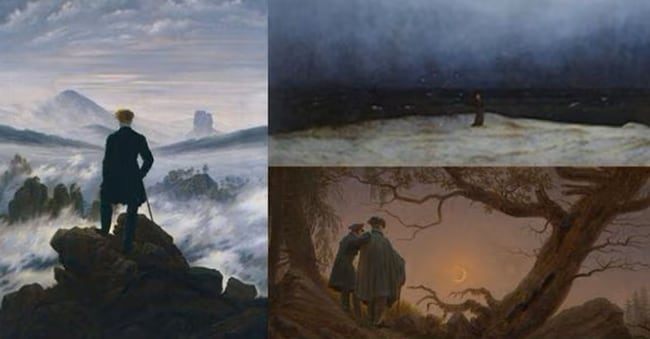
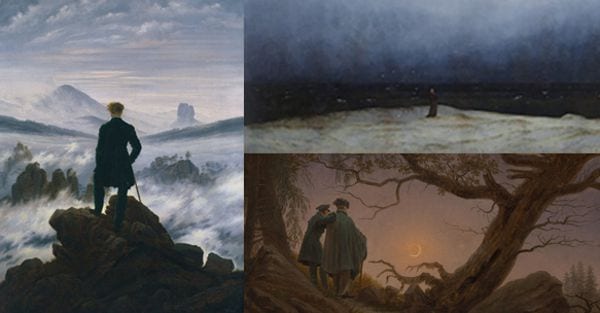
At the Met in New York - with a solo exhibition entitled The Soul of Nature - the most romantic of the Romantics, Caspar David Friedrich (1774-1840), is on show. One of the few authors known to experts and laymen alike in the art world. One enters the exhibition with a glimmer of pathos, all united by the eagerness to see the famous 'man on the cliff', careless but tenacious travellers in search of the Sublime. Yes, because no one like Friedrich can read the eternal link between inner gap and landscapes, that sea of fog inherent in the human soul.
75 works
75 works parade before the visitor and are imbued with meditation, mystery - drunk with wonder - permeating every romantic mood with light and shade.
Oil paintings, finished drawings and sketches from every stage of the artist's career are exhibited, revealing a symbolic vocabulary of landscape motifs, capable of conveying the personal and existential meanings present in nature during the years of tumultuous politics and vibrant culture of 19th century German Romantic society.
Monk by the Sea
Mystical lights and crosses follow egregious, contemplative works such as Monk by the Sea, in which a monk in complete solitude stares into an existential void: perhaps his own. Or ours.
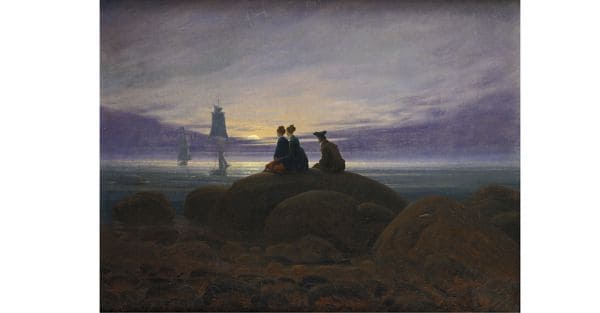
Rückenfigur
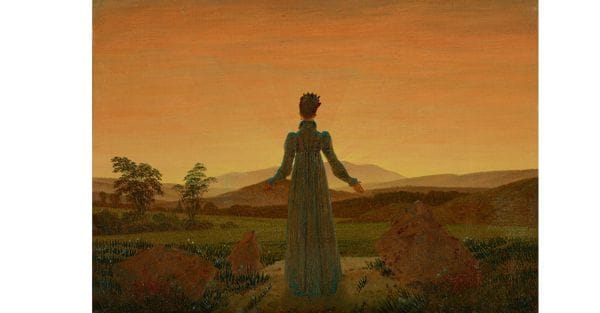
.Superb Two Men Contemplating the Moon (1825-30), the first famous example exhibited of a Rückenfigur, "figure seen from behind", which shows Friedrich and his pupil amiably observing the moon, the painter's favourite star, a changeable companion of human feelings. And again, sunrises and sunsets, immense and fiery skies, white clouds and lingering expectations, as in the nostalgic oil on canvas Woman at the Window (1822) or the glorious work Woman before the Rising or Setting Sun (1818-24).