
Friuli-Venezia Giulia: the way is clear for the return of the provinces
The Regional Council has reinstated the powers of Gorizia, Pordenone, Trieste and Udine

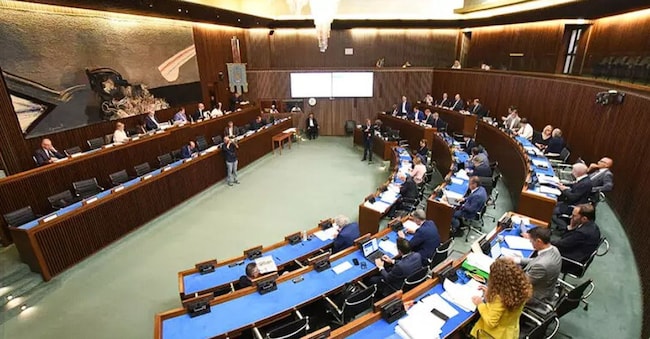
The Regional Council of Friuli Venezia Giulia approved Bill 86 overnight, which sets out the new structure of the regional administration and reintroduces the Provinces of Gorizia, Pordenone, Trieste and Udine, with the same territorial boundaries as before and with directly elected bodies.
At the same time, the abolition of the regional decentralisation bodies was approved. The final vote took place at the end of two days of debate in the Chamber on the text comprising 76 articles, to which numerous amendments had been tabled: 26 votes in favour, 16 against. The provinces had been abolished in 2016.
The centre-right’s vote in favour was joined by those of Serena Pellegrino (Avs), Marko Pisani (Ssk) and Enrico Bullian (an independent member of the Pact for Autonomy-Civica Fvg). Voting against, however, were the PD, the other four members of the Patto-Civica, Rosaria Capozzi (M5S) and Furio Honsell (Open Sinistra FVG).
The new law, which came before the Assembly following the amendment of the Regional Statute by Constitutional Law 1/2026, introduces a three-tier system of government in Friuli-Venezia Giulia: municipalities, provinces and the region. The government of the provinces is entrusted to three bodies: the Council, the Executive Committee and the President. The latter is elected directly by the citizens and remains in office for five years, with a limit of two consecutive terms. The Provincial Council also has a five-year term, and the number of councillors will be determined by a subsequent regional electoral law, whilst the Statute of each Province will define the composition of the Executive Committee.
Until 31 December 2028, the executive committees will be reduced in size and consist of a president and three councillors. A gender clause is provided for: representation of both sexes must not be less than 40 per cent. In an initial phase, from 1 January 2027, the Provinces will take over the functions of the EDRs, namely school building and road infrastructure, in addition to authorisation-related functions. Subsequent sector-specific regional laws will regulate the transfer of further wide-area functions to the provinces. A steering committee will coordinate the process of identifying the functions to be transferred.

