
Friuli Venezia Giulia, a model of attractiveness for investment
Over the past five years, the region has consolidated its position in Italy with a significant increase in investments from abroad

3' min read
3' min read
(Il Sole 24 Ore Radiocor) - Friuli Venezia Giulia is emerging as one of the most dynamic and attractive regions for investments in Italy, thanks to targeted policies, modern infrastructure, an innovative entrepreneurial ecosystem, and a coordinated system of incentives to support businesses. In recent years, the region has recorded a significant increase in investments from abroad, consolidating its position in the national economic landscape: from 2018 to 2023, foreign direct investments increased from 2.6% of the national total to 6.5% (Ice data). Last year also saw the establishment of multinational companies such as Performance Medical Technologies (USA), Mitsubishi (Japan), Innoway (Italy-Austria), while the number of foreign subsidiaries in the region increased by 40% in the last three years. Regional exports are also on the rise, which - according to Bankitalia surveys - in the first half of 2024 recorded a trend increase of 3.7%, thanks to the positive contribution of means of transport, whose trend is strongly influenced by the delivery of ships with a high unit value. In particular, exports to the United States more than tripled with an increase of 119.3% between the first half of 2023 and the first half of 2024. Overall, the year ended with exports of EUR 19 billion (+0.2%) driven by shipbuilding, which compensated for declines in some segments such as metallurgy, machinery and electronic equipment.
FVG has intensified its international relations, with a focus on the United States, Japan and Central Europe. This year, events such as 'Selecting Italy' in Trieste and the participation in Expo 2025 in Osaka represented some opportunities to strengthen its presence in global markets.
Strategic hub in the heart of Europe
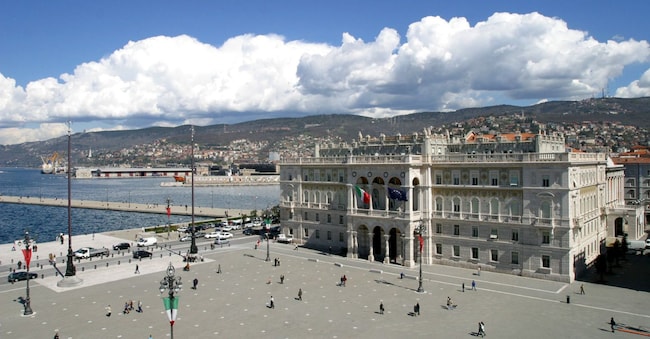
Friuli Venezia Giulia has taken on a key role in the connection between the Mediterranean Sea and Central and Eastern Europe due to its strategic location between the Baltic-Adriatic corridor and the Mediterranean corridor in north-eastern Italy. With three ports, an international airport, five freight villages and important rail connections, the region is thus a strategic hub for access to international markets. The Port of Trieste is the only international free port in Europe and the first in Italy in terms of cargo handling, total tonnage and rail traffic. Non-EU goods stored here are exempt from tariffs, VAT and other import charges and no bank guarantee is due as long as the goods are in the free port. The Port of Trieste, together with the Port of Monfalcone and Porto Nogaro, represents the second largest regional port system in Italy in terms of cargo handling with over 61 million tonnes. Trieste is also the first province in Italy in terms of added value of the Blue Economy with over 1 billion euros and is among the 15 top ports in the Mediterranean for port connectivity.
Fiscal incentives and soft loans
FVG offers a series of tax incentives and a subsidised finance system with loans at competitive rates for the benefit of businesses. For example, the tax on productive activities (Irap) is zero for the first three years (1% for the next two) and there are tax breaks for companies planning new productive investments in the region, as well as non-repayable subsidies for collaborative industrial research and experimental development projects. For more than 50 years, then, the regional finance company, Friulia, has been supporting the development of the region, investing in the capital of companies (with minority shareholdings) and financing projects for the development of their business with the creation and expansion of production sites within the borders. The Select Friuli Venezia Giulia Agency also provides information on opportunities to support the establishment or relocation of a new company in the region, accompanying companies and investors in projects to set up and develop in the area.
Strategic Sectors and Innovation
From Industry 4.0 to logistics, from energy to health and biomedical. These are some of the areas in which the region stands out, which over time has created a series of specialised clusters ranging from Life Science to new technologies. These include: the Life Sciences Cluster, which has around 170 specialised companies and 5,000 employees; the Comet Cluster of Engineering, which represents 46% of the regional manufacturing sector; the Digital Technologies Cluster (Ditedi), which supports the growth of ICT, and which has recorded an 8.8% increase in new companies specialising in information and communication technologies over the last 10 years. Then there are the Agrifood Cluster FVG to promote the development of the agri-food sector; the Maritime Technology Cluster, a point of reference for the maritime technology sector, which unites enterprises, universities, research centres and training institutions; the Wood and Home Furnishings Cluster for the development of one of the most important sectors of the regional economy in terms of number of active enterprises, workforce employed, export value and contribution to the formation of the regional GDP.


