
Compulsory motor insurance for e-scooters comes into force on 17 July, but number plates and helmets are still nowhere to be seen
Sharing economy companies: zero fatalities since November 2021, yet we’re footing the bill

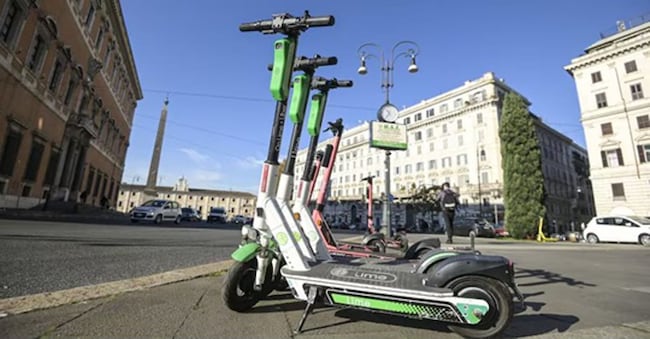
Following a postponement agreed by the Ministry of Infrastructure and Transport (MIT) in consultation with insurance companies, the requirement for motor vehicle liability insurance for e-scooter users comes into force in two weeks’ time. E-scooter-sharing companies have already complied with the new regulations, but it remains to be seen how the approximately 1 million private e-scooter users will respond. What is certain is that the requirement to wear a helmet (in place for two years now) and to display a licence plate (already in force) seem like a pipe dream. You only have to walk around the cities to see how few people comply.
Fines
Any fines so far? It is not known; the Home Office will have to say. But some are already complaining – namely the companies that operate ‘sharing’ schemes, i.e. those that rent out e-scooters whilst strictly adhering to all the rules. ‘We’ve been complying with the rules from day one: we’re the only sector that has always been authorised, regulated and insured,’ explains the industry association. ‘Perhaps it’s private individuals who aren’t complying: a million people who, from 17 July, will be riding in breach of the rules.’ And what about scooter-related deaths? “They do happen, but there have been zero deaths among sharing services since November 2021, when the Rosso law (Forza Italia) lowered the speed limit to 20 km/h. These are rules we enforce via software on every single vehicle. The legislator has seen the accidents involving private individuals and has passed the bill on to us.” What will change with the insurance? “Motor vehicle liability insurance doesn’t add a single euro’s worth of cover: it simply imposes more complex and more expensive policies on us. Pedestrians are covered in exactly the same way; it’s just that we pay more.”
Compulsory helmet use
And is the number plate necessary? “It’s not needed for car-sharing, but we haven’t complained because we still believe tracking is important, even though it gets torn off almost 5 per cent of our vehicles every month. Between GPS, the vehicle code and the app that records who’s driving, where and when, we know everything. The physical number plate tells us less than what we already know.” Finally, the helmet requirement: “A shared vehicle is, to all intents and purposes, a different type of vehicle from a private one, comparable to an e-bike, which in fact does not require a helmet. In the UK, where only shared vehicles are on the roads, helmets are not compulsory. A blanket requirement would affect occasional use – which is the very reason for the service – whilst leaving the private motorist driving at 40 km/h unchecked.”
Rising costs
Operators also complain of a significant increase in costs: “Three new requirements in two months, a public portal that wasn’t working, and insurance companies asking for an extension because they weren’t ready themselves. No business can withstand regulations designed to target a sector. If they force us to close down due to rising costs and regulations, the only vehicles left on the roads will be those that nobody checks.’ Finally, the fines: how many have you been given? ‘It’s unfair to put this question to us: ask how many fines have been issued to private individuals without licence plates since 17 May.’

