
From grants to bring properties up to standard to suspended mortgages: the decree for the Campi Flegrei has been approved
Governance is centralised and entrusted to the acting president of the Campania Region in his capacity as commissioner, with a ten-year management plan that is not tied to the emergency situation facing displaced persons, because ‘a preventative law must endure’

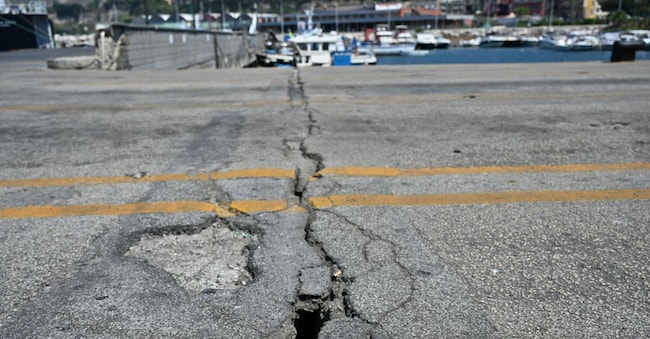
The State will cover 70 per cent of the costs of making one’s home safe, rising to 100 per cent for those declaring an income of less than 28,000 euros. Furthermore: a moratorium on mortgage repayments until the end of 2027 and, above all, a multi-year fund totalling one billion over ten years. These are the cornerstones of the extraordinary plan for the Campi Flegrei approved by the Council of Ministers, which the Minister for Civil Protection, Nello Musumeci, described in a press conference immediately following the meeting as ‘not an emergency law, but a law on prevention’.
The minister explained that the area cannot be compared to a typical earthquake risk scenario, where an event is followed by reconstruction and a return to normality. There are 85,000 residents living here in 15,000 buildings, exposed to bradyseism, which has seen the intensity of tremors increase in recent years. These measures had been expected weeks ago as part of the amendments to the PA decree, but were left out during the Chamber of Deputies’ scrutiny.
The principle is that the State does not promise to eliminate the risk, but undertakes to reduce exposure and vulnerability, to prepare the population for possible evacuation, and to enable those who request it to bring their buildings into line with anti-seismic standards. This special measure has been in place since September 2023: the aim of the reorganisation is to ensure that action is taken before an exceptional event turns into a catastrophe.
Governance
Governance is centralised and entrusted to the pro tempore president of the Campania Region in his capacity as commissioner, with a ten-year management plan that is not tied to the emergency situation of the displaced persons, because ‘a prevention law must endure’. The commissioner, who is solely responsible for the programme and accountable for ‘what, how and when’, will be required to report every six months to the Government and annually to Parliament, with a public report on the progress of the measures.
The Civil Protection Agency will continue to be responsible for risk monitoring, planning, issuing alerts, conducting drills and national coordination: ‘Let’s not turn the commissioner into a “super-boss” of civil protection.’

