
From ancient Egypt to viruses: scientific evidence to help us understand and avoid repeating the same mistakes

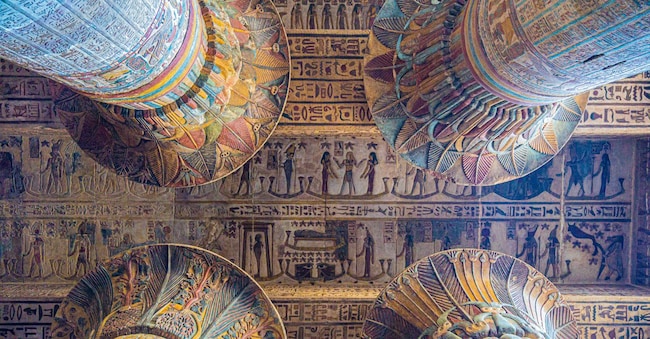
It takes courage to sit down at the same table when coming from such distant worlds as virology and Egyptology. On the one hand, there are those who study viruses, infections and diseases, and think in terms of genetic sequences, epidemic curves and transmission models. On the other are those who decipher hieroglyphs and papyri and study grave goods to reconstruct the past through the traces that have come down to us. Two languages, two ways of asking questions. And yet, when we are willing to listen, we realise that both are talking about the same thing: human beings grappling with what they cannot see or understand, including disease that can strike suddenly, take its toll, decimate populations and then, at times, fade away. Just as famines or droughts left their mark even thousands of years ago, contributing to the collapse of certain civilisations. The event on Monday 23 November at the Teatro Carignano, organised with the support of the Compagnia di San Paolo and the Egyptian Museum, brings together two seemingly distant worlds: virology and Egyptology.
Each of these two disciplines, on its own, would see only part of the picture; together, they shed light on mechanisms that span millennia. This convergence does not happen all at once, but is built up step by step: every piece of scientific data compels us to reflect on an ancient text with fresh eyes, and every text prompts the virologist to ask a question they would never have thought to ask on their own. Thus, an invocation to a goddess can become a clue to a real epidemic; a ritual can reveal an early concept of warding off evil; and a famine recorded in the chronicles may find an explanation in the diseases that afflicted livestock.
It is very striking that there are striking parallels, for example, when it comes to the spread of disease; the need to find an external culprit seems to be a constant that has persisted throughout the millennia.
Recognising these constants is a way of understanding ourselves better and of avoiding repeating the same mistakes. But to reach this realisation, one must pay a price – perhaps the highest price for those engaged in research: stepping outside one’s comfort zone. It means admitting that you do not know, asking questions that might seem naive to a colleague from another discipline, and temporarily setting aside the security of your specialist vocabulary. It means accepting that your knowledge, however vast it may seem, is nothing.
And then there is a further step: finding a way to summarise it so that it can be explained to non-specialists. It is precisely here that the interdisciplinary approach demonstrates its power: when two worlds meet and engage with one another, what emerges is not merely new knowledge for experts, but a treasure trove to be shared.

