
From Bassano del Grappa to Rome in 1696, among churches and relics
Published is the Chronicle of Fra Giovanni Antonio da Pordenone, which recounts as in a travel guide Assisi, Loreto, the Eternal City and its basilicas

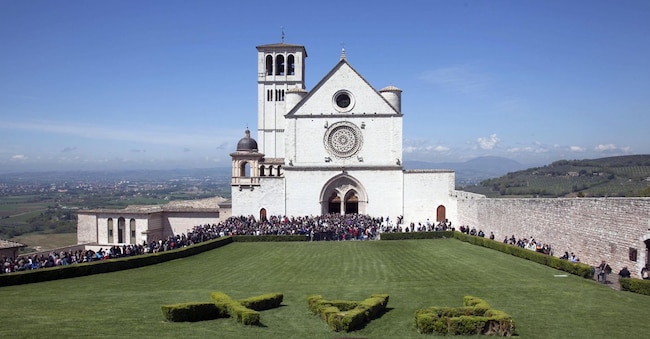
Fra Giovanni Antonio da Pordenone left for Rome, despite being "so advanced in age that he was 71 years old". It was the autumn of 1696 and the Capuchin reached the eternal city from Bassano del Grappa, stopping at Loreto and Assisi, at the request of his brother Agostino da Latisana and coinciding with the closing of the Jubilee of 1695, called by Pope Innocent XII. Of his pilgrimage he left a Chronicle preserved in the Provincial Archive of the Venetian Capuchins of Venice-Mestre, with "the beautiful and clear pages he ordered covered with characters in the likeness of prints, but patiently composed by hand", the publication of which was edited by Margherita Agostini, Roberto Castenetto, Alessandro Moro and Francesco Perin. It is almost a Grand Tour among churches, relics and monasteries, whose value lies in the description of the buildings, a true guide for pilgrims on their way to Loreto, Rome and the Franciscan places in Umbria.
With 28 stages, including three by boat from Chioggia to Senigallia, Father Giovanni Antonio arrives in Rome by Christmas, walking about 10.5 miles (i.e. 18/19 kilometres) each day. He travelled along the Via Romea Adriatica, as far as Ancona, then towards Loreto, then Foligno and, along the Valle Tiberina, following the Via Flaminia, he entered Rome from Ponte Milvio. The city is a distillation of gratitude and discovery, starting with the four papal basilicas: St Peter's, St Mary Major, St John Lateran and St Paul Outside the Walls. The Capuchin also visits the basilicas of San Lorenzo, Santa Croce in Gerusalemme, San Sebastiano, which with the papal basilicas are part of the itinerary of the Seven Churches, and takes note of the other 82 churches in Rome, making a sacred inventory of them. He is omnivorous and indefatigable, but in his writing he does not show boastfulness: "It is not solitary meditation of a restless and wandering spirit, but full involvement, of mind and body, with the history of salvation" and the return journey is equally enthralling: it is the good season and in 35 stages, two of which are by river from Bologna to Chioggia, the friar returns home, after Assisi with the three churches dedicated to St Francis, one on top of the other, with the convent that "looks like a castle".
The diary is full of characters and amazement at the relics in the Roman churches. It is such a whirlwind of encounters that the friar admits in the last pages that he even forgot to write that, after Easter, he had been received at the highest level and had kissed the slipper of Pope Innocent XII. But he almost does not care, better to think of the welcome he received on his return: 'At that dinner they spoke of nothing but the beauty and grandeur of Rome in every way, especially the churches, which certainly surpass the others in the world, as well as holy relics and indulgences'.
Cronaca del viaggio a Roma di fra Giovanni Antonio da Pordenone 1696-1697, edited by Margherita Agostini, Roberto Castenetto, Alessandro Moro and Francesco Perin
Al Segno, pp. 184, € 15


