
From construction to boats for the Coast Guard, the Piloda group's race
The company won an order for 40 vessels from the Italian coast guard and has just brought a floating dry dock to Naples

4' min read
4' min read
Almost 30 years ago, in 1997, the port of Genoa sold a floating super dry dock (350 metres long, 80 metres wide and 25 metres high, and capable of operating ships of up to 100,000 tonnes) to Karaman Sadikoglu, an entrepreneur at the helm of the Turkish Tuzla shipyard & tourism, who towed it all the way to Turkey: it is still operational today. In recent days, again from Turkey, in an ideally reverse route, a floating dock arrived in another important Italian port: Naples.
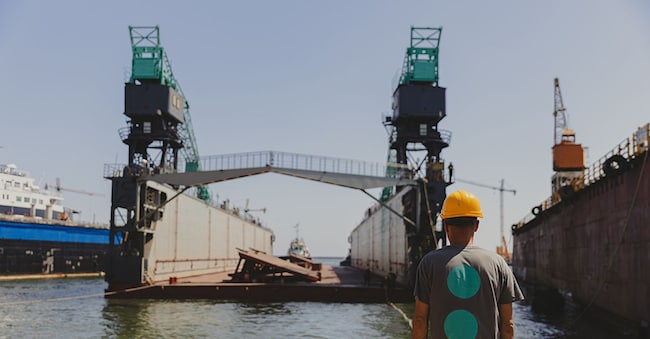
It is a 143-metre structure, 30 metres wide and with a lifting capacity of up to 6,000 tonnes. It was purchased, and transported to the Neapolitan port of call, by Piloda shipyard, the nautical division of the Piloda group, founded in the 1960s in Naples by Donato Di Palo and engaged, in the beginning, mainly in urban construction projects, such as the Polytechnic and the city's stadium. From these experiences, an entrepreneurial story has developed that, amidst evolutions and diversifications, has led to the creation of a network of companies, of which Shipyard is a part.
The first investment made in the nautical-maritime sector concerned the port of Forio d'Ischia, in 2014, which was followed by more recent investments to acquire shipyards in the port of Brindisi and then Naples. The investments made to complete these acquisitions amounted to around EUR 60 million.
A 143-metre dock from Turkey
.The dock, christened Donn'Anna, explains Di Palo, who is CEO of the Piloda group, 'was built in 2007 but has recently undergone a thorough modernisation, with upgrades to the electrical and automation systems. The cost of the purchase was over 15 million euro, while the transport from Turkey to Naples cost around 400,000 euro'.
The structure was conceived to respond to the growing needs of the company's military sector, which has just obtained a large contract from the naval defence sector: "The order," clarifies Di Palo, "is for the construction of means for the Coast Guard; it envisages the construction of 40 Sar (search and rescue) units, 14 metres each, and includes, for all of them, assistance for the first 10 years of operation. The value of the operation is approximately EUR 150 million'.


