
From Bolzano to Caserta for a German language exam: the investigation into fake bilingualism certificates widens
More than 1,700 suspicious certificates under scrutiny by the Guardia di Finanza

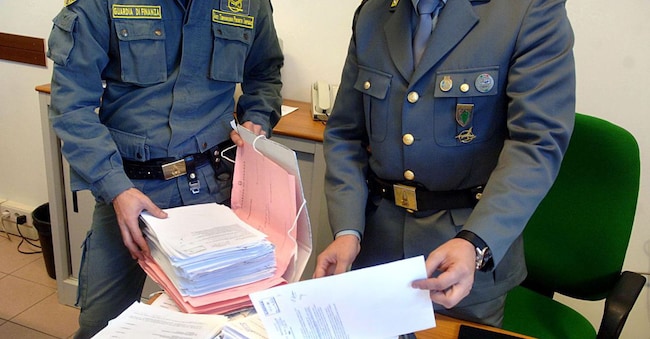
The Bolzano Public Prosecutor’s Office investigation into false language certificates in South Tyrol is taking on the proportions of a veritable tsunami; these so-called ‘certificates’ are essential for working in the public sector. In recent months, the investigation had brought to light around forty cases. The number of ‘certificates’ under scrutiny has now reached 1,700, and those who submitted them to gain access to these roles are under investigation. The sector most affected is healthcare, followed by local, provincial, regional and state authorities, as well as publicly owned companies and public transport operators. The Public Prosecutor’s Office is proceeding on charges of forgery.
The anomalous flow of certification recognition
In recent weeks, the Bolzano Financial Police carried out searches at three language schools in the province of Caserta and in Rome, which are Telc-accredited examination centres for the award of language certificates. This new phase of the investigation was prompted by an unusual and particularly significant influx of applications for the recognition of certificates obtained hundreds of kilometres away from the South Tyrolean capital, despite the fact that there are numerous accredited bodies in South Tyrol.
At the start of the investigations, forty forged certificates had been uncovered, produced by a former security guard at Bolzano Hospital (at a cost of 4–5 thousand euros). Further individuals have now been identified who are alleged to have sourced candidates in return for payment.
The debate on bilingualism exams
These developments have reignited the debate on bilingualism exams. Reinhold Perkmann, a consultant from Bolzano, proposes training focused on the specific vocabulary of various professions. To break down language barriers in hospitals, he suggests the use of language mediators and artificial intelligence. Alessandro Urzì, MP and regional coordinator of Fdi, reiterating that those responsible must be held to account and that bilingualism ‘is one of the pillars’ of South Tyrolean autonomy, calls for ‘in-depth reflection’ on the current model. Christian Bianchi, provincial councillor and leader of Forza Italia, calls for a “prudent approach”. The SVP reaffirms the principle of being able to express oneself in one’s mother tongue in hospitals and public bodies, and intends to consider “further measures or stricter rules”. The Süd-Tiroler Freiheit calls for “checks and severe consequences”. Finally, lawyer Nicola Canestrini urges people to avoid “widespread suspicion”. “Bilingualism is defended by distinguishing between different positions, not by lumping them together,” he emphasises.

